
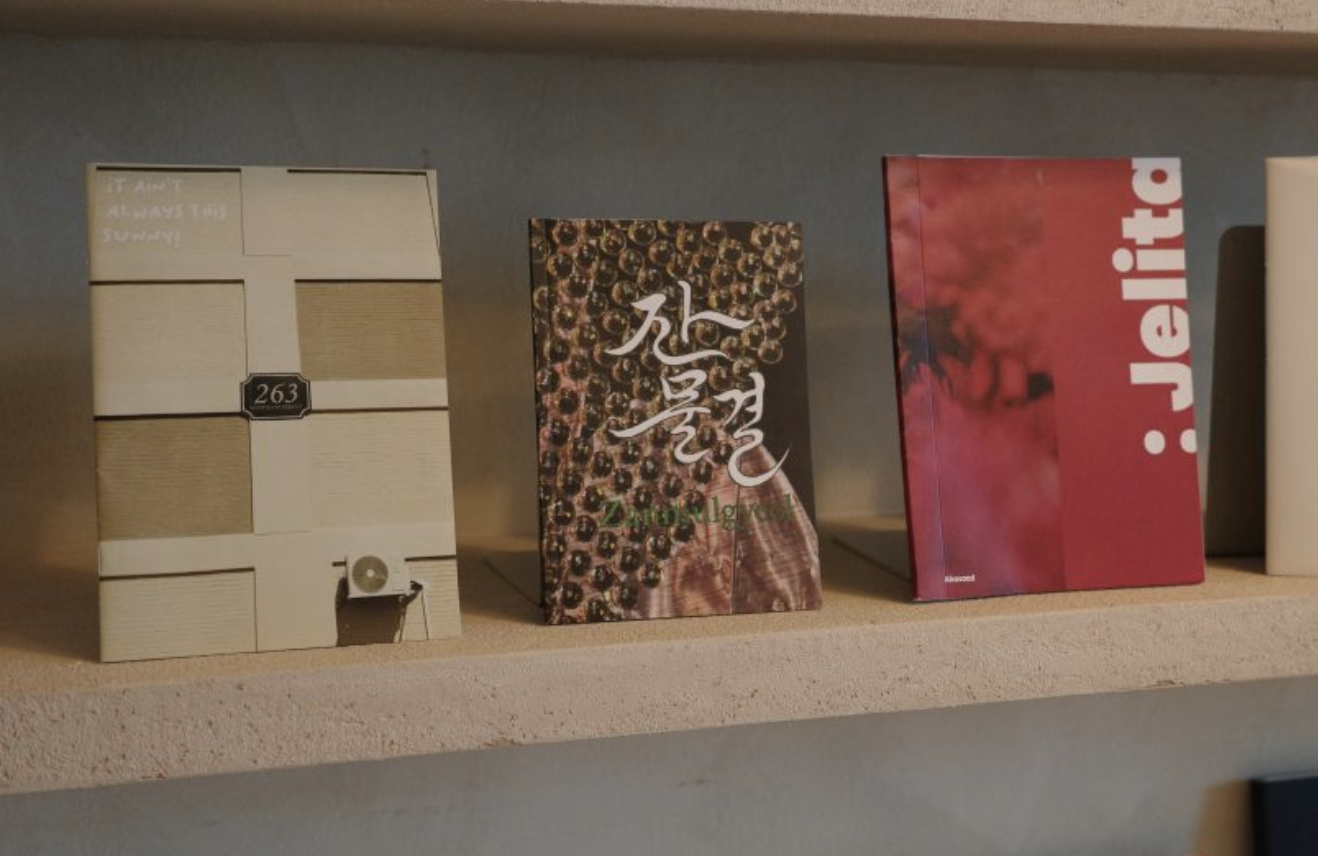
In Zanmulgyeol (ripples), artist Joonhee Myung (also known as JUNOS) follows a quiet thread that runs between the living egrets of Seoul’s waterways and the cranes carved into the city’s old wooden doors. What at first appears to be a simple visual coincidence gradually expands into something much deeper: a study of migration, symbolic memory, and the fragile ecologies that survive at the edges of urban life.
The project unfolds along Bulgwangcheon, a restored stream in northern Seoul where egrets return each year. Myung began walking there in 2023, observing how these white birds, delicate yet resilient, adapted to a city constantly reshaping itself. At the same time, she was documenting the disappearing doors of older neighbourhoods, many of them embellished with traditional crane motifs worn down by sun, weather, and redevelopment. The juxtaposition was impossible to ignore. Here were birds alive and moving, and birds frozen in wood; one part of a returning natural cycle, the other a symbol of longevity etched into the city’s disappearing architecture.
For Myung, who grew up between Chile, Russia, and Korea, the encounters stirred something personal. The project became a way of navigating the in-between spaces of her own migrant experience. Rather than approaching the city as a fixed landscape, she began to read it as a site of shifting fragments, images, symbols, impressions, and fleeting presences that assemble into a sense of belonging. Zanmulgyeol, meaning “ripples,” perfectly captures this method: small observations that widen over time into layered stories about place.
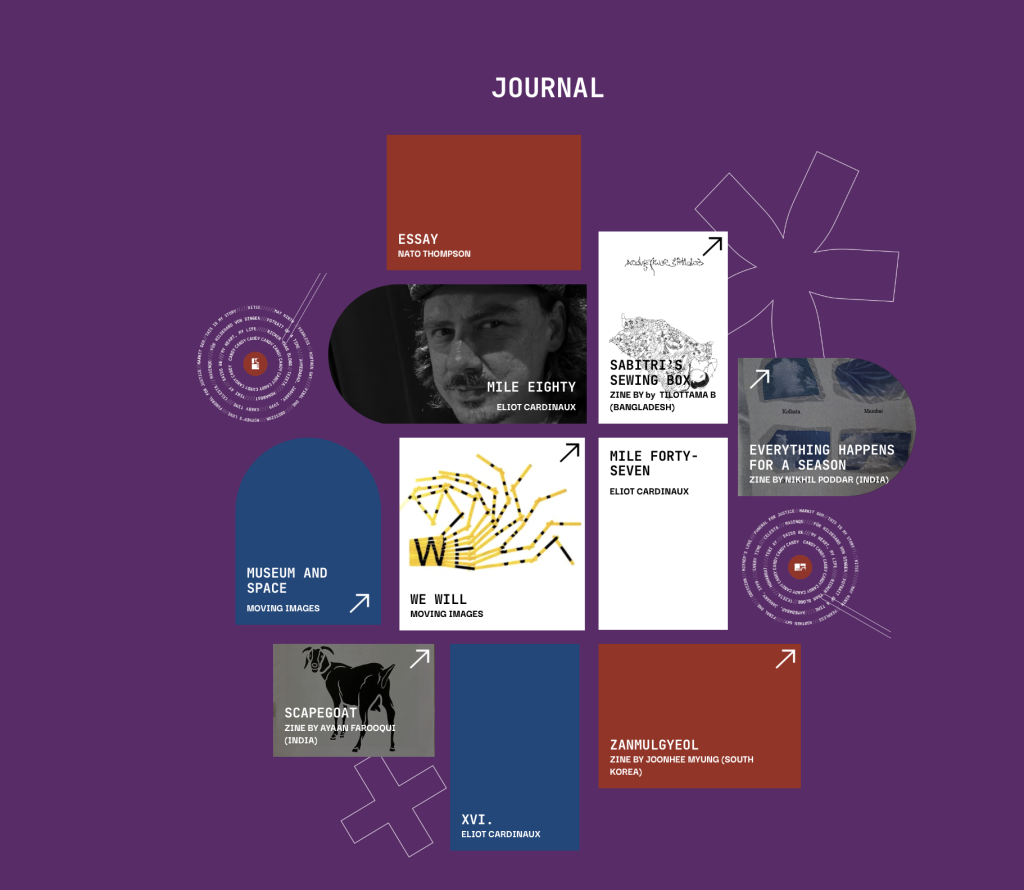
From this slow accumulation of field notes, the project grew into a limited-edition A5 artist zine, printed in a hybrid digital/fine-art process. Each copy draws together Myung’s photographs, drawings, and short prose pieces, creating a delicate and contemplative reading experience. The images move between riverbanks and alleyways, between living wings and carved silhouettes. The text acts as a soft thread binding them together, observations written in the moment, reflections shaped by distance, and meditative phrases such as the recurring line: “Even without water, the bird lands.”
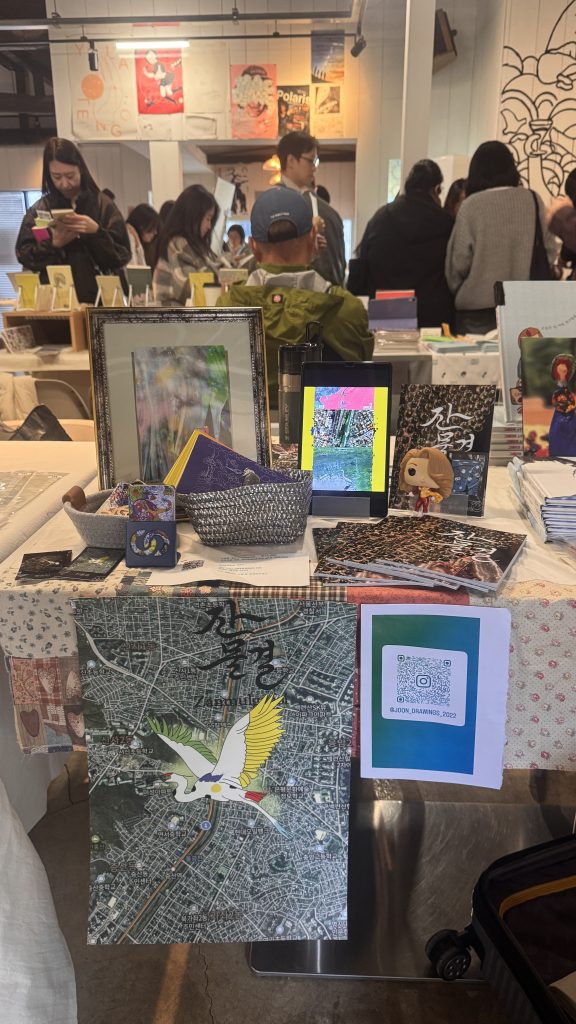
The zine is accompanied by an evolving wall archive of Seoul doors, which Myung continues to photograph before they are replaced or demolished. This archive will form the basis of her second zine, planned for release next year, extending the project into a broader conversation about urban memory and symbolic ecology. As the city continues to transform, the work captures a fleeting moment when wildlife, architecture, and cultural motifs briefly overlap before drifting apart.
Zanmulgyeol (ripples) has already been presented internationally, including in Singapore, India, South Korea, and through the Women Alternative Photo Group in the UK. Myung’s practice, which spans photography, film, illustration, and text, consistently focuses on the poetics of place and the ways migration alters one’s way of seeing. Publishing under Junos Creatives, she brings a diaristic sensibility to her work, treating each image or fragment as a trace of something felt but often unspoken.
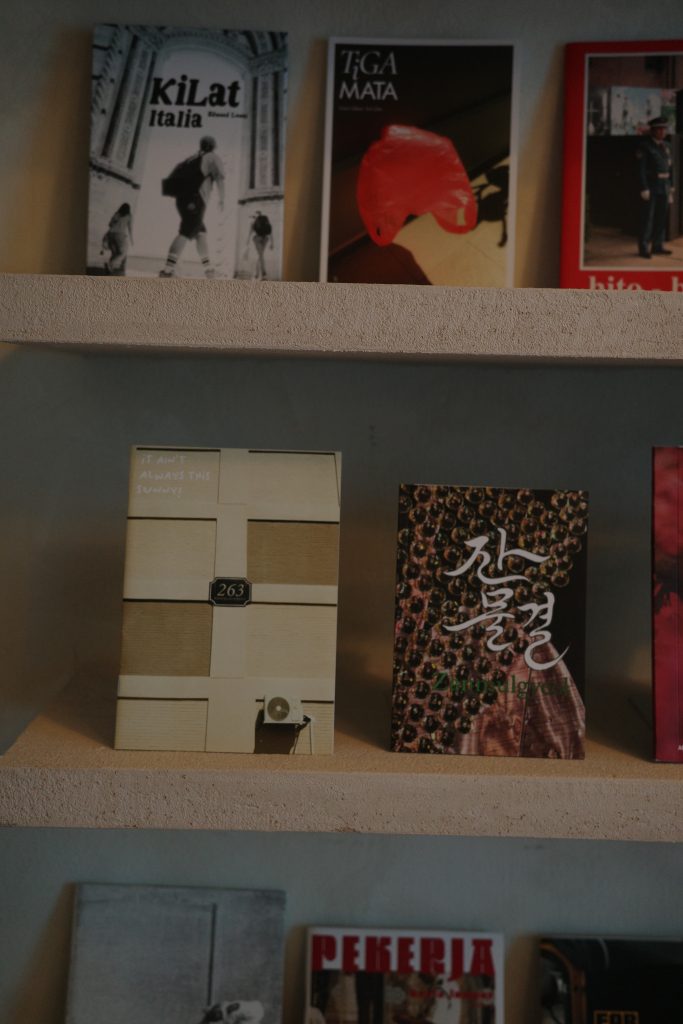
Through this project, the birds of Seoul, both living and carved, become markers of presence, resilience, and loss. They reveal how urban spaces carry their own quiet languages, and how artists like Myung can help us notice the stories that slip beneath everyday noise.


