
Ayush Batra’s interactive publication reframes twenty of Caravaggio’s paintings as a chronological psychological narrative rather than a collection of isolated masterpieces. Structured across the artist’s Early Roman, Mature Roman, and Exile periods, the book traces a progression from ambition to guilt, positioning each artwork as a visual confession shaped by violence, faith, and inner turmoil.
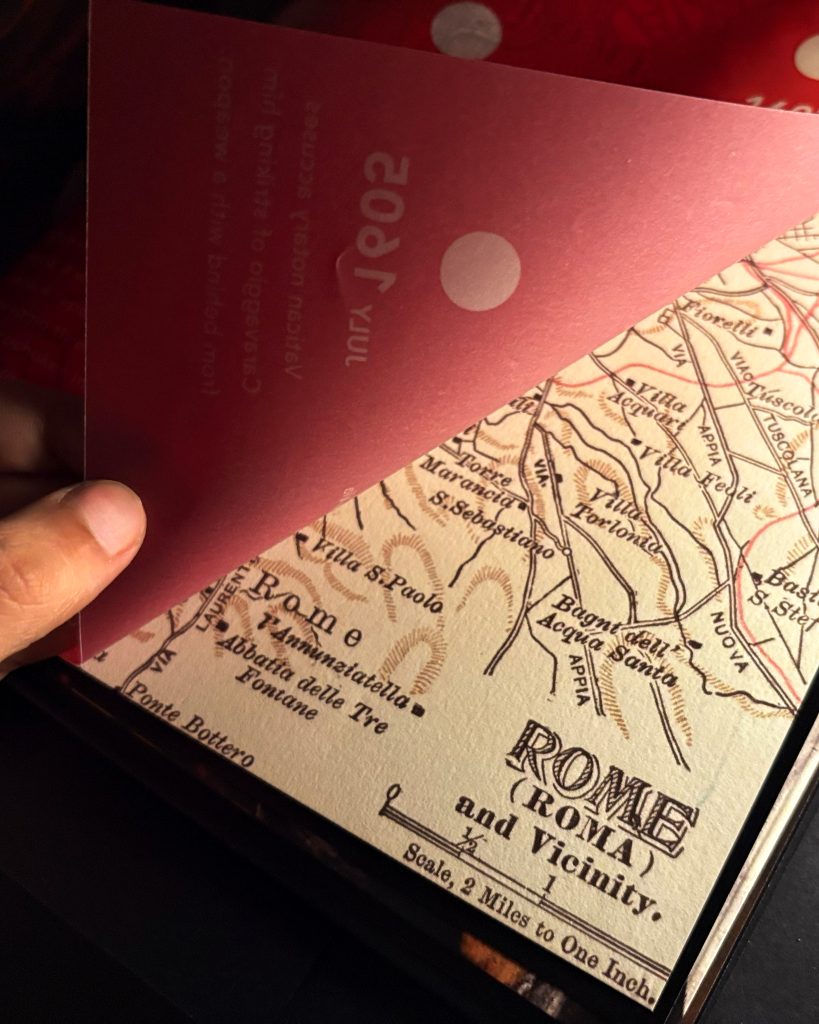
Rather than presenting art history as fixed and distant, the project invites the reader into a physically immersive experience. Interactivity becomes a narrative device. Smooth surfaces transition into rough textures. Pull tabs reveal hidden self-portraits. Transparent overlays obscure and disclose fragments of geography and memory. The act of reading requires touch, movement, and attention. As Batra explains, “Instead of explaining Caravaggio’s life, I wanted the reader to physically experience its psychological weight.”
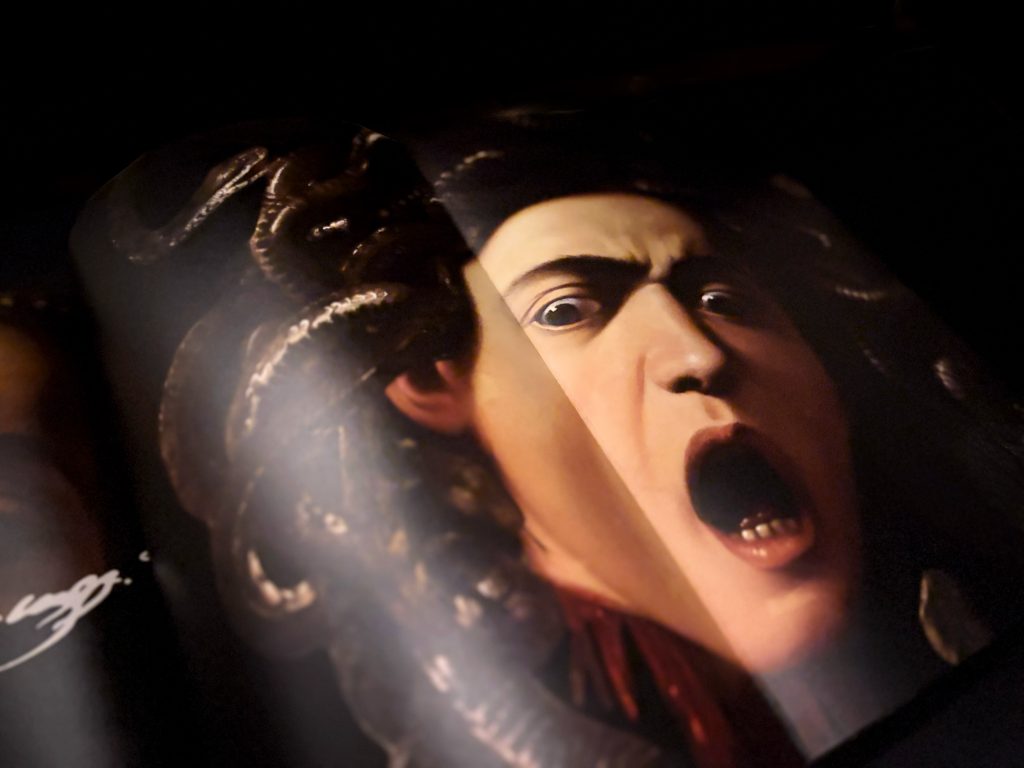
Material decisions play a central role in shaping this experience. Printed largely on black paper, the book stages text and imagery as light emerging from shadow, directly referencing Caravaggio’s use of tenebrism. A restrained palette of black, white, and red reinforces themes of blood, divinity, and guilt. Gold foil and raised UV details introduce devotional qualities, while layered stocks and a 3D-printed slipcase transform the publication into an object that feels archival and ceremonial.
Batra describes the approach clearly: “I treated the book as an artefact rather than a container of images something tactile, resistant, and emotionally demanding.” The physical resistance of the materials slows the reader down. Pages demand handling. Surfaces shift under the fingertips. Transparent red overlays bind violence, history, and memory into a single visual language.
The sequencing of the twenty works mirrors psychological descent. Narrative structure and material experimentation work together, encouraging reflection rather than passive consumption. “The more I read about Caravaggio, the more his paintings felt like confessions. This project became my way of translating that into a physical experience.”

Photography, creative direction, editing, design, text, and layout are all original. The publication is intended to be experienced in sequence, with interaction and pacing integral to its meaning. Through tactile design and structured storytelling, Batra proposes a way of encountering art history that prioritises embodiment over explanation.
Ayush Batra is a communication designer based in India working across editorial design, print publications, and interactive formats. His practice focuses on research-driven outcomes, material experimentation, and the relationship between narrative structure and physical interaction.

View the full project here
Instagram:
https://www.instagram.com/_ayushbatra/
Discover more from People of Print
Subscribe to get the latest posts sent to your email.