
Hold onto your swords and spellbooks—because a hidden medieval treasure has just been brought back to life!
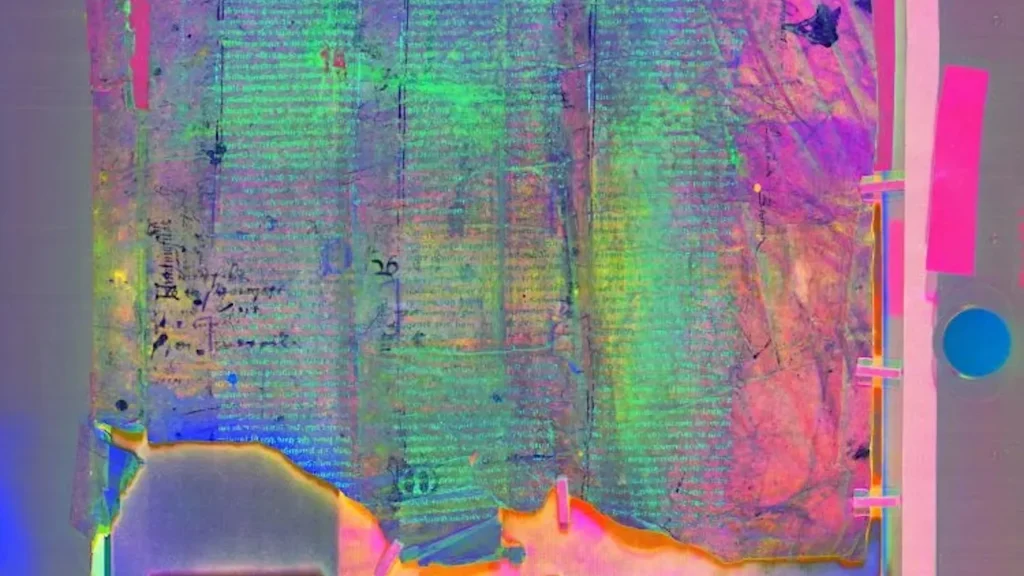
A forgotten fragment from one of the rarest Arthurian legends has been uncovered in the most unexpected place: the binding of a 500-year-old book. This incredible find adds another chapter to the legendary tale of Merlin and King Arthur, thanks to a brilliant team of researchers at the University of Cambridge who worked their conservation magic.

Credit: Cambridge University Library / CHIL
The fragment belongs to the Suite Vulgate du Merlin, a medieval French sequel to the famed Arthurian saga. Fewer than 40 copies are known to exist, making this a seriously rare gem.
But the real twist? It wasn’t found in a dusty chest or ancient library vault, but tucked inside the recycled cover of a 16th-century property ledger once owned by a wealthy family.
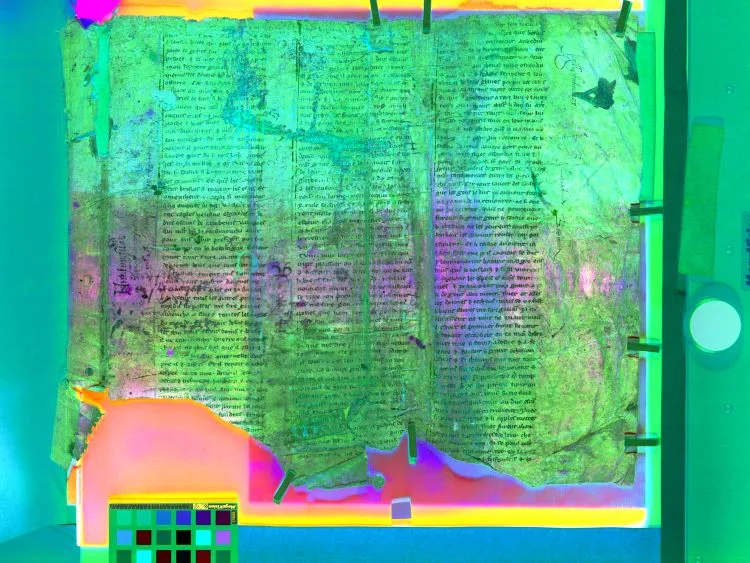
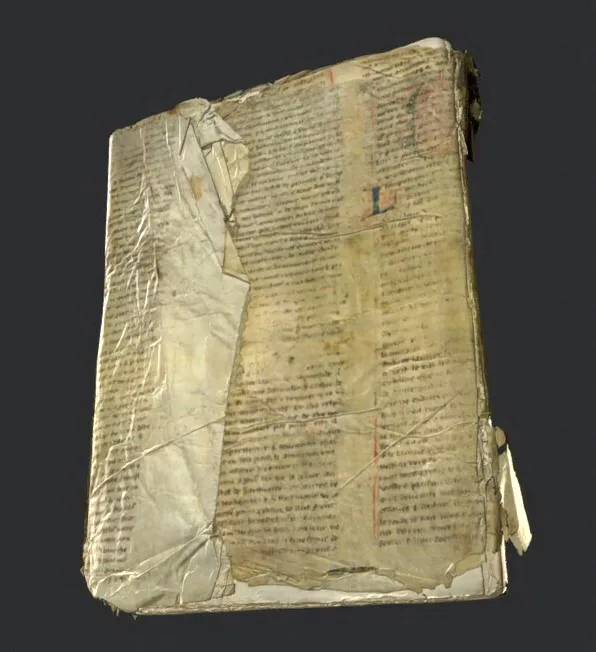
When scholars first stumbled upon the hidden pages in 2019, they were essentially unreadable—concealed beneath layers of parchment, folds, and stitching. But instead of prying it open or damaging it further, the team got innovative. They collaborated with Cambridge’s Cultural Heritage Imaging Lab (CHIL), using a jaw-dropping combo of high-tech wizardry: multispectral imaging, X-rays, CT scans, mirrors, magnets, and even prisms.
Using this kit of conservation sorcery, they digitally reconstructed the fragment in stunning 3D detail—allowing scholars to explore every inch without ever physically opening the binding.
What they revealed was pure storytelling gold.

Credit: Cambridge University Library / CHIL
The text includes a dramatic scene from the Battle of Cambénic, featuring the knight Gauvain (aka Gawain), his brothers, and King Loth squaring off against a horde of Saxon kings. Another section unfolds during the Feast of the Assumption of the Virgin Mary, with Merlin making a cheeky appearance at Arthur’s court in disguise—as a harpist, no less.
Even the tiniest details were revealing. The use of red and blue inks in the decorated initials and a few small copyist quirks point to its creation between 1275 and 1315 CE. Written in Old French—the language of England’s upper crust post-Norman Conquest—it’s believed this version was a condensed take on the original epic.
Credit: Cambridge University Library / CHIL
“We were able to identify this as a piece of the Vulgate Merlin sequel—a very different and seriously important version of the Arthurian myth,” said Irène Fabry-Tehranchi, one of the project’s lead researchers and a specialist in Cambridge’s medieval collections.
And here’s the kicker: this isn’t just about rediscovering an old tale. The techniques used in this project are opening the doors (or bindings) to a whole new way of studying fragile manuscripts around the world. Since medieval bookbinders often recycled older parchments for new books, who knows how many other historic treasures are hiding in plain sight?
“This was about much more than just unlocking a story,” Fabry-Tehranchi added. “We’re developing a method that could help libraries and archives across the globe access and study hidden manuscripts—without ever putting them at risk.”
Credit: Cambridge University Library / CHIL
Thanks to a fusion of cutting-edge technology and painstaking archival work, a long-lost chapter of the Arthurian world has resurfaced—without ever lifting a single stitch. It’s a powerful reminder that the past still has plenty of stories to tell, especially when you’re willing to look between the lines (and bindings). With this breakthrough paving the way for similar discoveries, who knows what other medieval secrets are waiting to be uncovered?

marcroy@peopleofprint.com
- Building Big Ideas: Inside the LEGO Design Student Challenge - February 17, 2026
- Penguin Random House Launches Support for Independent Bookshops - February 10, 2026
- Open Call: Indiecon International Travel Grant 2026 - February 9, 2026
Discover more from People of Print
Subscribe to get the latest posts sent to your email.


