
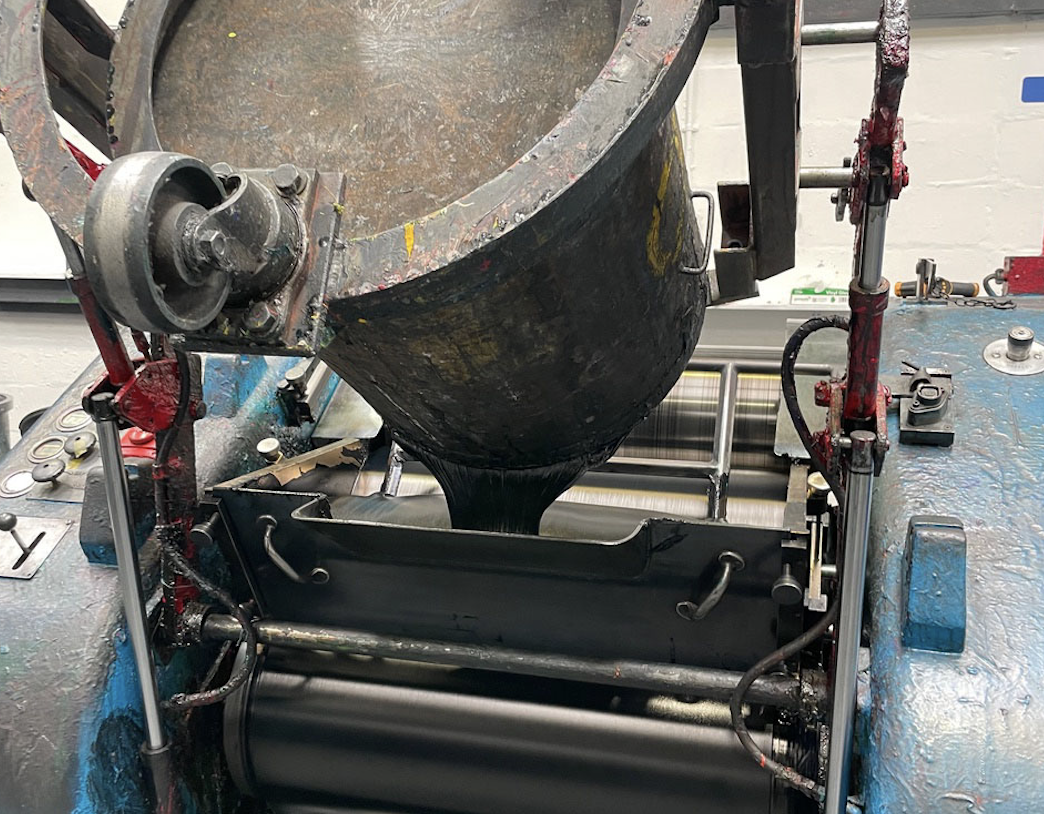
In recent years, we have seen a rise in print-on-demand services, pushing forward digital printing technologies and capabilities, and naturally, as a result of this, most inks are engineered for fast-drying commercial presses. This has meant one of the oldest mediums in printmaking nearly ran out of its most essential ingredient: traditional lithography ink. But thanks to a collaborative effort involving printers, researchers, and a passionate advocate from the Tamarind Institute, this centuries-old craft has gained a new lease on life.
At the centre of the effort is Brandon Gunn, Director of Education at the Tamarind Institute, the University of New Mexico’s internationally renowned centre for fine art lithography training and research, where generations of printers have learned and shared the medium. When lithographic facilities worldwide began reporting a critical shortage of traditional black lithography ink, the workhorse colour in stone and plate lithography, Gunn stepped in to help find a solution.
For years, ink suppliers had struggled to produce a truly non-drying black ink suitable for lithography, a formulation that stays receptive to water and grease (the core principle of lithographic printing) without setting up too quickly. When the industry’s leading manufacturer, Cranfield Colour, launched focus groups to understand printers’ needs, Brandon was one of the first to volunteer his expertise.

That conversation sparked an international partnership that brought together:
– Historical ink research led by Stephen Hoskins and Milly Hardy at the Centre for Fine Print Research, University of the West of England, Bristol, who have been studying traditional ink recipes going back over 200 years.
– Chemical and production expertise from Cranfield’s lead chemist, Paul Lee, and CEO Michael Craine, who worked to adapt and refine formulas.
– Practical printing insight from Gunn, whose hands-on knowledge ensured the ink performed as printers needed it to.
The result? A revived set of black inks, carefully formulated and tested across small batches and industrial mill runs, that meet the unique demands of modern lithography while honouring its deep material history.

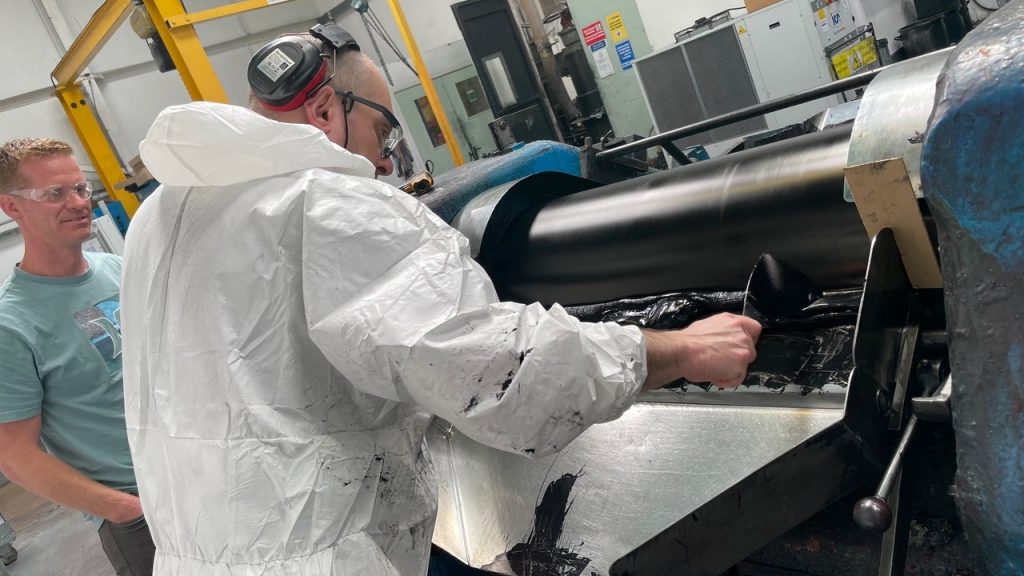
Developing an ink that behaves properly across stone and plate lithography is no small feat. Viscosity, tack, drying time, and print performance all had to be balanced; often at the scale of tenths or hundredths of a gram, and then scaled up for production on industrial mills without losing the qualities printers depend on. During testing, some batches were so stiff they nearly jammed the equipment, a reminder that traditional print materials require as much tactile understanding as technical know-how.
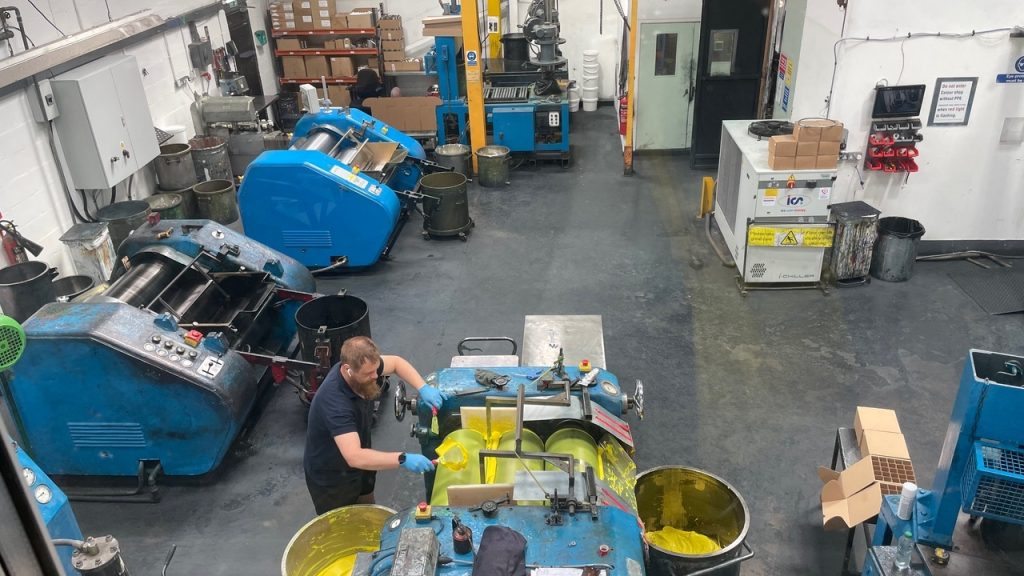
Once the final formulations were ready, Cranfield began producing three versions of black ink, soft, medium, and stiff. Each is suited to different printing styles and presses. Through word of mouth alone, the first batch sold out, and production continues into subsequent runs, signalling strong demand from printmakers and presses worldwide.
Crucially, work didn’t stop when Gunn returned home. He continued testing and refining the ink for months, and with support from Albuquerque distributor Takach Press, helped make the revitalised formulas available in the United States as well.
What might seem like an arcane material concern, the formulation of black lithography ink, actually touches the heart of the craft itself. Lithography relies on the chemistry of ink and surface, the balance of grease and water, and the way pigment sits on paper. Without reliable ink, printers can’t make stones sing or plates roll cleanly. By helping ensure this ink’s future, Tamarind, Cranfield and their collaborators have safeguarded a vital link in the lineage of fine art printing.
As Gunn himself observed, the effort was fundamentally collaborative: each expert contributed essential knowledge, and the project’s success came from bringing those voices together.