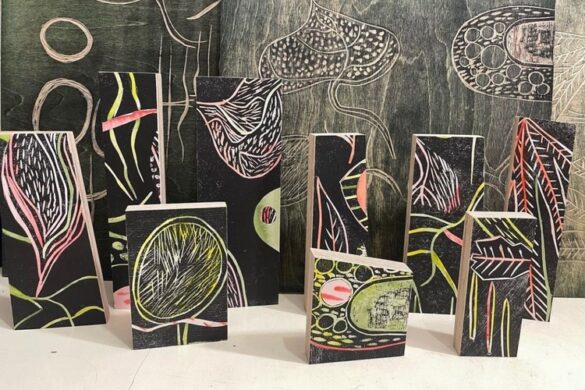
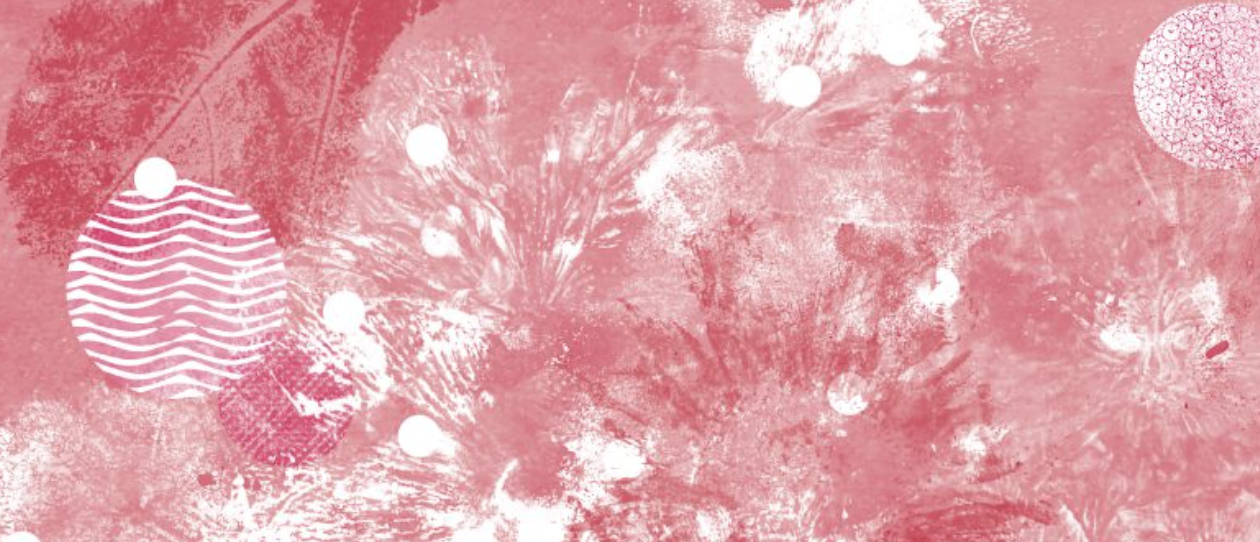
In The Sensory Language of Flowers, graphic designer Celeste De Plano explores the intricate visual and tactile cues that flowers use to communicate with pollinators. Drawing inspiration from botanist Heather Whitney’s TED Talk, The Secret Language of Flowers, the zine investigates the invisible structures present on the surface of petals, revealing how these natural patterns guide insects with precision and purpose. The project combines hands-on printmaking with digital layering to create a sensory overload of textures and forms, echoing the complexity of the natural systems it celebrates.
The first stage of the process took place on a Gelli plate, which De Plano used to pull impressions of different flowers and leaves. Thin layers of acrylic paint captured ridges, veins, and subtle surface structures that are not always visible to the naked eye. By applying and removing petals from the plate, she created both negative shapes and textured imprints. Each print became part of an evolving inventory of marks, offering glimpses into the hidden language used by plants to attract their pollinating partners.
“I wanted to find a way to translate these microscopic worlds into something people could feel with their eyes,” De Plano says. “Flowers are communicating all the time through texture and pattern, and most of that happens beyond our usual perception.”
Gelli printing proved ideal for this translation. Its accessible, experimental nature allowed her to make dozens of variations quickly, letting the process dictate new directions. Some layers left partial traces behind, ghostly outlines that blended into subsequent prints. These accidents became essential to the final compositions.
“The unpredictability of the Gelli plate felt right for this topic,” she explains. “Nature is full of systems, but those systems are never perfectly tidy. Patterns overlap, blur and repeat. I wanted the prints to reflect that.”
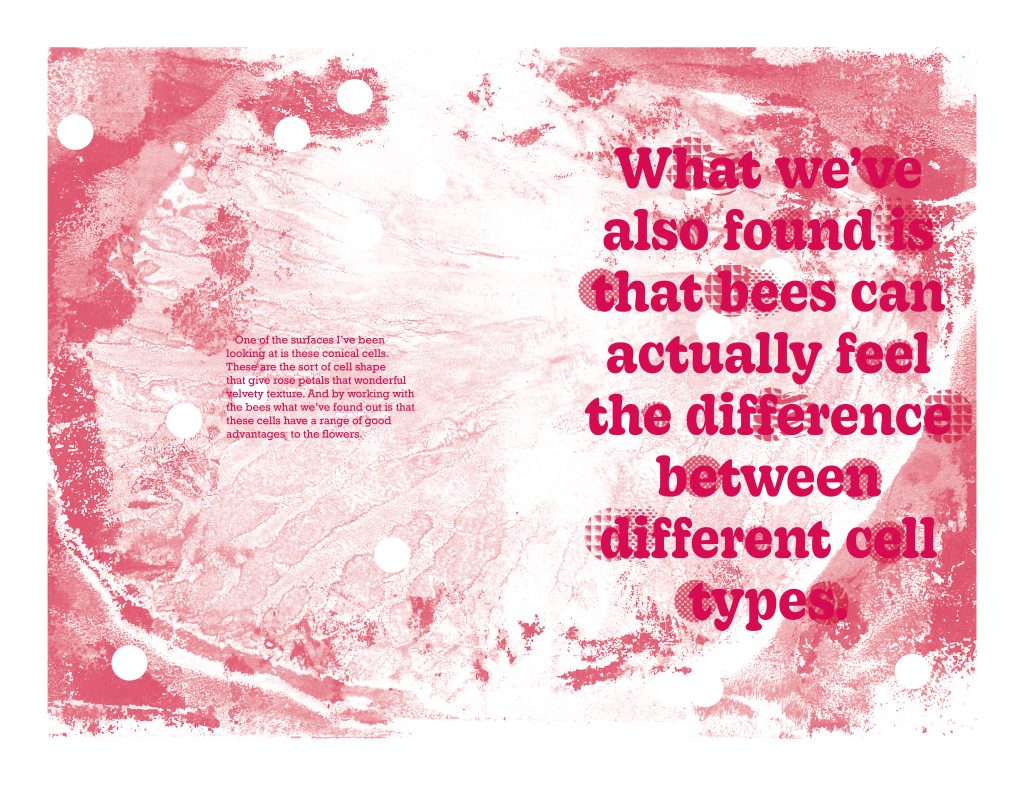
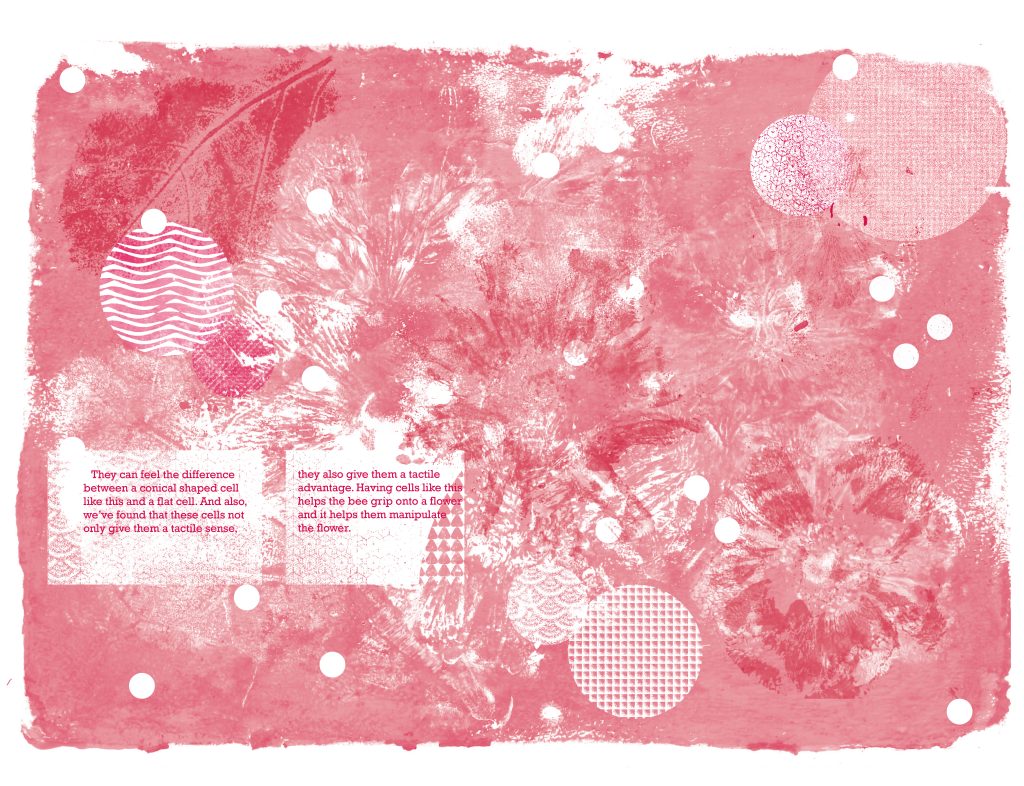
Once the tactile library of textures was created, De Plano shifted into a digital workflow. She adjusted colour and opacity, layered prints on top of one another and added patterns that echoed the ultraviolet and structural cues flowers use in real life. Extracts from Whitney’s talk appear throughout the zine, including the phrase that became a guiding mantra for the project: patterns on patterns on patterns. The repetition builds a visual rhythm that mirrors the sensory intensity experienced by pollinators navigating a flower’s surface.
“What fascinates me most is that plants have been designing communication systems for millions of years,” De Plano notes. “We just needed to learn how to see them.”
The zine functions as both an artistic study and an educational exploration, merging printmaking, graphic design and natural science. It embodies De Plano’s broader practice, which thrives at the intersection of disciplines. Her design philosophy celebrates experimentation, combining playful exploration with polished storytelling. Whether working digitally or in print, she approaches each project as an opportunity to uncover joy, complexity and unexpected connections.
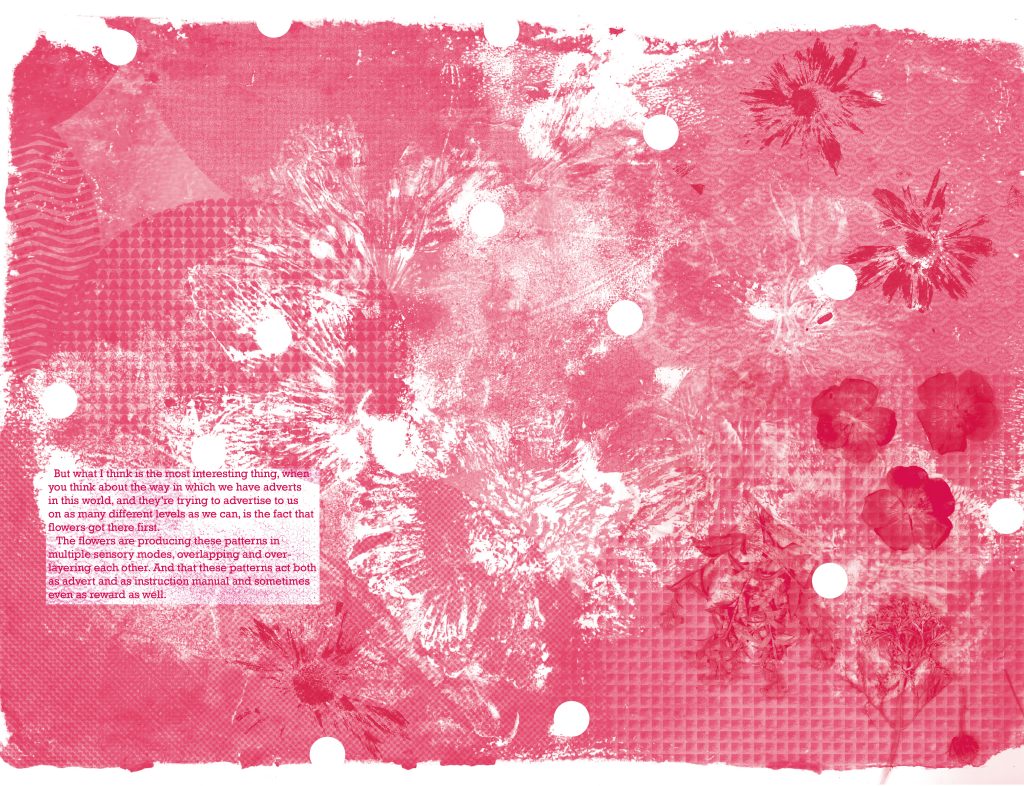
The Sensory Language of Flowers invites viewers into a world where aesthetics and biology intertwine, revealing a visual language that exists all around us yet often goes unnoticed.
Discover more from People of Print
Subscribe to get the latest posts sent to your email.