

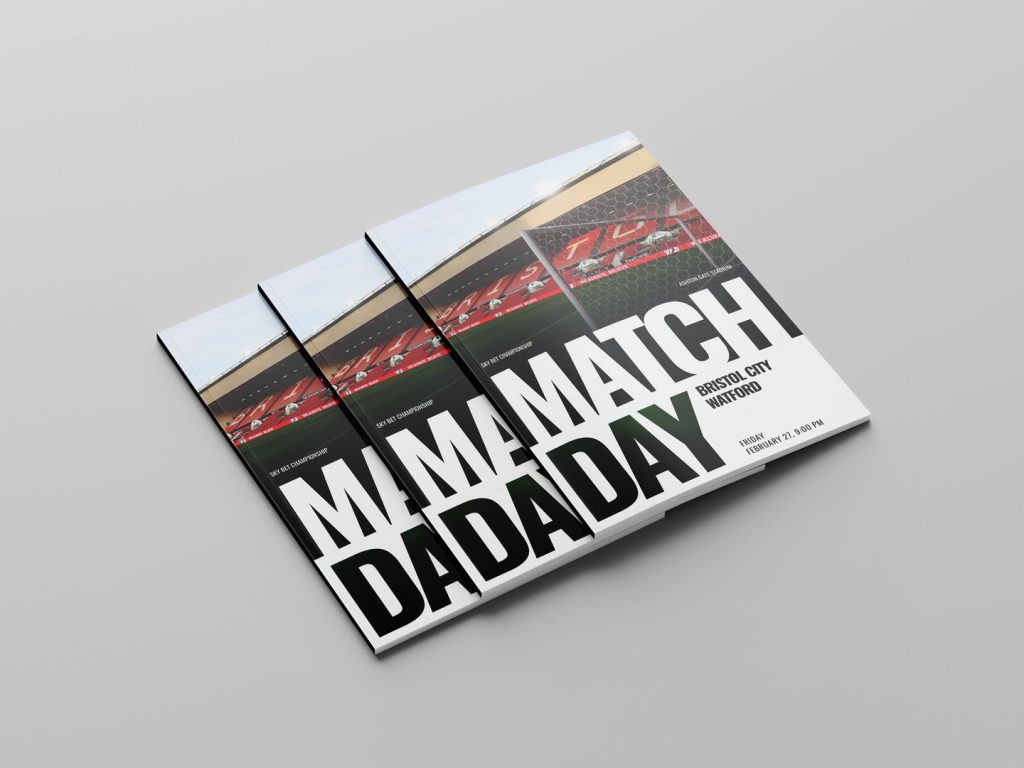
For more than a century, the matchday programme has been part of football’s ritual. Bought before kick-off, read in the stands, and taken home as proof you were there. For many supporters, it sits alongside scarves and ticket stubs as a physical reminder of the day.
But as digital media absorbed pre-match information and sales steadily declined, the economics of traditional programmes became harder to justify. In 2018, Football League clubs were no longer required to produce printed matchday programmes. For some clubs, rising print costs and falling demand simply made the model unsustainable.
Watford FC’s new Matchday Edition does not attempt to preserve that system. Instead, it rebuilds it entirely.
What Is Watford FC’s Matchday Edition?
Watford’s Matchday Edition is being described as a world-first personalised post-match printed programme. Rather than previewing a fixture, it is created after the final whistle and ordered online by supporters who want a physical record of what actually happened.
This shift changes the role of the programme completely. Traditional editions were speculative. They guessed line-ups, previewed storylines and printed interviews days before kick-off. The Matchday Edition captures confirmed team sheets, verified statistics, official photography and post-match interviews. It includes QR codes linking to highlights, allowing the printed object to sit comfortably alongside digital media rather than compete with it.
The programme is no longer informational. It is commemorative.
How Print on Demand Is Changing Sports Publishing
The key innovation behind this model is print-on-demand. Each programme is produced only when ordered. There is no speculative print run, no warehouse stock and no unsold surplus.
The first edition, following Watford’s fixture against Derby County, received 523 orders. A comparable fixture last season saw 450 traditional pre-match programmes sold. The uplift is notable, but more interesting is the behavioural change. Supporters were willing to wait until after the match to purchase a personalised memento rather than buy a generic preview at the ground.
By removing the need to predict demand, print-on-demand eliminates one of the biggest financial risks in sports publishing. There is no overproduction and no waste. Orders trigger production, and production triggers fulfilment.
For clubs that have struggled to make traditional programmes viable, this is a meaningful structural shift.
Who Developed and Prints the Post-Match Programme?
The concept was developed by Early Doors Sports, a UK technology company founded in 2021 that specialises in personalised, licensed sports publications. Their platform automates the assembly of official club imagery, match data and supporter content into print-ready layouts shortly after full time.
Production is handled by Pureprint Group, one of the UK’s leading sustainable print and marketing production companies. The programmes are printed on HP Indigo digital presses and shipped directly to supporters.
This is web-to-print infrastructure working properly. The ordering process happens online, content is dynamically assembled, and digital production allows each copy to be created individually without slowing down workflow or compromising quality.

Why HP Indigo Digital Printing Makes This Possible
The choice of HP Indigo technology is not incidental. Indigo presses are designed for high-quality short-run digital printing with advanced variable data capability. That means every copy can contain unique elements while maintaining consistent colour reproduction and professional finishing.
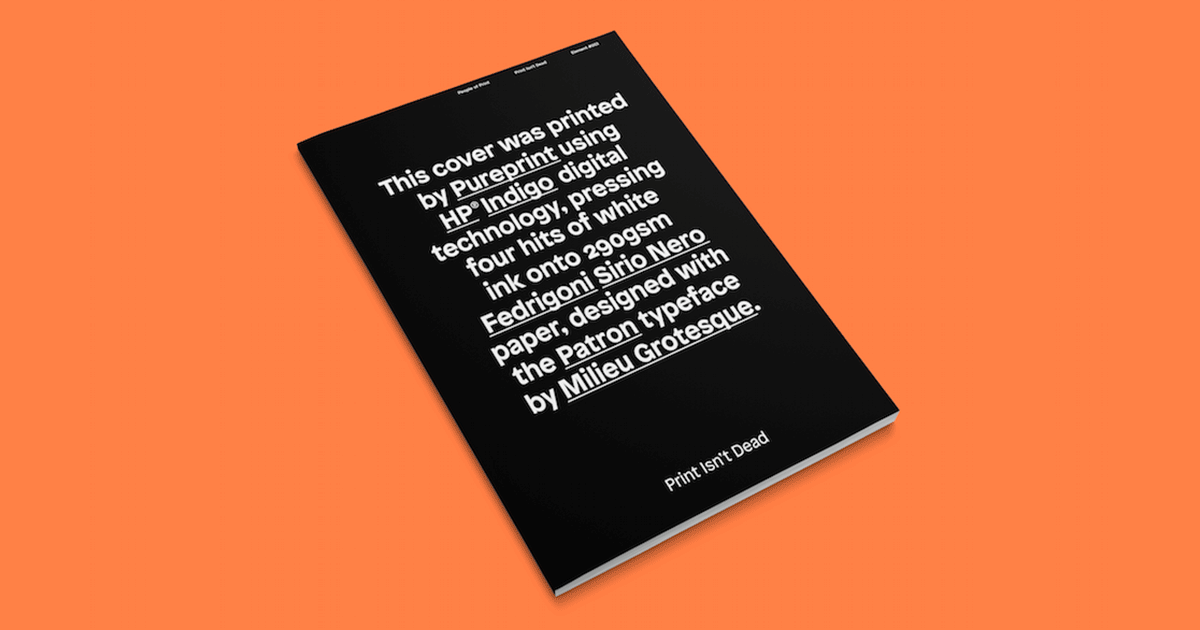
We saw the power of this approach in Issue 3 of Print Isn’t Dead® magazine, where 1,000 variable covers were produced using HP Indigo. Each cover was different, yet each maintained the same standard of finish with multiple hits of white ink onto black paper (almost like a screen print effect). That project demonstrated how digital print can elevate an edition rather than dilute it.
The Matchday Edition operates on the same principle. Personalisation is not a novelty layered onto a mass print run. It is embedded into the production logic from the beginning. Offset printing would struggle to accommodate fluctuating demand and individualised content without introducing financial risk. Indigo technology removes that pressure and makes short-run, high-quality personalisation commercially viable.
From a production standpoint, this is digital print being used exactly as intended.
The Future of Personalised Sports Programmes
For years, the conversation around matchday programmes has centred on decline. Falling sales. Rising costs. Digital disruption. What this project suggests is more nuanced.
Print has not become irrelevant, generic print has.
When a printed object reflects a specific moment, carries personal meaning and is produced only when genuinely wanted, its value increases. The Matchday Edition is closer to a limited-edition zine or commemorative photobook than to a disposable preview booklet. It reflects a wider movement across contemporary print culture, where editions may be smaller but their emotional impact is significantly greater.
If the model proves sustainable across a full season, it is unlikely to remain confined to football. Concerts, festivals, exhibitions and conferences all revolve around live narratives. A post-event printed record, produced on demand and personalised for attendees, offers a compelling model in each of those spaces.
The lesson for the print industry is clear. The future is not about printing more. It is about printing with purpose. When print becomes commemorative rather than informational, it becomes much harder to replace.
Discover more from People of Print
Subscribe to get the latest posts sent to your email.


