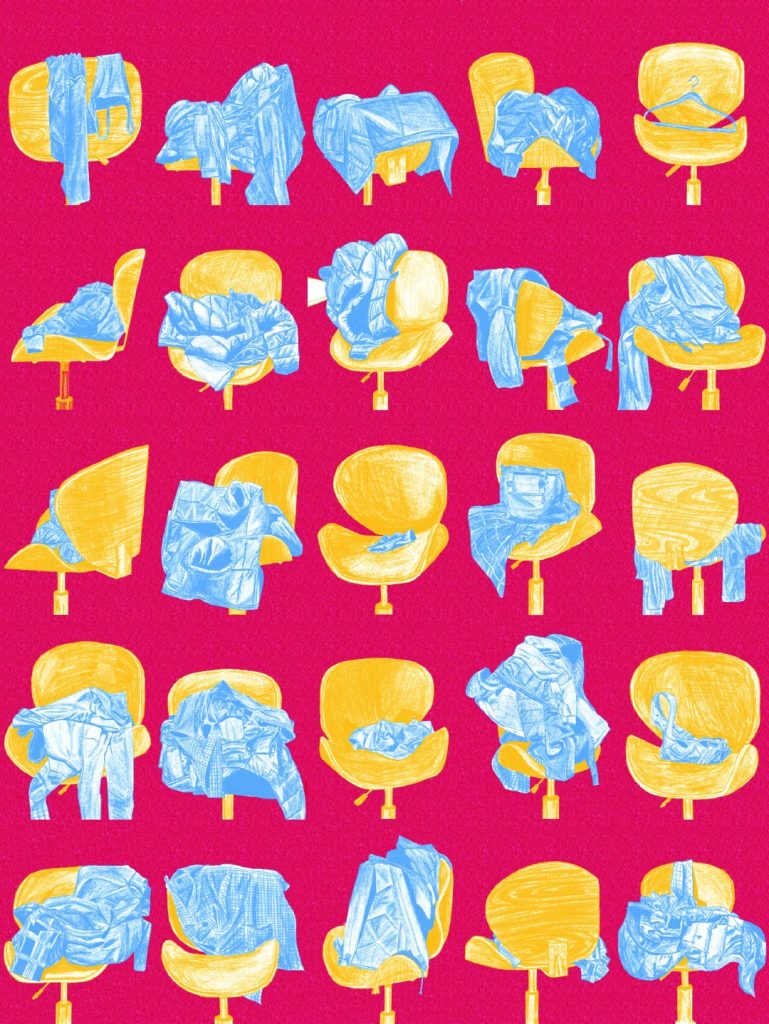
Dirty Laundry is a series of 53 intuitive illustrations by Shrivaani Poddar, a multidisciplinary graphic designer currently studying at the Glasgow School of Art. What began as a casual sketching exercise evolved into a quietly powerful body of work rooted in observation, repetition, and metaphor.
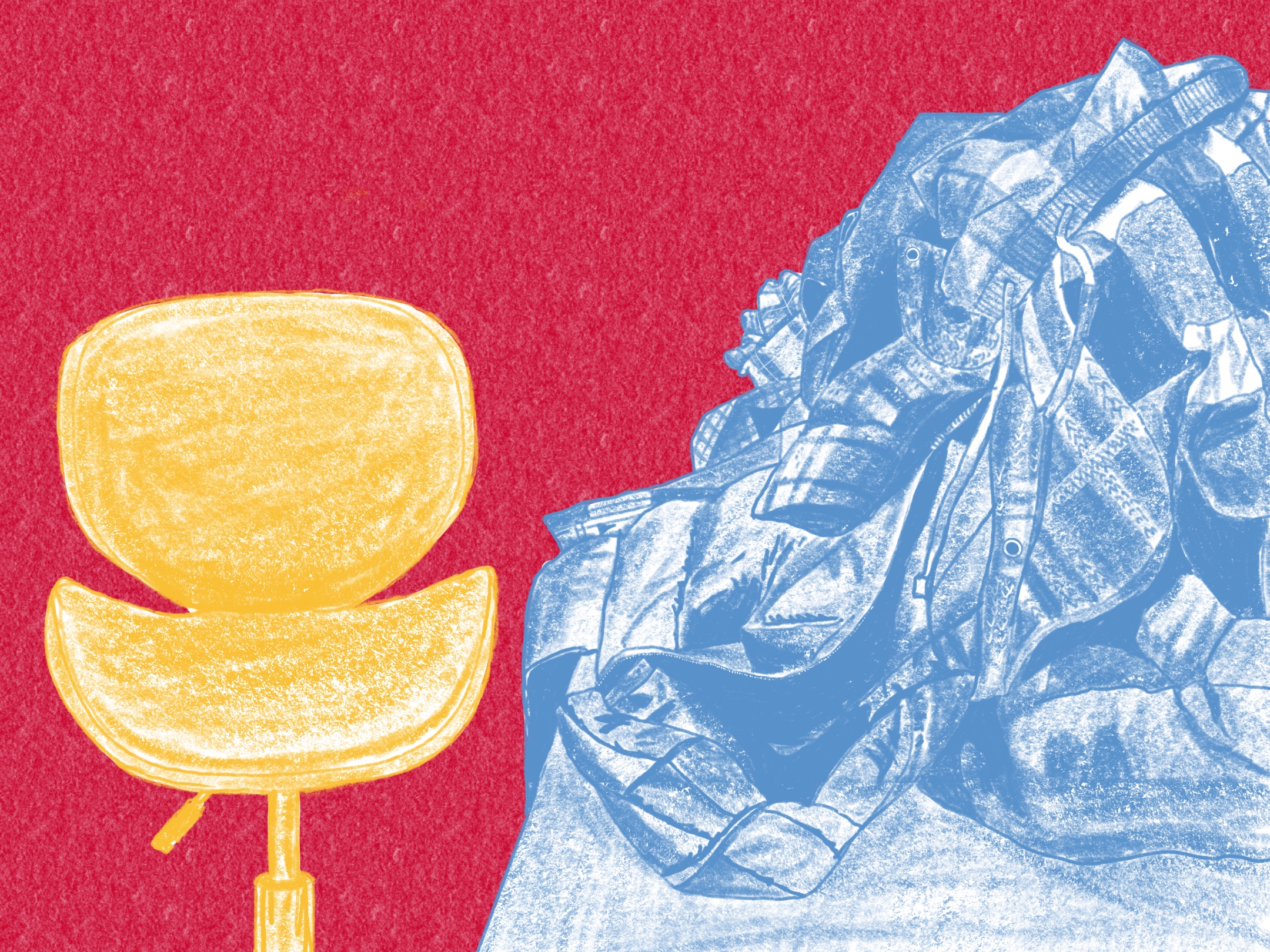
The series started simply. During a moment of boredom, Shrivaani looked up and began drawing what was directly in front of her: a chair piled with clothes. With only her iPad at hand, she opened Procreate and used the familiar primary colours she often returns to in her work. What began as a spontaneous sketch soon became a near-automatic ritual.

Each illustration captures a different variation of the same everyday scene. Shirts slump over chair backs. Sleeves tangle. Fabrics collapse into soft, chaotic forms. The repetition of subject matter allows subtle shifts in colour, composition, and gesture to emerge. Through this process, the act of drawing became less about the object itself and more about entering a state of creative flow.
Over time, Shrivaani realised that the work resonated beyond her own space. The “chair pile” is almost universal. It is a domestic constant, a quiet presence in bedrooms and studios alike. The title Dirty Laundry plays on both literal and metaphorical meanings: the physical clutter we postpone dealing with, and the personal messes we carry internally.
By focusing on something so ordinary, the series invites reflection on routine, avoidance, and shared human habits. The illustrations do not dramatise the mess. Instead, they sit with it. They acknowledge it. They make space for it.
Shrivaani Poddar’s broader practice explores the relationship between typography, illustrative graphics, and culture. Her projects often draw from both personal and collective experiences, using design as a medium for identity and narrative. Dirty Laundry reflects this approach, transforming a mundane domestic detail into a visual meditation on familiarity and quiet vulnerability.
Illustrated in Procreate, the series demonstrates how digital tools can capture intimacy and immediacy when guided by instinct and repetition.