

Artist Chong Kar Lai’s project The Heirs Who Shouldn’t Exist begins with a contradiction. Raised in a pork butcher family in Malaysia, a Muslim-majority country where selling pork has become increasingly difficult, Kar Lai grew up within a trade that was slowly disappearing. What was once a generational livelihood shaped by cultural practice and daily labour has become harder to sustain in contemporary conditions.
Instead of preserving the business in its traditional form, Kar Lai and her sister have chosen to transform it.
Working together under the name Grimmy Granny, the sisters reinterpret their family’s butcher heritage through art. Pork, once the central product of the family trade, is translated into images, objects and materials across digital drawing, clay works and documentary photography.
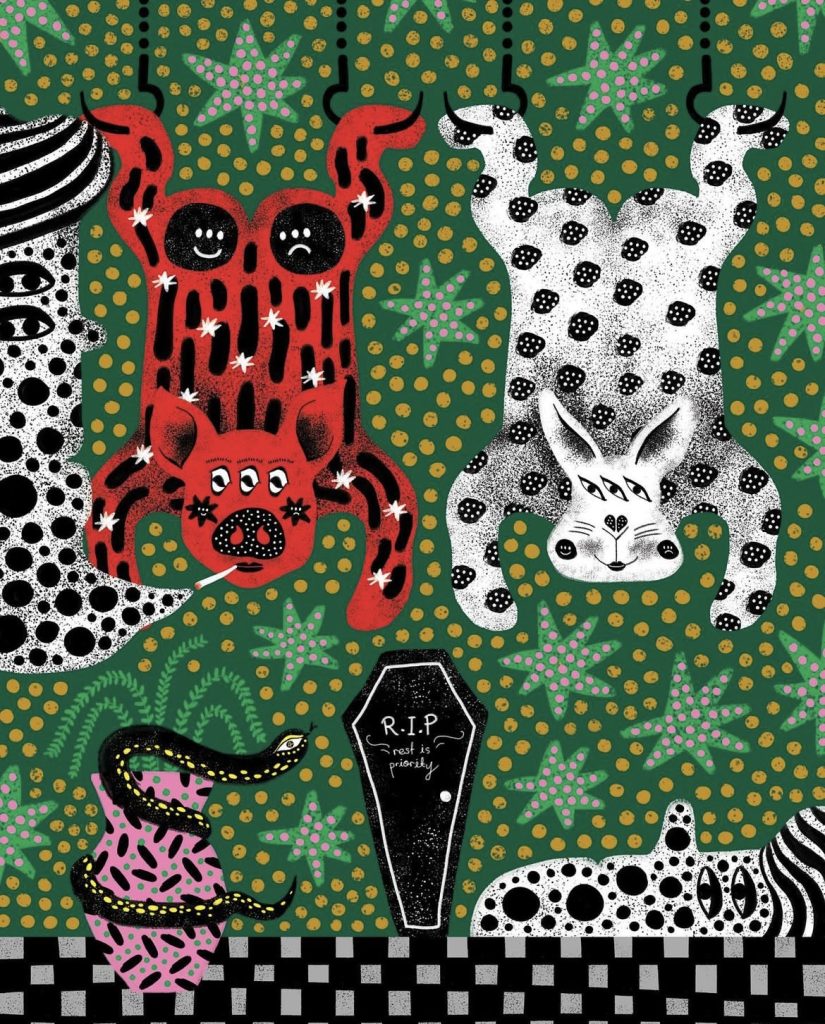
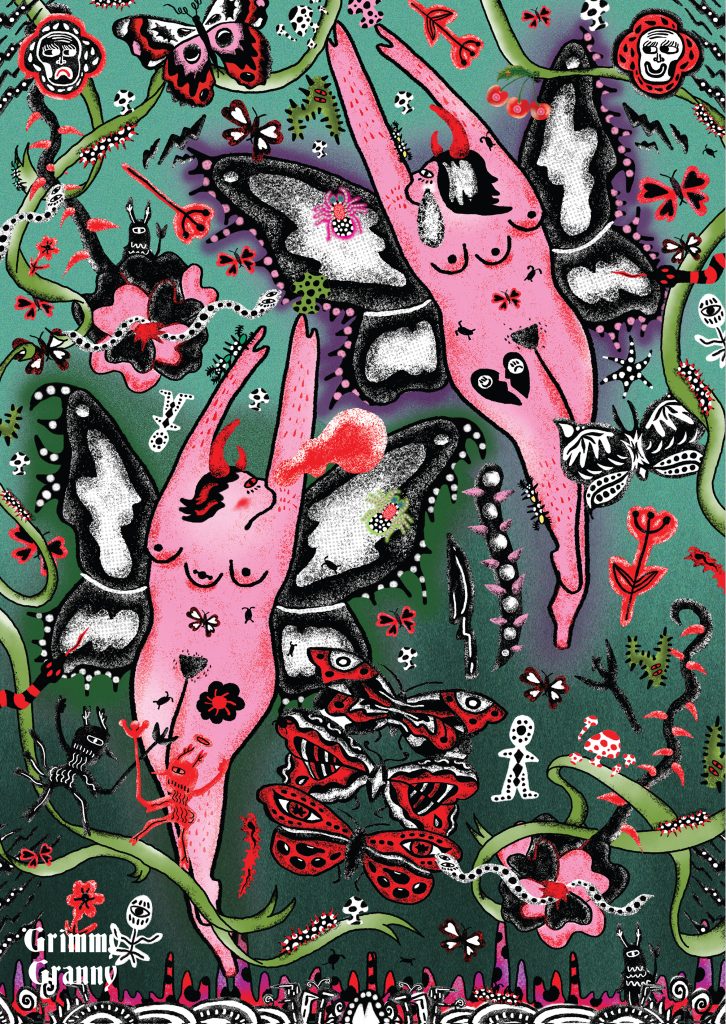
“We are still ‘selling’ pork,” Kar Lai explains. “But no longer as meat.”
The project centres on digital drawings of their former butcher home, alongside images and artefacts that carry traces of the family’s past. The visual language is intentionally raw and chaotic, echoing the sensory intensity of wet markets, roasting pits and pig farms that shaped the sisters’ childhood.
Tracing back through generations of fathers and grandfathers, knives and butchery once defined the family’s world. As children, the sisters followed relatives to pig farms, watched pigs roasting over fire and moved through the noise and heat of market life. These early experiences now inform the dense, layered aesthetic of their work.
Pattern sits on pattern. Texture sits on texture. Nothing exists in isolation. This maximal approach reflects how memory and inheritance function within the project. The work becomes a visual archive of family history, reassembled through contemporary artistic practice.

The project also addresses a deeper tension within traditional inheritance structures. Butchery has historically passed from father to son. In families where daughters now carry the name, the continuation of that trade becomes uncertain.
“When daughters carry the family name, tradition begins to crack.”
Rather than accepting the end of that lineage, the Grimmy Granny sisters shift the meaning of the trade itself. By transforming pork into a symbolic material within their art, they create a new form of continuity that acknowledges cultural, religious and economic pressures while refusing to erase the past.

Grimmy Granny describes itself as “the chaotic brainchild of two sisters trained in art but born to butcher blood.” Their work sits somewhere between instinct and memory, translating the noise, labour and contradictions of their upbringing into a visual language that is deliberately rough, excessive and unapologetically personal.
In doing so, The Heirs Who Shouldn’t Exist becomes both an act of preservation and resistance.
ARTIST LINKS
Website


