

Los Angeles based artist Liesel Plambeck is bringing renewed attention to aquatint etching, an often overlooked and highly demanding printmaking technique, through a contemporary body of large-scale works on paper. Rooted in minimal form, colour, and balance, the series explores harmony and emotion while foregrounding the cultural value of slow, time-intensive craft in a fast-paced world.
The works were created in close collaboration with French master printmaker Pascal Giraudon, whose decades-long experience with copper plate and woodblock processes played a central role in shaping the project. Together, Plambeck and Giraudon developed a series of prints that rely on repeated rounds of aquatint, biting, and proofing, with some works taking years to reach completion. The process is deliberately laborious, demanding patience, precision and sustained attention.
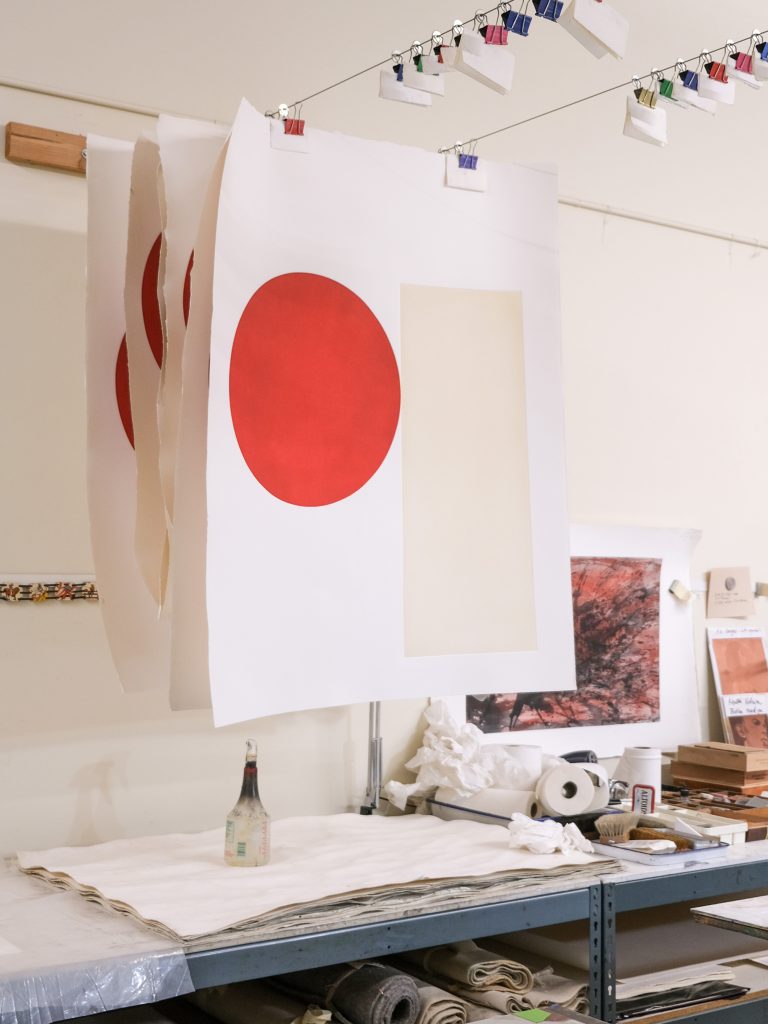
One of the central works, Red Circle, White Rectangle, began as a commissioned piece and evolved into a year-long collaborative investigation. Supported by a patron who encouraged deep experimentation, the project became an immersive study of aquatint etching. Developed alongside Blue Circles, the copper plates moved through multiple stages of reworking to build depth, texture, and tonal variation. Rather than aiming for mechanical perfection, the process focused on cultivating what Giraudon refers to as feeling within the printed surface.
“I find that at nearly every stage of what I do, there is so much beauty,” Giraudon notes, reflecting on the slow evolution of the plates and the cumulative nature of the work.
A key concern throughout the collaboration was preserving the presence of the hand while maintaining a rigorous sense of precision. Plambeck’s compositions are reduced to their most fundamental elements, yet the surfaces carry subtle irregularities that reveal the physical labor behind them. Aquatint’s capacity for tonal richness and depth allows these restrained forms to hold emotional weight without relying on complexity or excess.
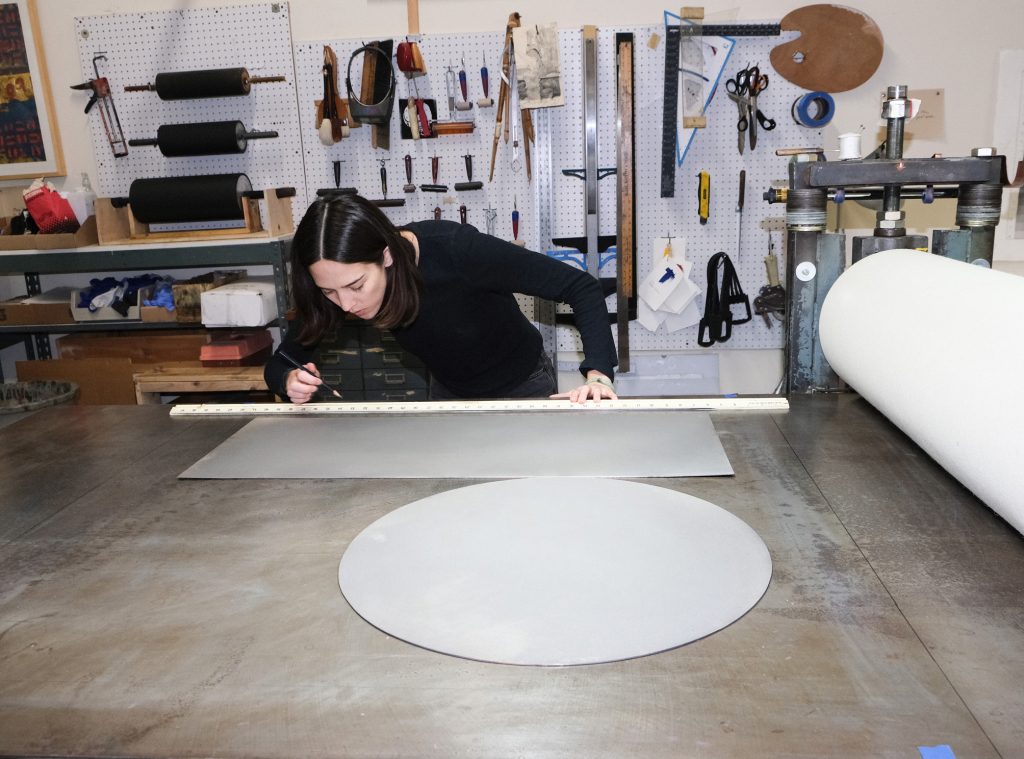
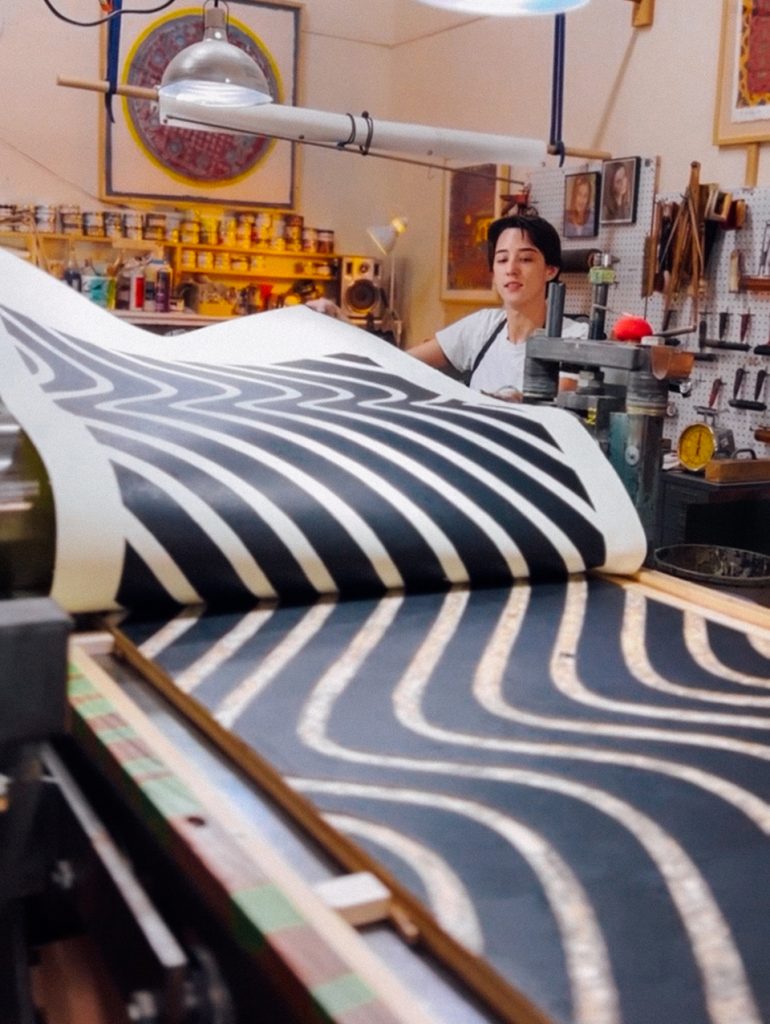
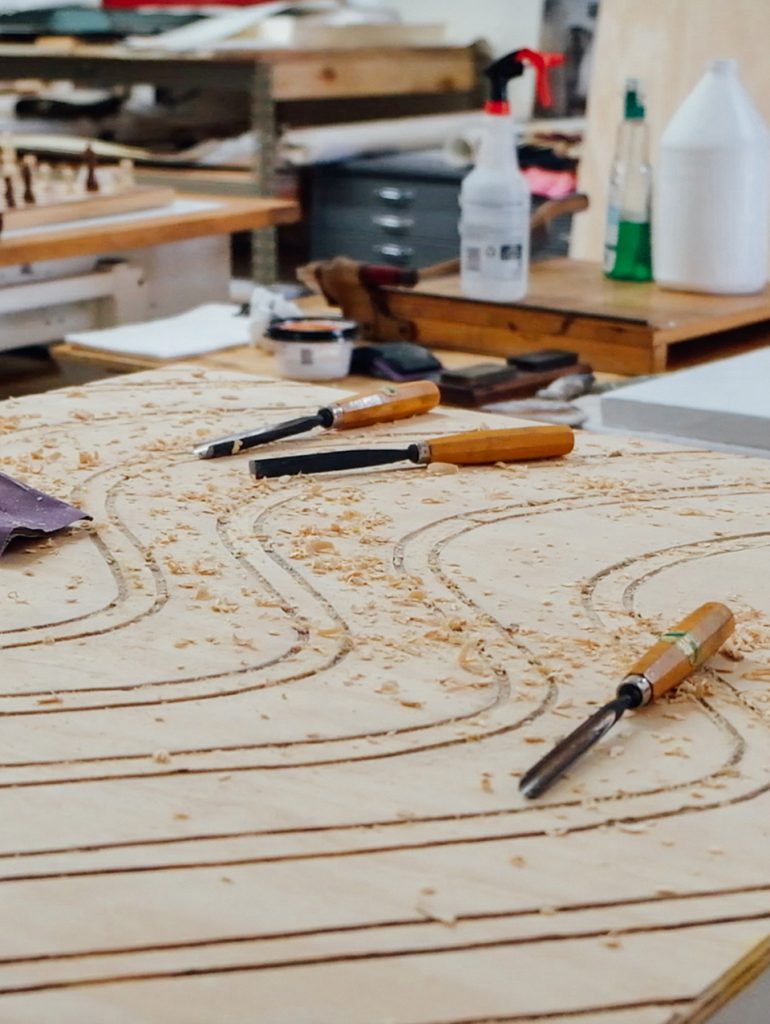
Alongside copper plate etching, the project also incorporates woodblock processes, further emphasising material engagement and craft knowledge. The scale of the works challenges conventional expectations of aquatint, positioning the technique not as a historical footnote but as a living process capable of contemporary expression.
Plambeck’s broader practice sits at the intersection of abstraction, structure, and emotion. Her work distills visual language to essential shapes and relationships, balancing mathematical precision with expressive freedom. By committing to an increasingly rare printmaking process, she reframes antiquated techniques as relevant tools for present-day artistic inquiry.
The collaboration with Giraudon underscores the importance of transmission and dialogue within printmaking. Rather than treating technical mastery as fixed knowledge, the project demonstrates how shared experimentation can push traditional processes into new territory. In doing so, it argues for the continued relevance of slow making, not as resistance to contemporary culture, but as a necessary counterbalance.
Through aquatint etching, Plambeck’s work invites sustained looking and quiet attention. The prints reward patience in both their making and their viewing, offering a measured exploration of balance, harmony, and emotional resonance shaped by time, craft, and collaboration.
Artist links
Website
Instagram
Process videos
Discover more from People of Print
Subscribe to get the latest posts sent to your email.


