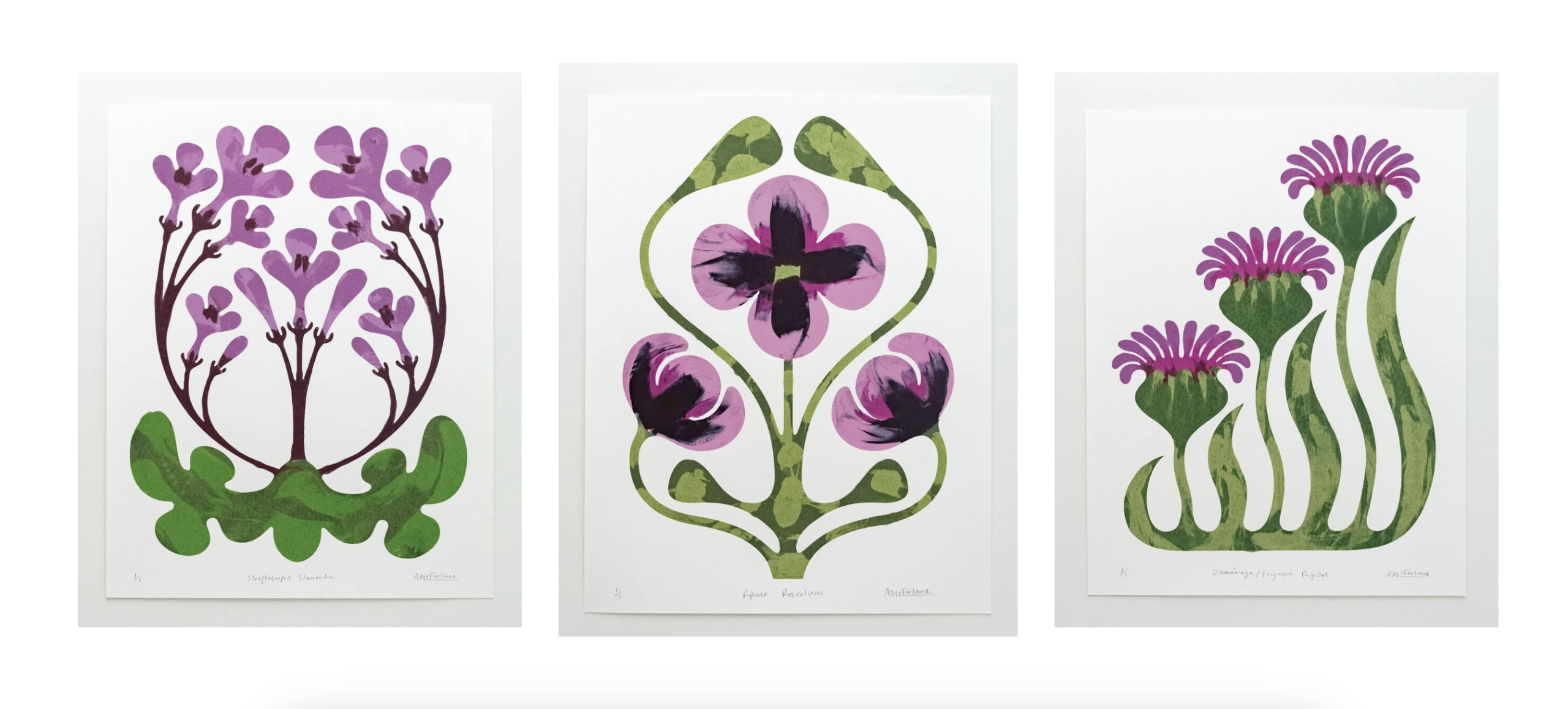
Bio-adversity: Plantae is a body of work by Annika McFarlane that brings biodiversity and printmaking together through process as much as concept. The project celebrates endangered plant species from A to Z, with each plant represented by a single, unique monotype screen print. In total, the series comprises 26 one-of-one prints, making each artwork as rare as the plant it depicts.
The project builds on McFarlane’s earlier Bio-adversity: Animalia, which explored endangered animals through a digital process. For the plant edition, she wanted to push herself further by moving away from the computer and into a more tactile, unpredictable way of working. Having recently begun exploring screen printing, McFarlane was drawn to the medium’s ability to balance her characteristically clean shapes and negative space with texture, variation, and chance.
Working from Malaspina Printmakers in Vancouver, McFarlane was surrounded by artists using a wide range of print processes. Seeing the work of studio mate Gina Ortiz introduced her to the idea of monotyping through screen printing, a painterly approach that involves applying ink directly onto the screen. The discovery proved pivotal. The expressive, one-off nature of screen printed monotypes aligned precisely with the project’s focus on rarity and fragility within the natural world.
To develop the series, McFarlane began by researching endangered plants using the IUCN Red List, selecting one species for each letter of the alphabet. The aim was to build a collection that was both alphabetically complete and botanically diverse. Each plant was then explored through extensive sketching before being refined digitally in Adobe Illustrator, where McFarlane created her screen stencils using vector shapes.

The final printing stage was deliberately demanding. Painting directly onto the screen required experimentation, patience, and acceptance of failure. Many early attempts were discarded, but the process became a self-directed learning curve that allowed the material qualities of ink and screen to guide the outcome. Long nights in the studio became part of the rhythm of the project, with each successful print emerging as both an image and a record of its making.
Every print in Bio-adversity: Plantae exists as a single edition, reinforcing the project’s central idea. The method does not allow for replication, only presence. As McFarlane explains, “Nothing brings me more satisfaction than challenging myself, learning something new, and having a process that perfectly supports the concept of a body of work. The one-of-a-kind nature of monotyping fit perfectly with highlighting how rare and special these endangered plants were.”
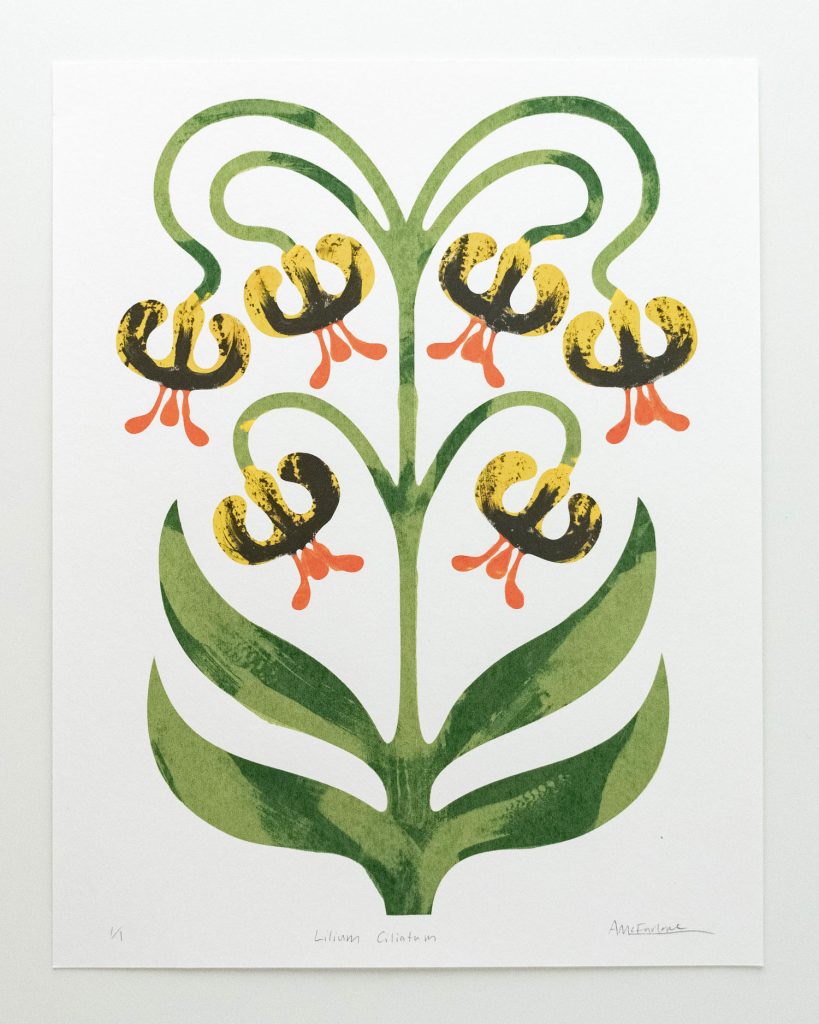
Through Bio-adversity: Plantae, McFarlane demonstrates how printmaking can operate as both medium and message. By pairing environmental research with a labour-intensive, non-repeatable process, the work asks viewers to consider value, scarcity, and attention in both art and nature.
Discover more from People of Print
Subscribe to get the latest posts sent to your email.