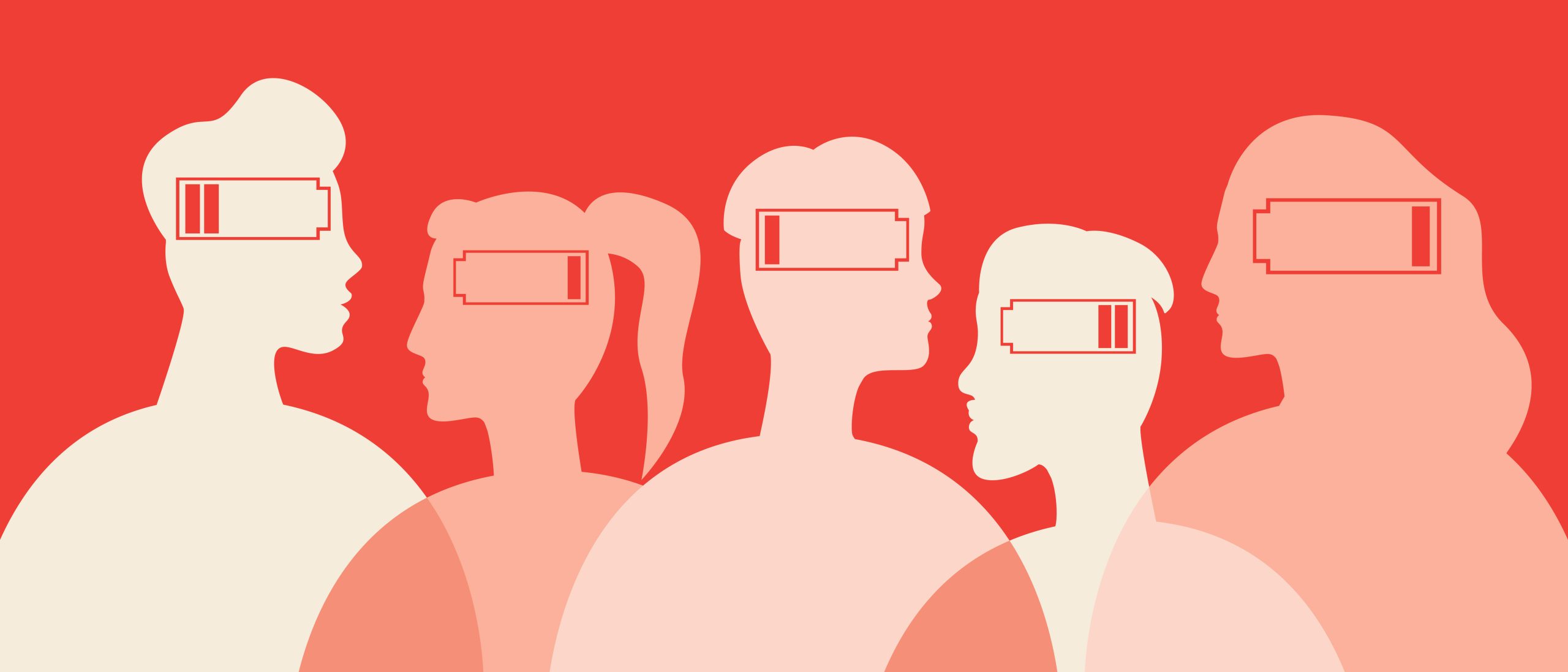
Working for yourself today means carrying a lot.
You are doing the creative work and the admin, marketing, socials, accounts, emails and contracts. You are navigating relentless news cycles, rising costs, family responsibilities, kids, and surprise bills that land out of nowhere. It can feel like your brain never fully switches off.
We asked our community a simple question. How do you shut off from work? What actually helps you step away, even briefly? The responses were generous, funny, vulnerable and sometimes contradictory. They reveal not just coping mechanisms, but the reality of creative life in 2026.
Nature as a Necessary Reset
The most repeated answer was simple. Nature.
Some kept it short. “Nature.” Others expanded. “Walking in nature, cycling, climbing. Cooking.” One creative described it as essential to “feel the wind, listen to birds, be surrounded by trees, to reconnect with who I am and to get away from screen-time, AI and all the other digital and ‘superficial’ stuff.”
Another comment distilled it beautifully:
“Nature. Disconnect from machinery and digital interfaces. Even if for 20-30 minutes. Touch grass. Sun on face. Wind and rain on skin. Anything but digital light.”
For a community deeply embedded in digital platforms, this pattern is telling. Switching off does not always mean doing nothing. It often means stepping outside of the interface.
Movement as Mental Survival
Running appeared again and again. So did gym classes, cycling, swimming, squash, tennis and boxing.
One person put it plainly:
“I ride my bike until I cannot. The only way out of my head is through my body.”
Another reflected on the blurred line between work and rest:
“As a creative I personally don’t think you ever ‘step away’, and turn a switch to ‘off mode’; there’s down time and decompression time where ideas usually come more organically – a run usually clears the head.”
Movement is not about optimisation. It is about release. It creates a boundary between thought spirals and physical rhythm, and it is often the fastest route back to clarity.
Making Without an Audience
Interestingly, many creatives shut off by continuing to make, but privately.
“I love to crochet 🧶 it helps me unwind after a long day of printing and packing orders.”
“💯 Embroidery and knitting really soothe my anxious brain.”
“I sew!”
One comment captured the spirit perfectly:
“Making something just for making sake. Not showing anyone. Keep the fun.”
Another shared a longer reflection:
“Running & strength training, meditation, drawing with no pressure for results, smashing the midi keyboards making terrible music 🎶 Also, reading or watching anime before bed. I think relaxing is important, but so is play.”
There is something important here for our industry. Creativity without pressure. Process without performance. No metrics, no algorithms, no need to share. Just play.
Real Connection Over Productivity
Time with family and friends appeared frequently.
“Kids!!! 😅❤️”
“Working out and gaming with my kids.”
“Nature weekends and board games with family.”
“Reading, exercise, time with family.”
One creative wrote:
“Calling my funniest friends. Having intimate gatherings with good food, good people, and great conversations that take your mind off of making money.”
Another offered practical wisdom:
“My no. 1 tip is ditch ‘keeping up’ with the news. It will still trickle in. You don’t have to keep up. Focusing on your own circle of control doesn’t mean you don’t care.”
In a culture that rewards constant output, choosing presence can feel radical.
Drawing Lines in a Digital World
Several people spoke directly about digital boundaries.
“I’ve deleted IG from my phone, and only access it from my computer. Less mindless doomscrolling.”
“Disconnected international travel.”
“A Sabbath, completely offline, is essential.”
These are deliberate acts. They acknowledge that creative work today is inseparable from platforms, but they refuse to let platforms dictate every waking moment.
Humour, Friction and Fatigue
Not everyone felt they could switch off.
“Lol wait you guys shut off?”
“Don’t shut.”
“Screaming at the mirror works pretty well for me 😅”
One person admitted, “Even looking at this list makes me want to cry.” Another said, “Yup and I feel like I’m failing on half of that list. It’s overwhelming at times and just want to be creating!”
There is honesty in these responses. Burnout is not theoretical; it is lived. The pressure to monetise creativity, to keep up, to wear every hat, is real.
And yet, even within that pressure, people are experimenting. Sewing. Running. Cooking. Touching grass. Deleting apps. Lighting candles. Riding bikes until they cannot.
A Collective Realisation
One comment lingers:
“As a creative I don’t think you ever ‘step away’.”
Perhaps that is true. Perhaps there is no hard off switch. But what the community responses show is that there are shifts. From screen to soil. From thinking to moving. From performing to playing. From scrolling to connecting.
Nature helps. Movement helps. Making without pressure helps. Real connection helps. And Digital boundaries matter.
Most importantly, rest is not a weakness. It is maintenance. In a creative economy that asks you to be everything at once, protecting your energy might be the most important project you work on.

marcroy@peopleofprint.com
- Nils Leonard on Craft, Culture, and Why Print Still Matters - April 28, 2026
- Our time at OFFF Festival 2026 | 10 Key Takeaways - April 19, 2026
- More Than Fish: Donna Cyril at Sasoon Dock - April 4, 2026