After a decade of growth, the French type foundry rebuilds from the ground up.
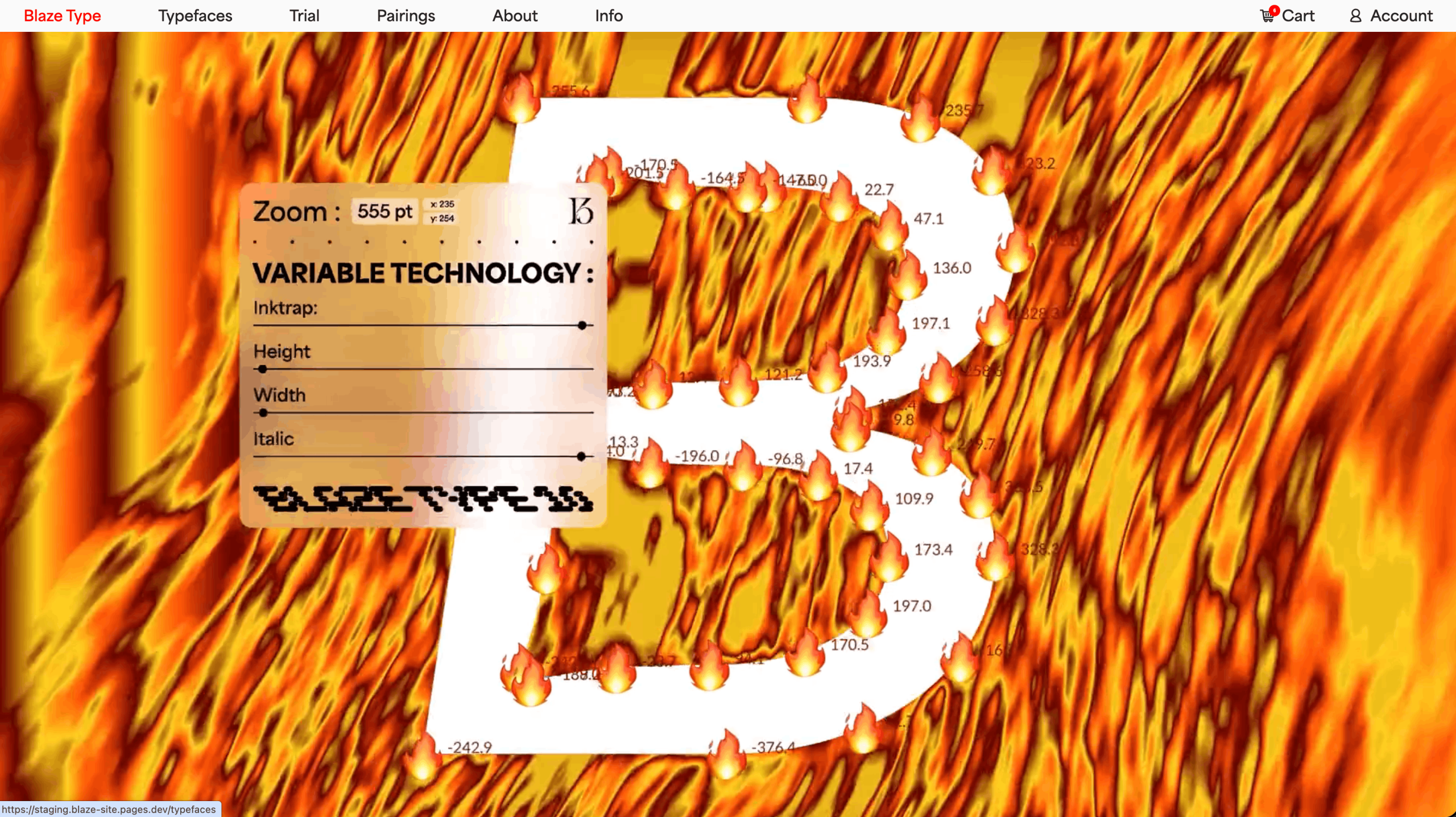
After a decade of shaping contemporary type design, Blaze Type has launched a completely rebuilt version of its website. More than just a visual refresh, the new platform is a considered response to the realities of a growing catalogue and an evolving audience. It is the third version of blazetype.eu in the foundry’s ten-year history, and by far the most ambitious.
The decision to rebuild came from a clear need. The previous site had become slow and increasingly difficult to navigate, making it harder for users to explore an expanding library of typefaces. Rather than patching over these issues, the team chose to start again from the ground up.
“The idea of rebuilding the website had been with us for a while,” says founder Matthieu Salvaggio. “Not as an ambition, but as a necessity. The old experience no longer reflected the way we wanted people to interact with our work.”

Over the course of more than a year, every element of the platform was reconsidered. Design, development, art direction and content were all rebuilt with a clear and consistent direction, resulting in a site that feels both focused and intuitive.
“We kept a clear direction from the start and stuck to it,” Salvaggio explains. “It wasn’t about dramatic changes, just careful decisions made over time by a small team that cared about getting it right.”
The project was developed in close collaboration with UXO x Nuuk Agency, including Sebastien Bossi Croci, Willy Clauzel, Xiao Fei Yan and Raphael Fremont, who helped shape the user experience from the earliest stages. For a studio of Blaze Type’s size, the scope of the undertaking was considerable, but Salvaggio describes the process as focused rather than chaotic. No dramatic pivots, just a lot of careful, sustained work.
One of the most noticeable improvements is to the navigation of the type catalogue. The new system is faster, more responsive and designed to feel effortless, allowing users to browse and discover typefaces without friction.
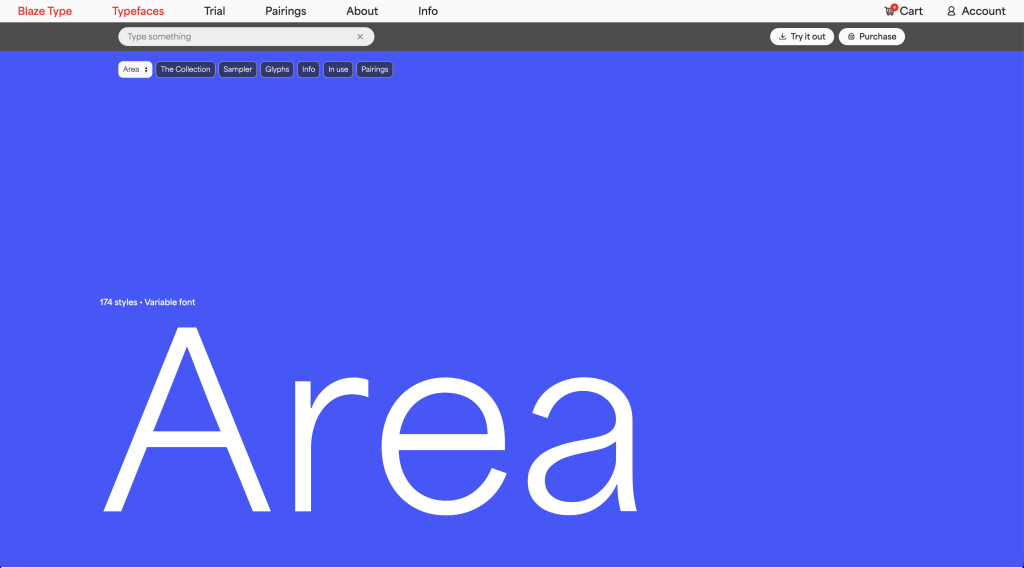
“The goal was simple,” Salvaggio says. “You should be able to find what you’re looking for without thinking about it.”
The redesign also revisits the original colour principles from the earliest version of the Blaze Type website, grounding the new platform in its own history while refining its visual identity. It is a small but deliberate choice, and one that gives the site a sense of continuity that a decade of work deserves.
Alongside these structural updates, the team has introduced a long-awaited type pairing tool. Users can now test fonts together directly on the site, explore combinations and make more informed decisions before committing to a purchase. It is the kind of feature that sounds straightforward but takes real thought to build well.
“It’s something we’ve wanted to build for years,” Salvaggio adds. “Typography doesn’t exist in isolation, so it made sense to create a tool that reflects how designers actually work.”
Founded in 2016, Blaze Type has established itself as one of the more distinctive voices in independent type design, with a catalog of variable fonts used across global brands, cultural institutions and independent studios worldwide. Salvaggio is also the author of How to Design Fonts, a book aimed at making type design accessible to a broader audience, and one that speaks to the foundry’s wider belief that good type should not be mysterious or exclusionary.
The new website reflects both the maturity of the foundry and its ongoing commitment to clarity, usability and thoughtful design. It is not just a platform to showcase type, but a tool built for the people who use it. The new site is live now at blazetype.eu. If you have not visited in a while, it is worth the trip.
Visuals courtesy of Blaze Type
Blaze Type
Website: blazetype.eu
Instagram: @blazetype
Matthieu Salvaggio Type designer, art director and author based in France. Founder of Blaze Type. Author of How to Design Fonts.
UXO x Nuuk Agency Creative collaborators on the new site: Sebastien Bossi Croci, Willy Clauzel, Xiao Fei Yan and Raphael Fremont.


Want to know more about our membership? Give us an email at members@peopleofprint.com.