
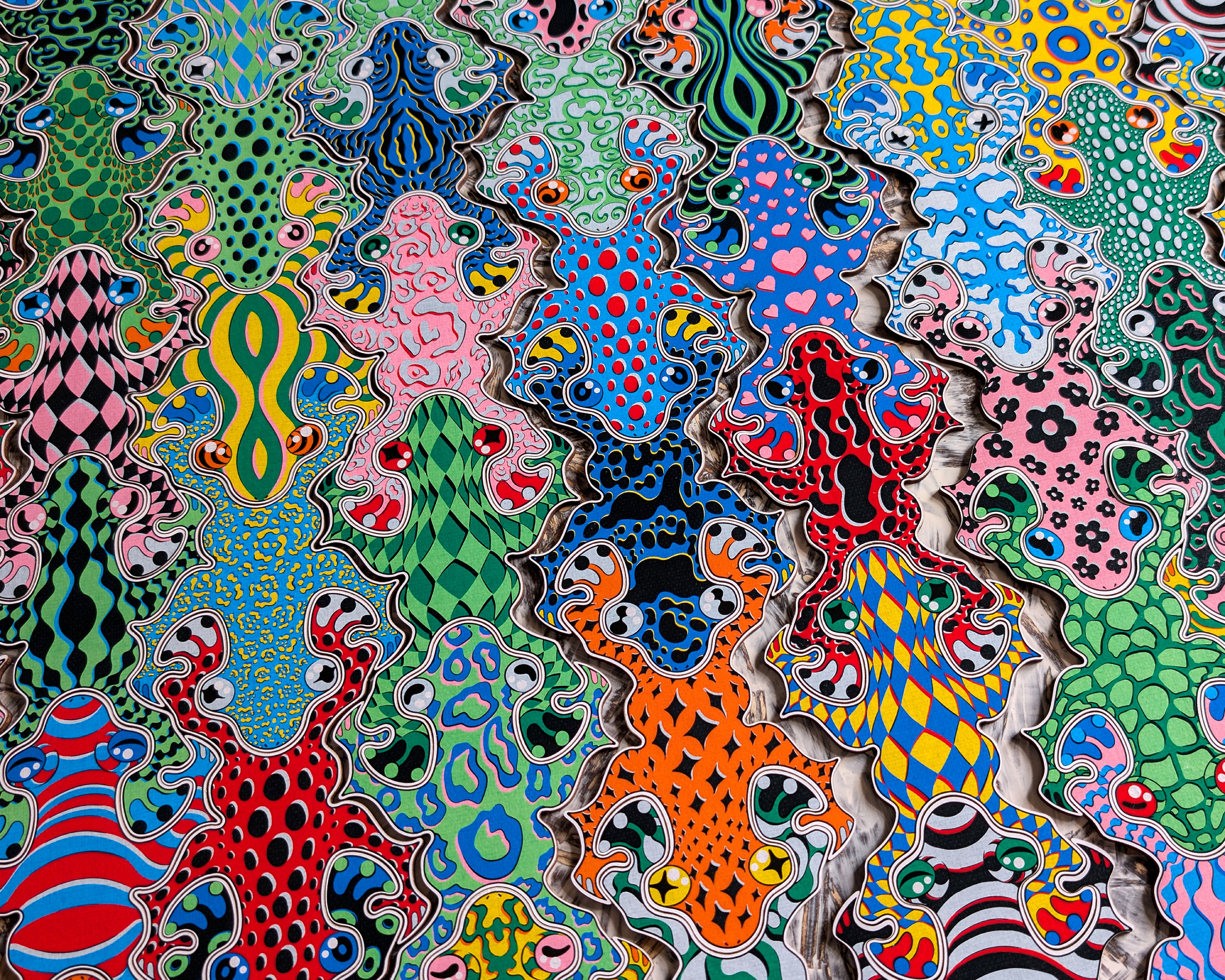
British artist Sam Wilde invites V&A visitors to co-author a vast hand-drawn frog tessellation, distributing over one thousand unique tiles in blind-box booster packs to create a live, shifting public artwork shaped by chance and individual choice.
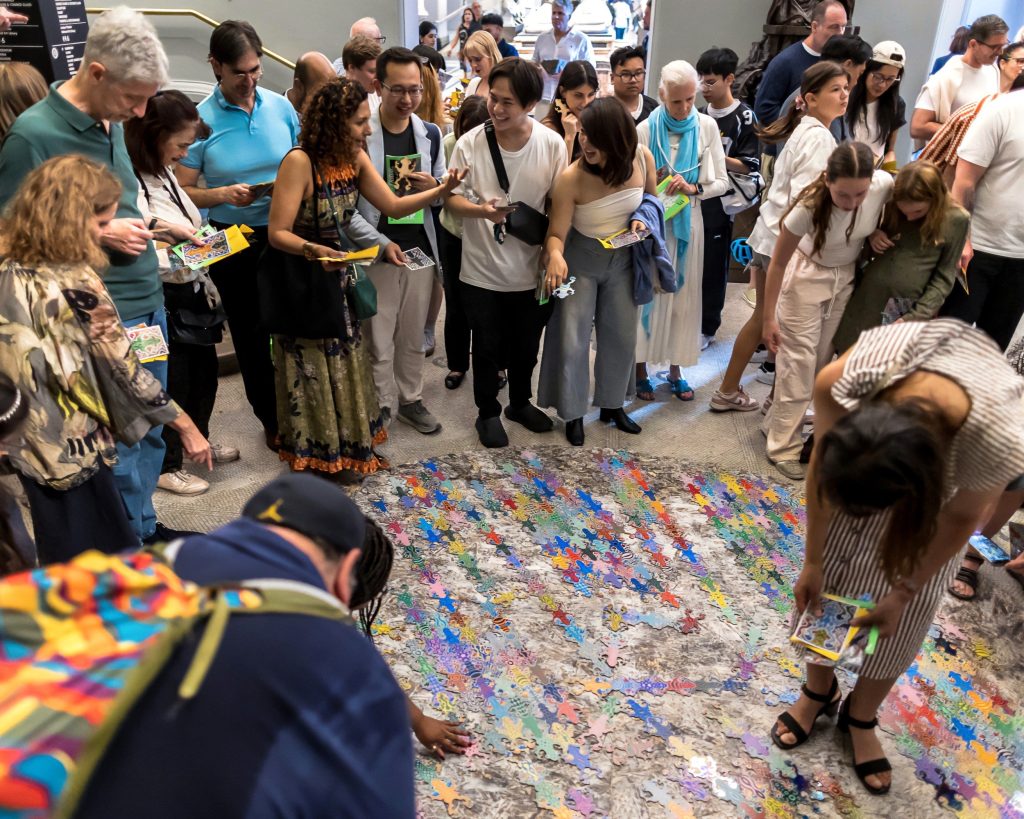
More than one thousand frogs. Each one hand-drawn, unique, cut from FSC-certified birchwood, sealed in a recyclable foil blind box with an identifier card bearing the frog’s individual name on the reverse. At the V&A Museum in London, visitors received one, placed it, and became co-authors of a living artwork that no one had designed and no one could fully predict.
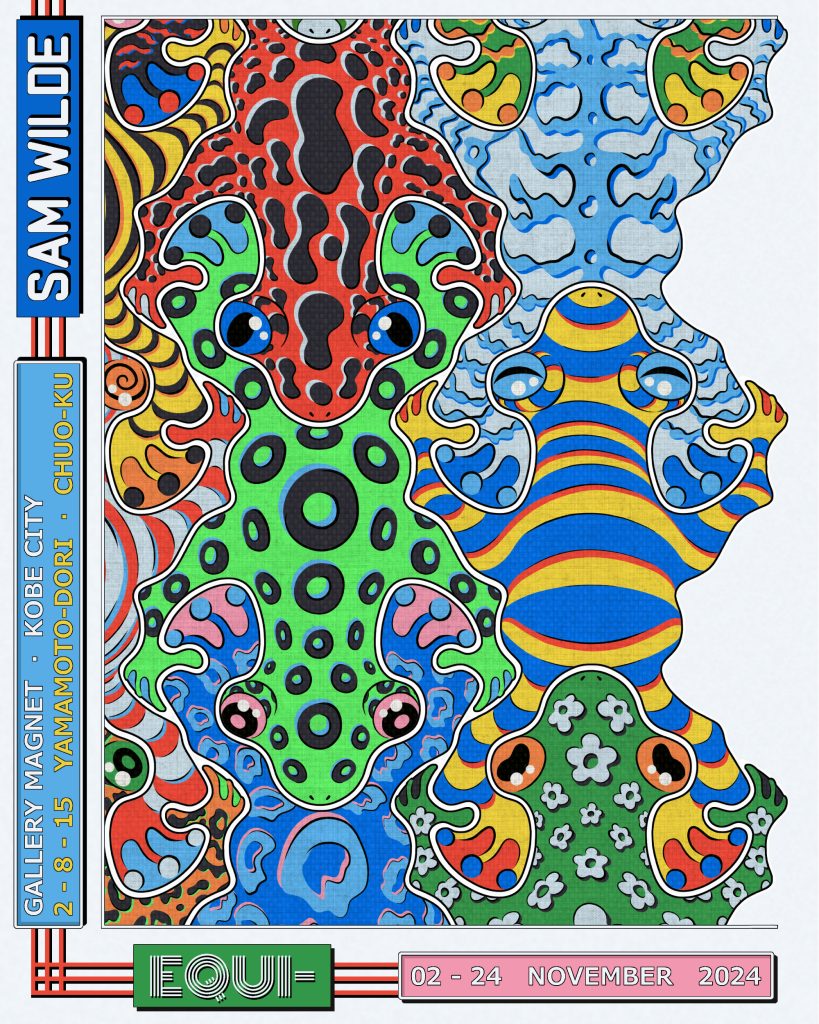
Equi- and its sequel Equi- II are interactive art installations rooted in a deceptively simple premise: what if every contribution to a collective artwork remained individually recognisable? In Yayoi Kusama’s Obliteration Room, individual marks disappear into the whole. Wilde inverted that logic. Each tile interlocks with the others in an ever-shifting tessellation of Escher-derived frog geometry, but each remains traceable to the hand that placed it. Together the tiles form infinite configurations, shaped by chance and personal choice, never resolving into a single fixed image. “I believe society is hungry for these moments,” Wilde says. “In an age of division, Equi- offers analogue play, human connection and a sense of being part of something larger than yourself. It shows how patterns can be more than decoration; they can be whole worlds we build together.”
The number one thousand draws from the Japanese tradition of senbazuru, where folding one thousand paper cranes becomes an act of devotion and transformation. The project began during an artist residency at AiR Kobe, supported by the Daiwa Anglo-Japanese Foundation, where Wilde was shaped by further Japanese references: Mirei Shigemori’s gardens at Tofukuji Temple, where ordered stone geometries dissolve into moss, and the spatial concepts of mo and ma, the space in between and what is left untouched, suggesting that meaning lives not only in the tiles but in the quiet relationships between them.

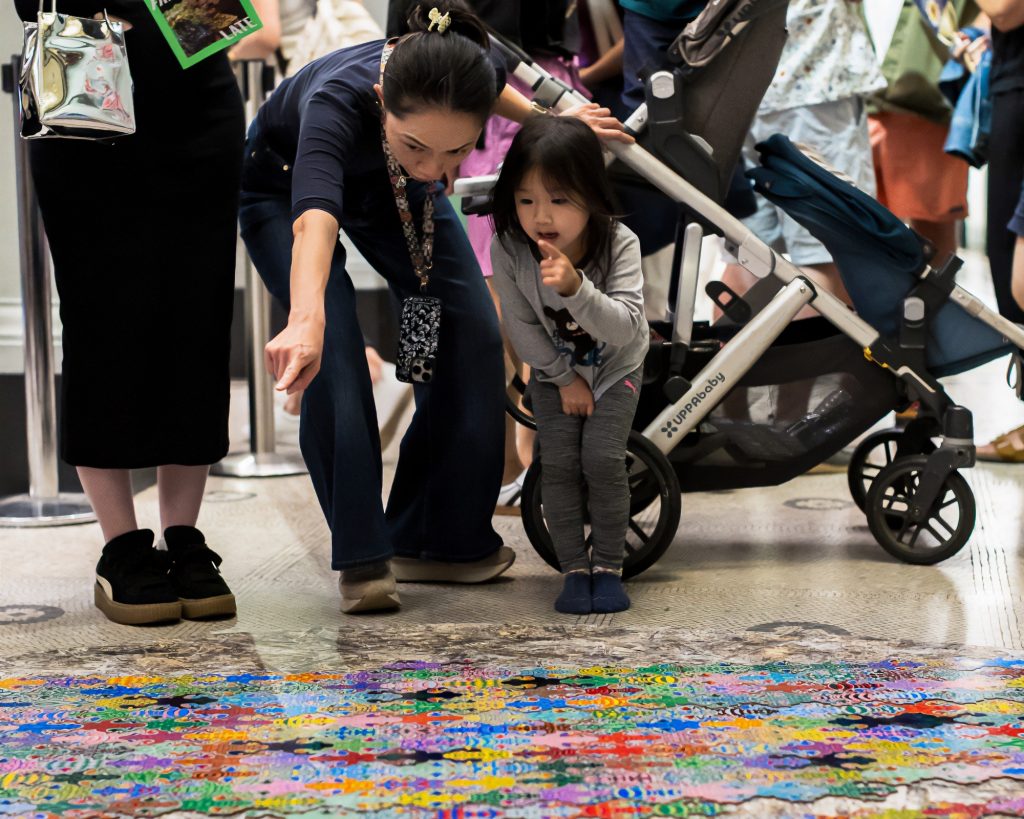
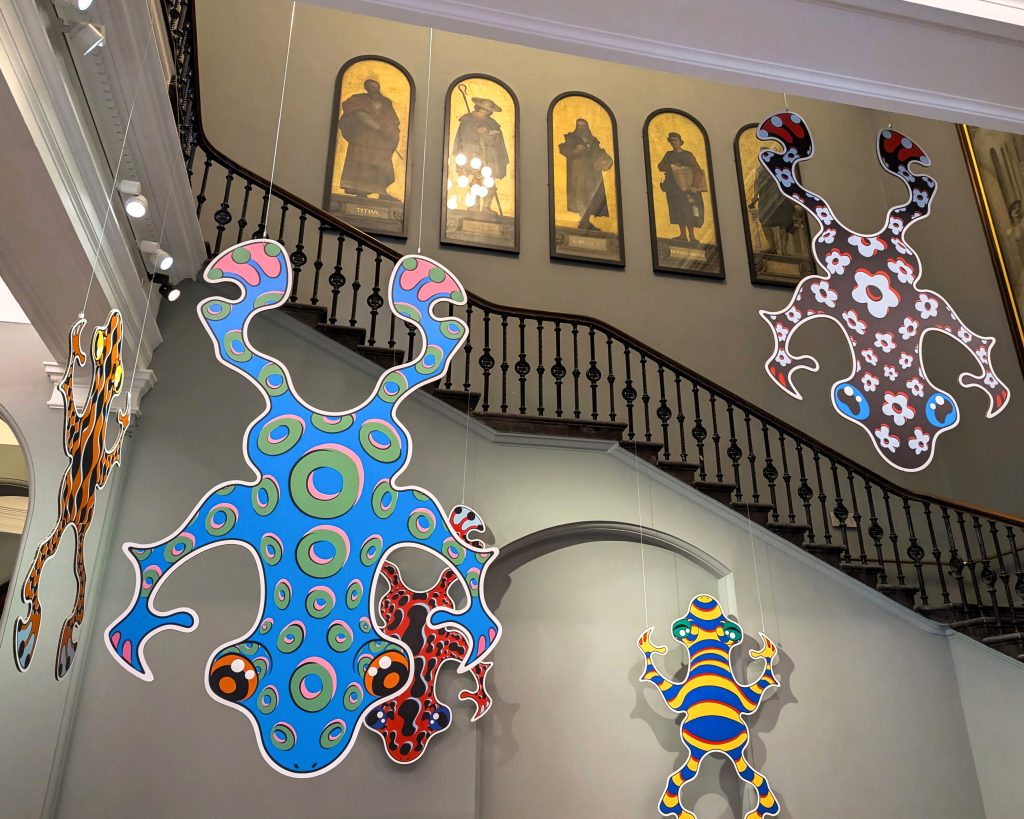
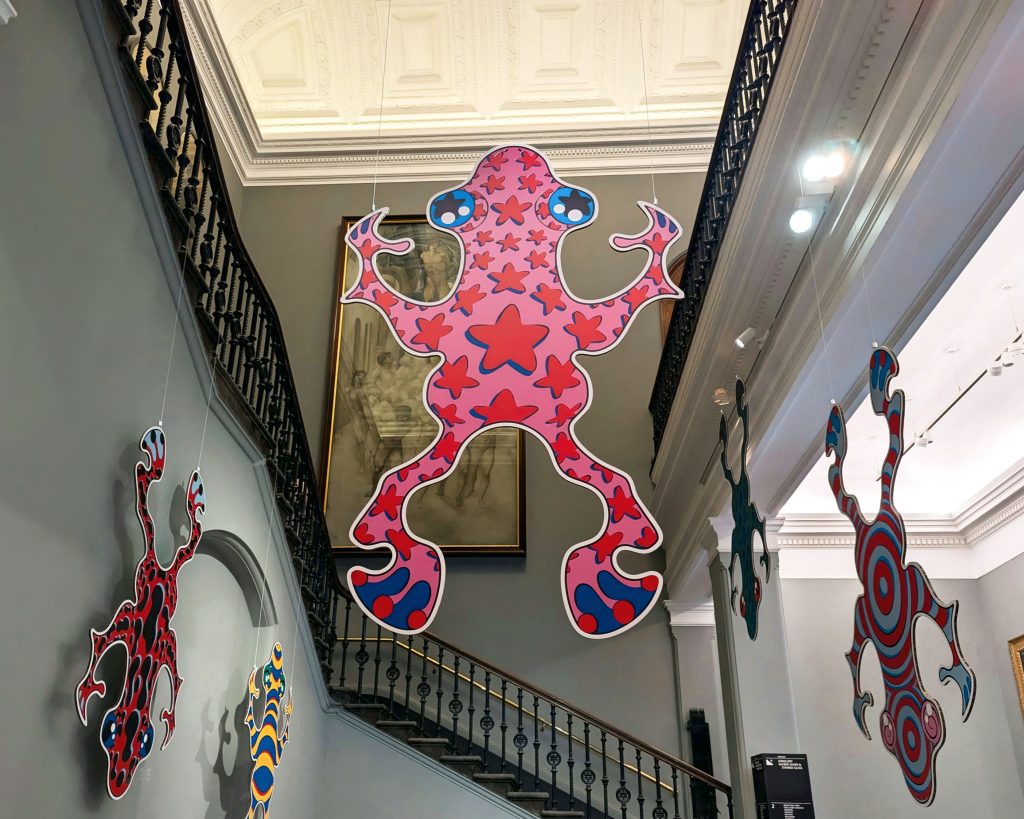
The blind-box format is integral rather than incidental. Originating in China and now global, it carries the thrill of collecting, trading and anticipation. Equi- II included a less than two percent chance of receiving a secret rare variant finished with rainbow UV ink and silver foiling, placing the collecting-culture format directly into the fine art context of one of the world’s great museums. Oversized suspended tiles extended the installation into the surrounding V&A architecture, transforming floor and air into shared space. “Visitors were captivated by the clarity of the idea and the ambition behind it,” Wilde says. “The installation transformed the V&A into a living artwork shaped by hundreds of individual decisions, each one visible and valued.”
Every element was made by Wilde alone: over one thousand two hundred frogs drawn, cut and packed by hand.
Sam Wilde is a British multidisciplinary artist working in fine art patterns, illustration and surface design. His award-winning work is known for a worldbuilding approach to pattern-making and an unabashed playfulness.
Website: samwilde.uk Instagram: @vespertine
Equi- and Equi- II, V&A Museum, London. Over 1,200 hand-drawn frog tessellation tiles, FSC-certified birchwood, recyclable foil blind boxes. V&A photography: Hydar Dewachi (@hydardewachi). Japan residency photography: Manami Inui.


