Art, Print & Publishing at Mega Press / SVA RisoLAB
For over two decades, Panayiotis Terzis has been making work at the intersection of drawing, painting, printmaking and publishing from the heart of New York City. Born in Greece and rooted in Brooklyn since art school, he runs Mega Press — a Risograph publishing operation with more than thirty editions and seventy-five featured artists since 2014 — and co-founded and directs the SVA RisoLAB, one of the most significant educational Riso print facilities in the world. His artist books and prints sit in the permanent collections of MoMA Library, the Brooklyn Museum, the New York Public Library and Stanford University. His studio practice, now centred on large-scale oil painting and represented by New York’s Good Naked gallery, carries the energy of a creative life shaped entirely by this city’s pressure, ambition and relentless forward motion. For the fourth installment of our City Series — where we go deeper into the lives, surroundings and daily rhythms of the creatives we admire — we spoke with Pan about how New York made him, and how he keeps making in return.
Who are you, what do you make, and how would you describe your practice to someone discovering it for the first time?
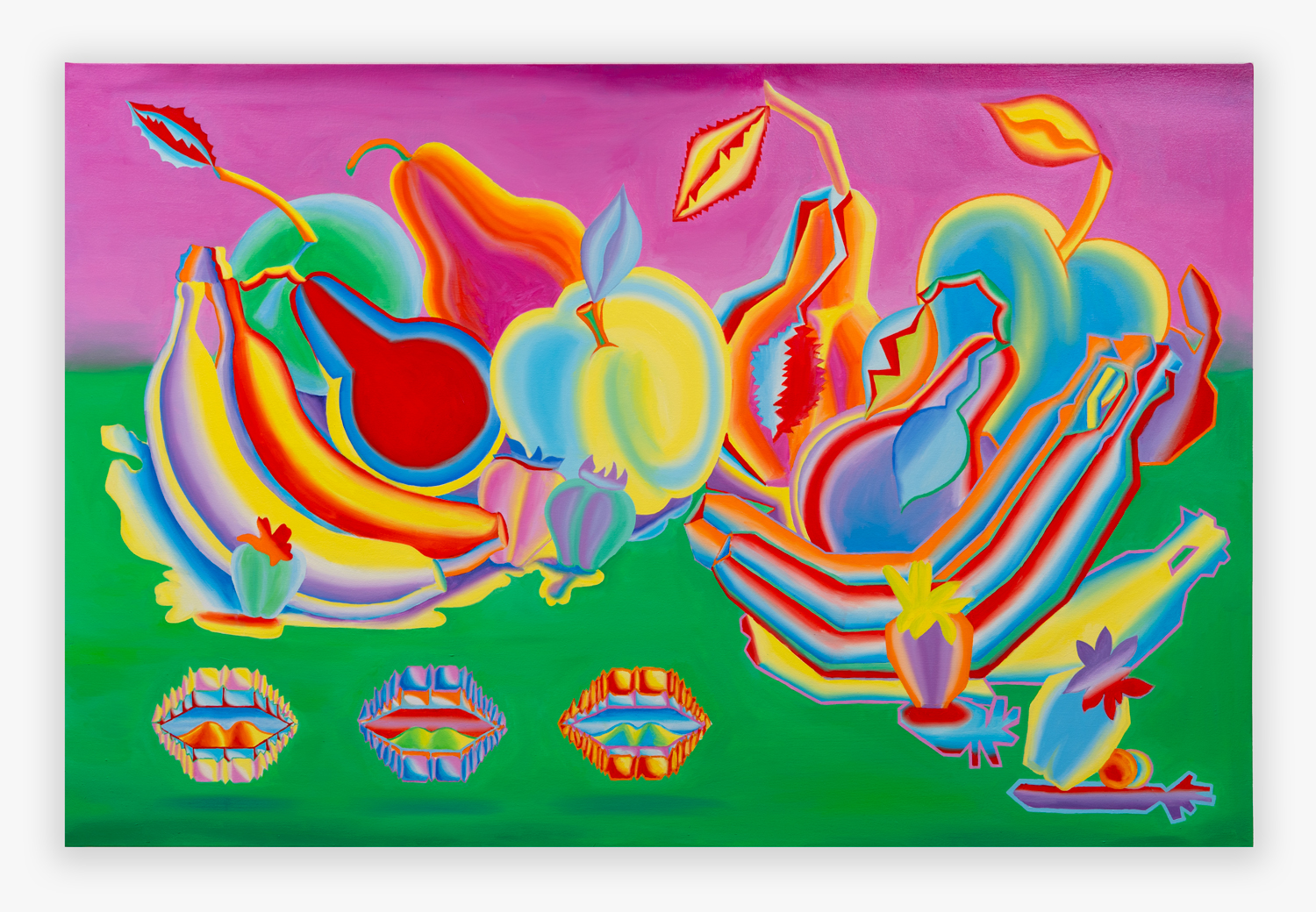
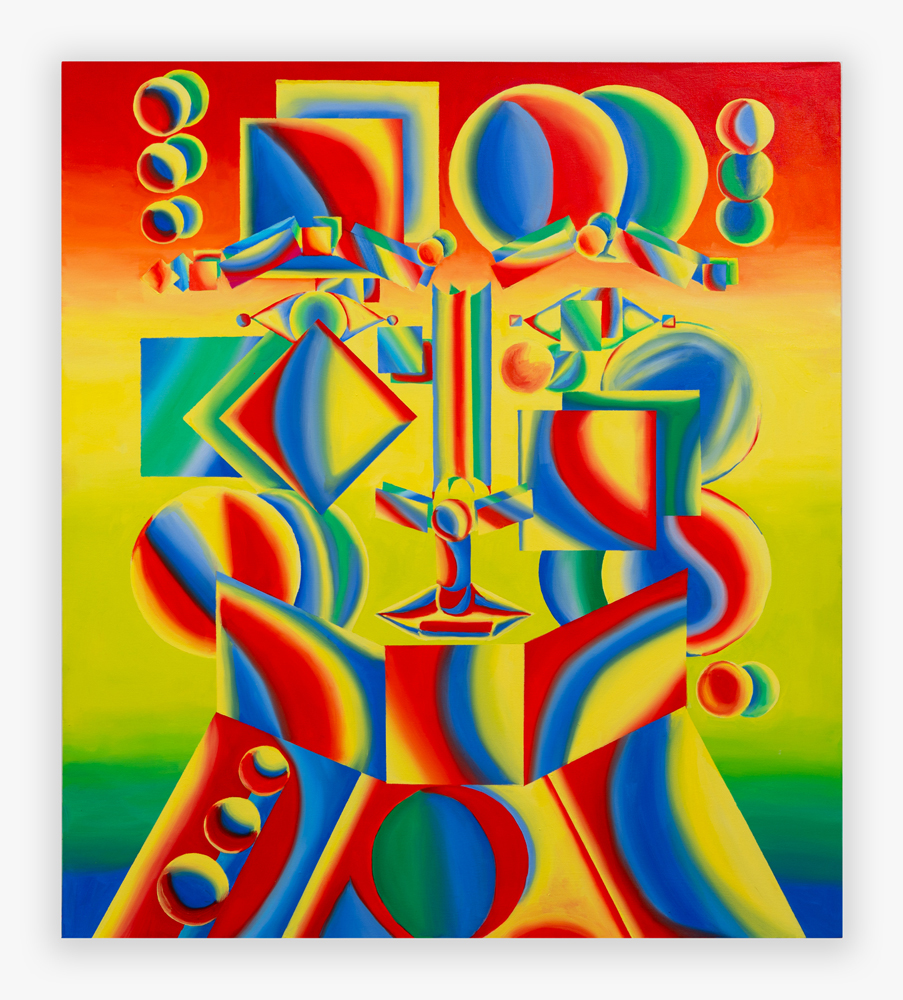
I’m an artist, printer, and publisher. I’ve been working with traditional printmaking techniques for over two decades, and Risograph printing for sixteen years, but I’ve always felt like a painter who took a long detour into print. These days I’m focusing on creating large-scale works in oil on canvas. My studio practice is represented by the New York–based gallery Good Naked.
My work combines drawing, collage, painting, design and print elements. I’m interested in the far future, the distant past, technology, and how civilisations rise and fall. I also love colour, paint, form, drawing, and design.
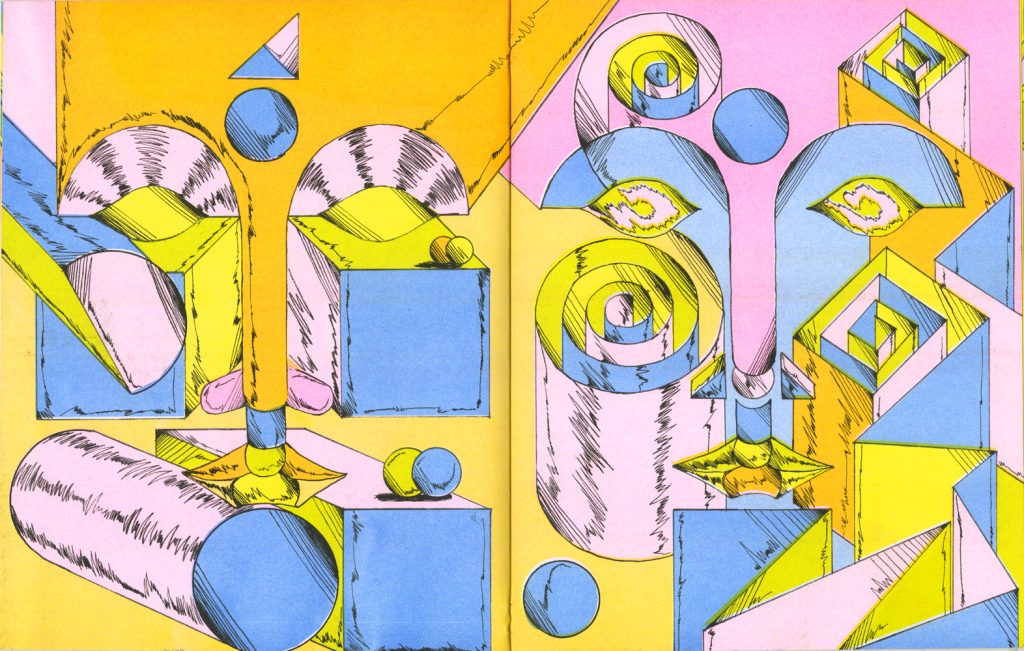
I run a small publishing operation called Mega Press. I’ve published over thirty editions featuring over seventy-five artists in addition to my own work since 2014, and participated in book fairs around the world including the New York Art Book Fair, the Tokyo Art Book Fair, Multiple Formats, and many more.
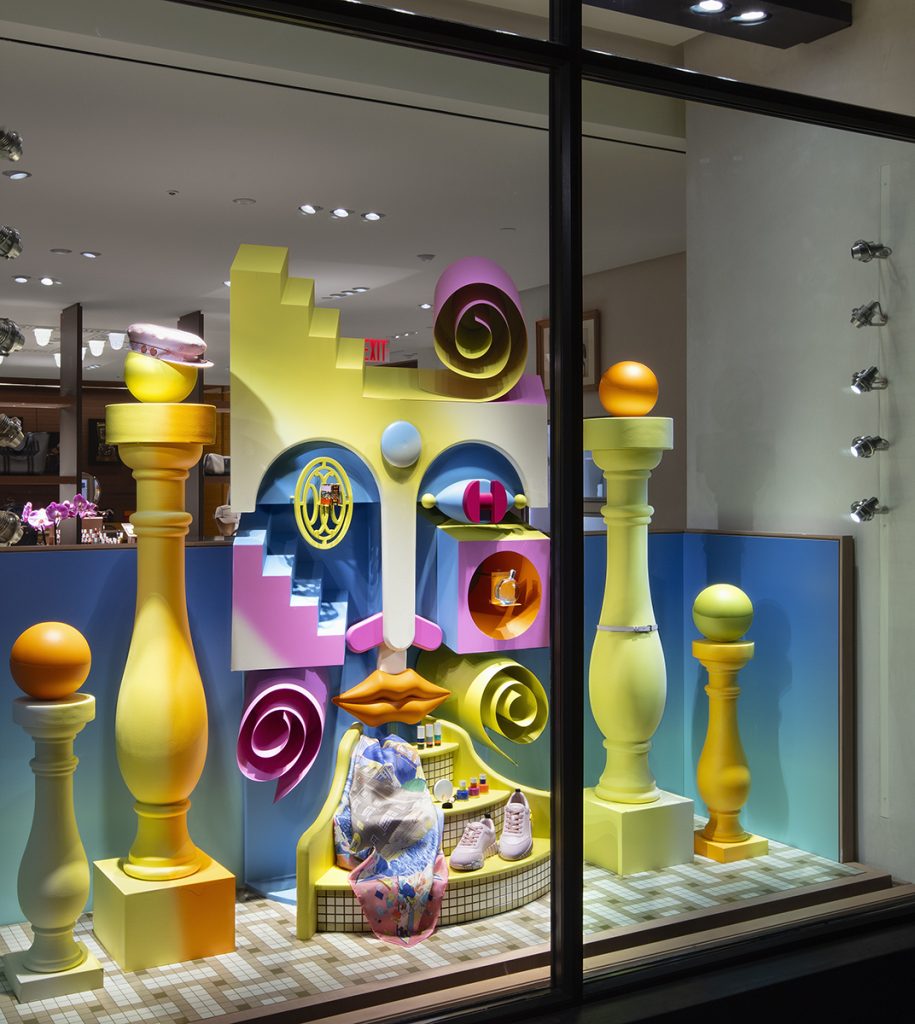
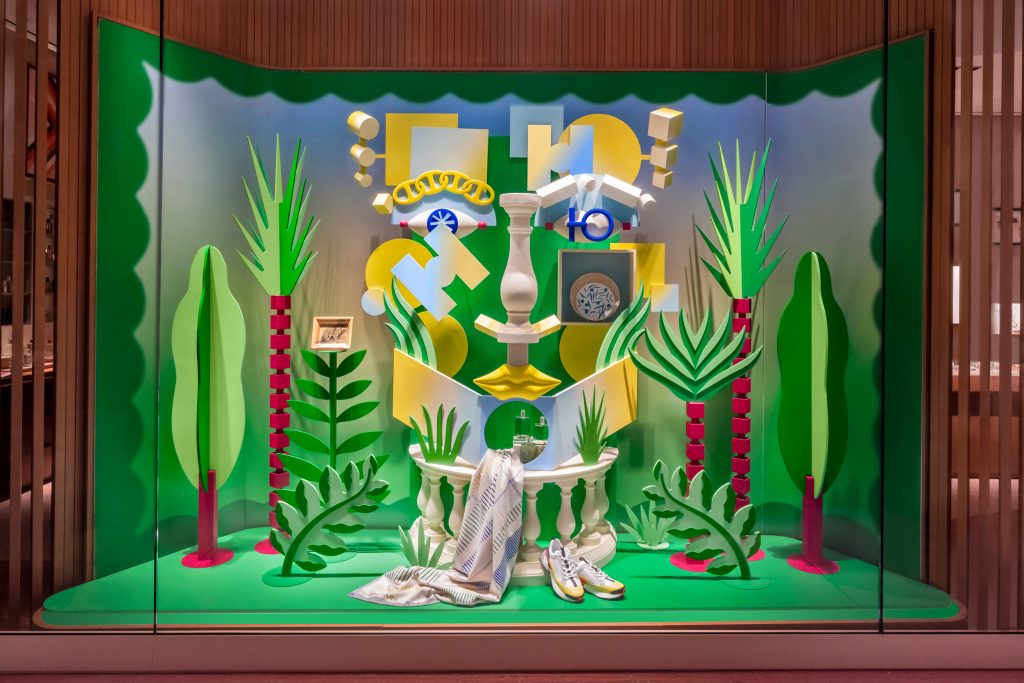
I’ve collaborated with many brands and publishers, including Hermès, The Atlantic, Bloomberg Digital, Elsewhere Space, and Goddezz Temple Records.
I’m the co-founder and Director of the SVA RisoLAB, an educational Riso print studio at the School of Visual Arts in New York that we started in 2015. The RisoLAB provides classes, training, and Risograph print access to over 250 artists, from undergraduate and graduate students as well as artists and creatives of all backgrounds who take classes at the Lab and use our space as a printing and production facility. As Director, I oversee day-to-day operations at the RisoLAB including its visual identity and conceptual direction. I teach several college-level classes and workshops each semester.
You moved to New York for art school and never left. What kept you here?
It’s an intense place to live, but one that’s shaped me since the beginning of my life as an artist. I was lucky enough to find people who I connected with creatively and became involved in the world of artist books, zines, independent publishing, underground comics, and where this world intersects with various galleries and odd corners of the art world.
I’ve been living here for my entire adult life — over twenty years — so I don’t know any difference, but it’s still the centre of the international art world and the opportunities for artists are infinite. This is a global city that the entire world passes through. All of the best and most ambitious people in their field come here. The intense pressure and competition energise me.
What makes New York a good place to run an independent print studio?
NYC is a massive, internationally significant metropolis with a thriving art world and multiple overlapping art communities. There’s so much potential to make connections with people who can provide you with opportunities. The visibility of working here helps one quickly build a following.
It’s also incredibly expensive and challenging in many ways — studio and commercial rents are outrageously high, as are lots of other basic goods. You can find a deal if you’re scrappy and determined enough. I’ve had many different studio situations over the years. You have to be resourceful.
This city can be filthy, chaotic, noisy, and frustrating. Living and working here requires lots of endurance and patience, but it draws the best out of people and sharpens them to a fine point.

What does a typical working day look like, from first coffee to final clean-up?
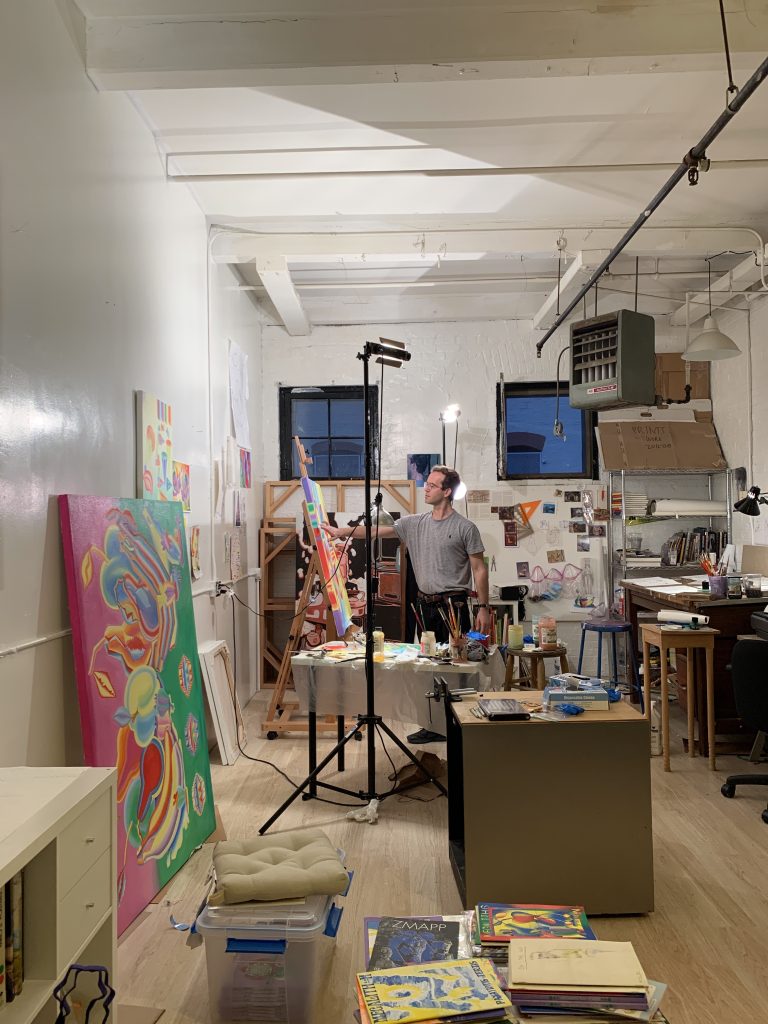
Each day is different depending on the project I’m working on or the role I’m taking on. An ideal day starts the same way regardless of where I’m headed: I wake up early, drink my first coffee on the fire escape and watch the sun rise. Then I meditate and work out, whether I’m heading to the gym to lift weights or run in Prospect Park.
If it’s a studio day, I’ll take the bus or subway or ride my bike fifteen minutes to my studio in the Can Factory in Gowanus, Brooklyn. I try to spend an hour or so drawing in my sketchbook with no particular goal in mind as a warm-up exercise. Then I’ll turn to the project at hand, whether it’s a painting I’m working on or drawings that will form the basis of print designs — or a commissioned illustration or design project. I put on some music, put my phone on airplane mode and set a timer for an hour and a half, taking breaks only when the alarm goes off.
On other days I head to the RisoLAB at SVA in Manhattan. I teach one to three classes a week for undergraduate and graduate students at SVA as well as occasional workshops.
My work as Director of the RisoLAB involves a mix of administrative work, maintenance and repair of our duplicators and binding equipment, designing posters and assets promoting our space, or anything that might come up in a busy educational printing facility. There are a lot of meetings and responding to enquiries — artists in town who want to check out the space or other academics reaching out about a collaboration or visit. I oversee a team of four technicians so there’s a lot of strategising with the group and delegating tasks to keep the space running smoothly.
If I have a Risograph project to print, I’ll print it at the Lab, which involves a lot of planning and scheduling to make sure I can realistically produce a new publication in time for whatever event I’m preparing it for.
What printing processes and production methods define your work right now?
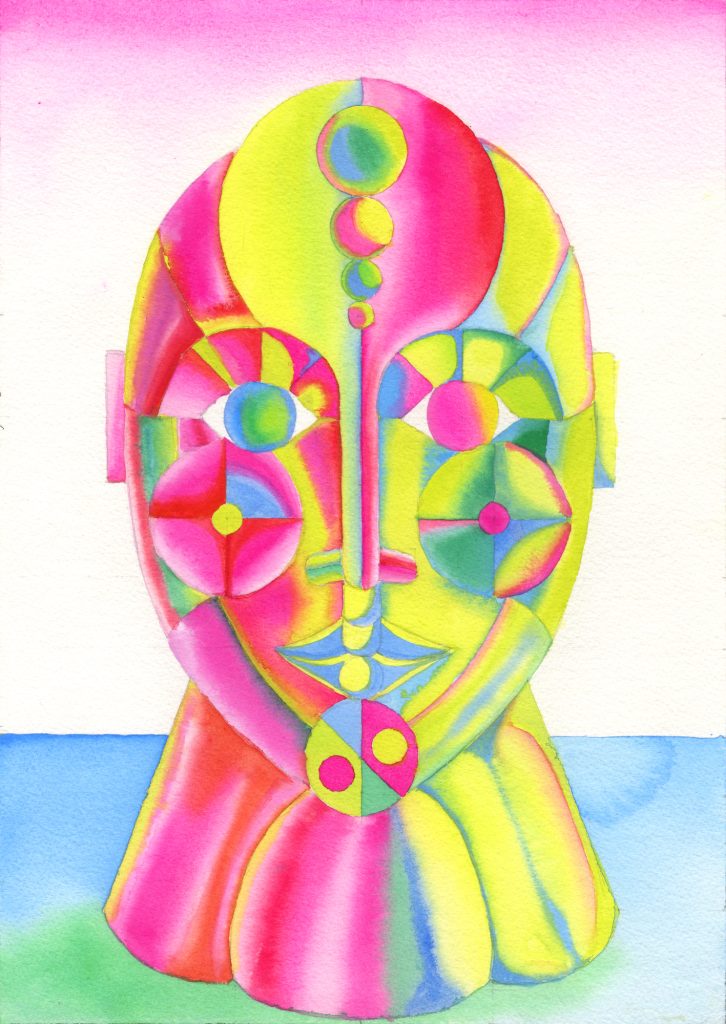
These days I’m focusing on painting. I’ve been making paintings on paper in gouache for years, but I returned in recent years to working in oils on canvas.
My roots are in traditional printmaking, especially screen-printing, which formed the core of my creative process when I was first starting out. I relied heavily on screen-printing as a production tool to create editions that straddled the border between artist books and zines back in the late 2000s. With these publications, I was able to storm the gates of institutions such as Printed Matter, who started selling my work at that time and exposed me to a much wider audience, leading to many subsequent opportunities for my work to be published and exhibited.
Working with mechanical, repetitive printmaking techniques while creating work that had a very identifiable personal style seemed like a contradiction to me, and led me to think more broadly about print media as a form of technology that relies on the human printer as the fleshy component of an image-making machine. This made me think about humans and our relationship to technology and incorporate these ideas into my work. I added photolithography into my print practice to reproduce detailed collages and drawings I was making, inspired by the most braindead garbage imagery of our digital mediasphere, such as clickbait advertising slop.
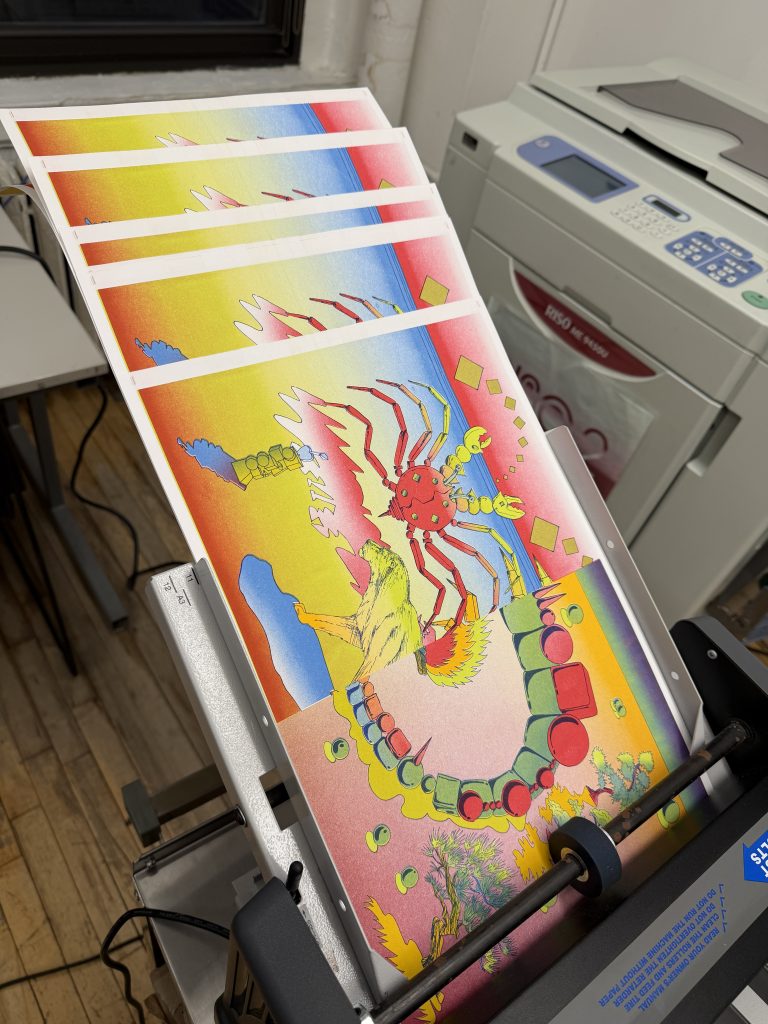
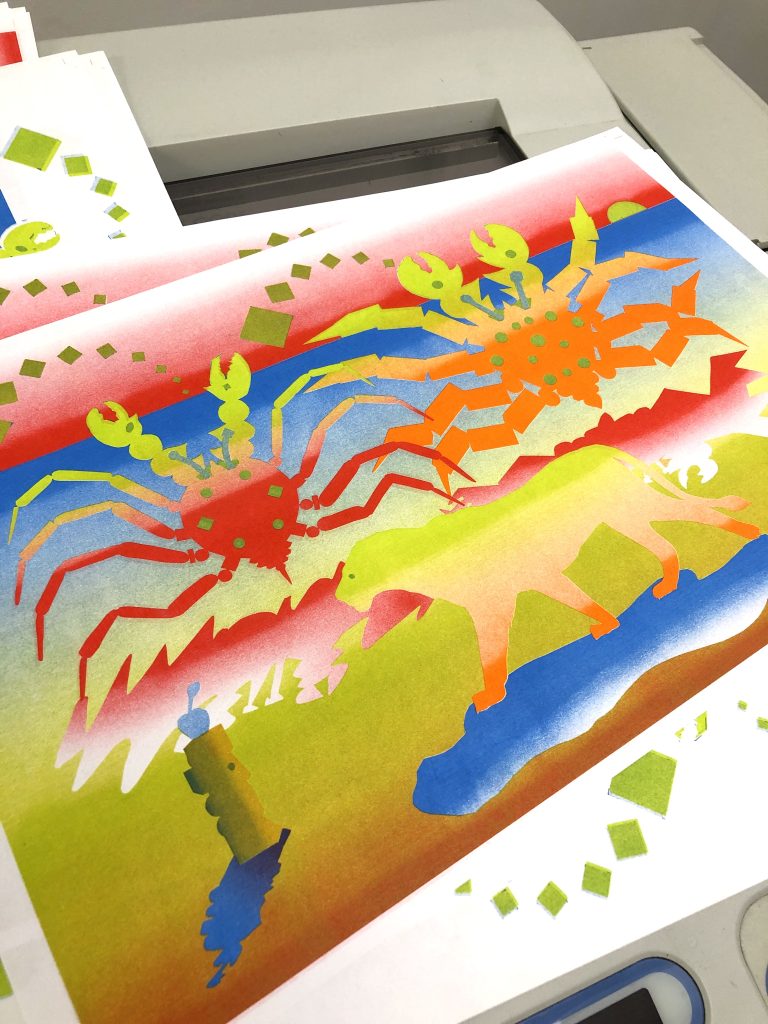
When I discovered Risograph printing in 2010, it seemed like the perfect synthesis of the techniques I was using before. Riso printing combined the stencil process of screen printing with the tonal quality of lithography, in the form of a compact printing robot designed for printing cheap, dirty prints at high speed. It revolutionised my print and publishing practice. The speed of production and low cost of materials allowed me to make bigger editions to sell at lower prices. Eventually I bought my own machine and started Mega Press.
When I was first starting out as an artist, there was a lot of hype about print being “dead” (again) and everyone was excited about Post Internet art and new media projects. I felt defiant about the relevance of human craft and skills, and confident that this work would not hold up in the long run and that there would be a natural backlash to the digital being forced down our throats. At the same time, I felt that we were living in a cybernetic dystopian sci-fi future already, and no one was acknowledging the dark side. A decade and a half later I feel vindicated, as my undergraduate students rage against AI and digital media and clamour to enrol in Riso printing and printmaking classes.


What equipment and machines form the backbone of your studio setup?
The most important object in my studio is my 1940s-era drafting table, with its solid wood frame and 4 ft by 5 ft adjustable table top. It breaks down into twelve pieces that are held together by long bolts. I think I’ve moved it at least a dozen times.
I use Risograph printing for all of my publications that I release with Mega Press.
I use digital tools for colouring, design, preparing files for print and post-production, but if a piece is drawing-based, I always make the initial drawing on paper. I have an Epson Expressions 11000XL that is absolutely crucial in my studio.
Was there a moment when you realised analogue production would be central to your practice rather than an add-on?
For me it was always the other way around. I prefer working with analogue techniques, which is why I’m a printmaker and painter. I always used Photoshop to clean up scans or photographic documentation of my work, and increasingly used digital tools over the years for preparing print files. Digital tools are fantastic, but I see them as just one part of the process, as most of what I make is ultimately meant to exist as a physical object, whether it’s a book, a print, or a painting.
How does the physical space of your studio influence the scale or ambition of your projects?
I’m trying to take advantage of my studio space to create some ambitious, large-scale works on canvas. I’m exploring the possibility of building a screen-printing setup in my studio so that I can incorporate this medium back into my painting practice.

What paper stocks, inks or materials do you return to repeatedly, and why?
When it comes to Risograph printing, I prefer using Cougar vellum bright white paper in 120 gsm text weight for the interiors of books, and 120 gsm smooth card stock for covers or print editions. A heavy flexible text-weight paper holds the ink nicely and allows for a really rich finish as the ink can penetrate deep into the fibres. My recent editions — Bad Stones Z, a collaboration with UK-based Leomi Sadler, and Megalith 8, a solo book of my drawings — each had multiple pages that had more than eight colours, but the 120 gsm Cougar could handle the load without buckling.
I have been using the same pasteboard-backed sketchbooks made by Kunst & Papier for a decade and a half. I like the quality of the paper, the rigid matboard covers, and the flexible, coloured fabric spine which allows each spread to open completely flat. I always have at least one sketchbook going and I bring it with me everywhere I go. I draw commuters on the subway, interesting objects or scenes I might come across, ideas for paintings, or studies of sculptures at museums, as well as loose drawings. So many projects originated as quick sketches in my sketchbooks that I returned to later and developed into larger works.
What is one tool in your studio that has genuinely shaped your creative output?
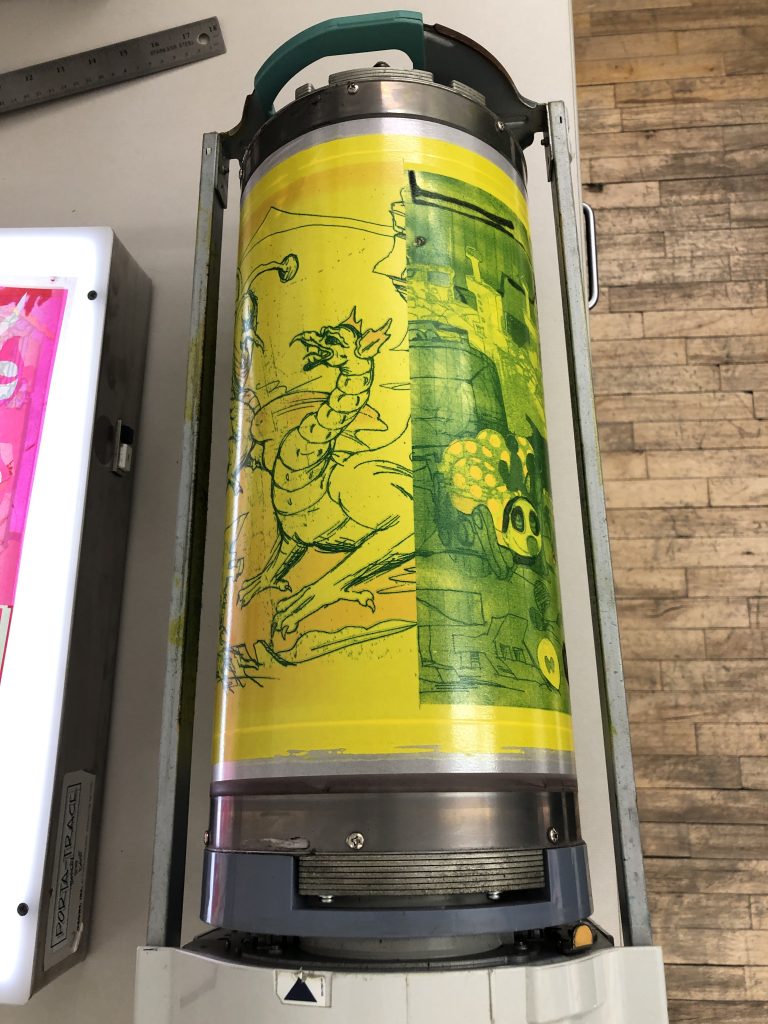
At some point I started using traditional drafting tools like protractors and compasses in my drawing practice. I wanted to add a mechanical element to my process in order to resonate with our technological era. I developed a habit of measuring my drawings, making sure certain aspects of an image were symmetrical, or the edge of one figure was exactly a certain distance from a given side of a composition. I was trying to bring in a neutral, mechanical structure that I could play off against. This is also one aspect I like about printmaking techniques: the contrast between the rigid structure of process and human mark-making.

How do you balance traditional print techniques with digital tools in your workflow?
Digital programs are an incredible way to edit and prepare work for printing, but they are just one step in a multi-stage process.
What part of the production process do you enjoy most?
I enjoy all of it except for bookbinding. Using a paper folder during the collating and binding process has been a game changer. My favourite part is usually the printing process itself. It’s amazing to see an image come together layer by layer.
How has New York influenced the visual identity of your work — in colour, typography, texture or attitude?
The energy of New York has fuelled my work from the beginning in an indirect way. The pressure to survive here, the press of millions of people in such a densely populated city, and the speed and chaos of daily life has definitely added a level of intensity to my work.
Are there architectural details, signage, landscapes or industrial remnants near you that feed into your aesthetic?
This city contains the entire world, including the history of architecture. Every era is slammed together from the buildings to the style of the people on the street. That being said, I definitely resonate with certain architectural styles and tendencies on display across the city — the smooth modernist geometry and streamlined classicism of Art Deco; the gargoyles, green men, sphinxes and lions guarding facades of prewar buildings from the Lower East Side to Brooklyn Heights; the grand, soaring spaces of public crossing points like Grand Central Station; the imperial bombast of monuments like Grand Army Plaza in Brooklyn or the southern entrance to Prospect Park; the gargantuan scale of Manhattan as a whole. While a lot of the work I do is physically on the smaller scale, the spirit is inspired by monumentality, ambition, and a superhuman striving to achieve an impossible goal.
How does the pace of life in New York affect your creative decision-making?
When someone reaches out with an opportunity, I try to respond immediately. When I’m working with others the timeline is often ridiculous, but this forces me to focus and make the right decision the first time, from aesthetic choices to negotiating the design fee.
What local creative spaces, galleries or independent shops inspire you regularly?
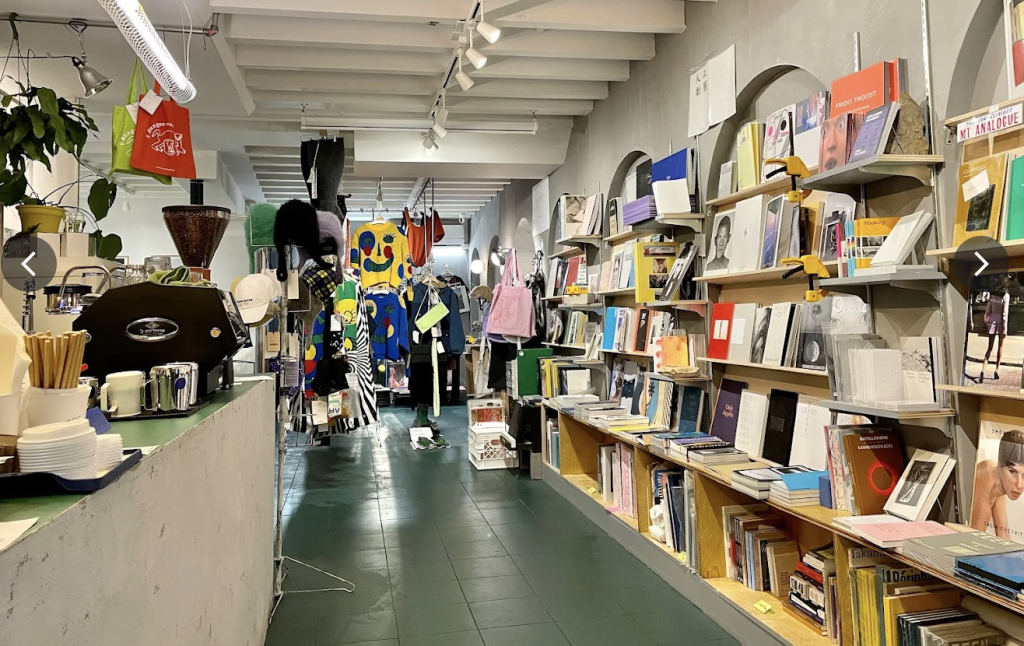
Printed Matter is an essential hub of NYC’s artist publication and print culture that brings together so many different scenes, artists, eras, and generations. Absolutely crucial. Other shops that carry interesting and rare printed material: Bungee Space, Desert Island, and Molasses Books. I’m also constantly inspired by the creative energy I see on display in the RisoLAB.
Is there a community of designers, printers or makers in your area that supports your practice?
I’ve lived here for twenty-three years, so it’s difficult for me to narrow my community down to one scene rather than the scores of people I know from different contexts who overlap with each other in various ways. The longer you live in New York the more it feels like a small town where you constantly run into people you know in odd corners of the city.
You’ve always been in a major design capital. Have you ever been tempted by the alternative?
By moving to a major design capital at nineteen to study art, I felt that I had missed out on the experience of living in a small city in a community of artists, living a scrappy life with low expenses and lots of free time to make art.
I mythologised places like Providence, Rhode Island, where RISD graduates moved into old factory buildings in the late 1990s and created a legendary community of artists, musicians, animators, and filmmakers, giving rise to spaces like Fort Thunder and artists and collectives like Paper Rad, Brian Chippendale, Dearraindrop, and so many more.
When I got a chance to live there for a month at an artist residency, I realised that while cosy in some ways, this kind of small community lifestyle could be a little suffocating. Within two days of arriving everyone knew I was the new artist in residence. People would wave at me as I biked around town and I found it hard to turn down the constant invitations to barbecues and house parties. I had to really focus to lock in to get my project done.
I realised that I had become a New Yorker. In NYC there’s no limit to how much you can grow as a person and an artist. You can always find new people who you can resonate with. This doesn’t even get into the advantages of living in a place where people value art and design and have the budget to support it.

What are the real challenges of running a physical print studio in New York?
The expenses and the competition force you to go as hard as you can to make it work.
How do local clients respond to analogue print and handcrafted production?
There is a general resurgence in interest in handmade objects created by humans. This is an obvious backlash to the corporate embrace of all things digital and automated. People are interested in people, and they appreciate the things they can make with their hands.
Are there regional materials, suppliers or production networks that influence how you work?
Paper Outlet is the best source for paper suitable for Risograph printing in NYC. For screen-printing materials, Holden’s is the go-to for screens, paint and emulsion, and Victory Factory in Hollis, Queens is a good source for aluminium screens. There are still a few raw material suppliers down on Canal Street like Canal Plastics and Canal Rubber that have provided exactly what I needed for specific projects.

Outside the studio, what does a perfect day in New York look like for you?
Wake up early, greet the dawn, meditate and do some kind of exercise to calibrate my mind and body. Then a few hours spent checking out galleries in Tribeca or LES, or maybe I head to the Met to wander and draw in the Greek and Roman or Ancient American wing. Afterwards coffee, browsing at a bookstore, wandering the streets, maybe taking a break in a park. Dinner and then a late-night movie with my wife at the Nighthawk theatre at 15th Street and Prospect Park, after which we walk home and talk.
Does fashion, workwear or local subculture influence the way you present yourself or your brand?
4If I had to pin down my fashion influences I suppose it’s a mix of general postwar Americana — rough and ready button-down shirts and straight-leg jeans — the 1920s pleated pants, circular spectacles and combed-back hair of the early European and American modernists, avant-garde Japanese designers such as Yohji Yamamoto and Issey Miyake, 1980s Memphis School aesthetics and their consequences (which can be seen in my early nineties bedsheets and swimming trunks of my childhood), from Neo Geo painters like Peter Halley to the set design for Pee-wee’s Playhouse.

What philosophy underpins your approach to print and making in 2026?
You need to know and master your tools and craft to survive and be self-reliant. My approach is no different than it was when I first started: making the work is the goal, and everything else in life serves this purpose. You may not know where you’re going, but the work will carry you through.
For someone wanting to start their own print studio in New York, what honest advice would you give?
You have to be scrappy and resilient, creative and resourceful to make it work.
Panayiotis Terzis has been shaped by New York in the way the city shapes everyone who stays long enough — not gently, but completely. Twenty-three years of making work here, from scrappy zines sold through Printed Matter to paintings on canvas represented by a Manhattan gallery, from building the RisoLAB into one of the most important educational print spaces in the country to publishing seventy-five artists through Mega Press. What comes through in this conversation is not romance about the city but a clear-eyed understanding of the deal it offers: relentless pressure in exchange for limitless possibility. The work carries you through. You can find Pan’s studio practice at panterzis.net, Mega Press at megapress.info, and the SVA RisoLAB at risolab.sva.edu.