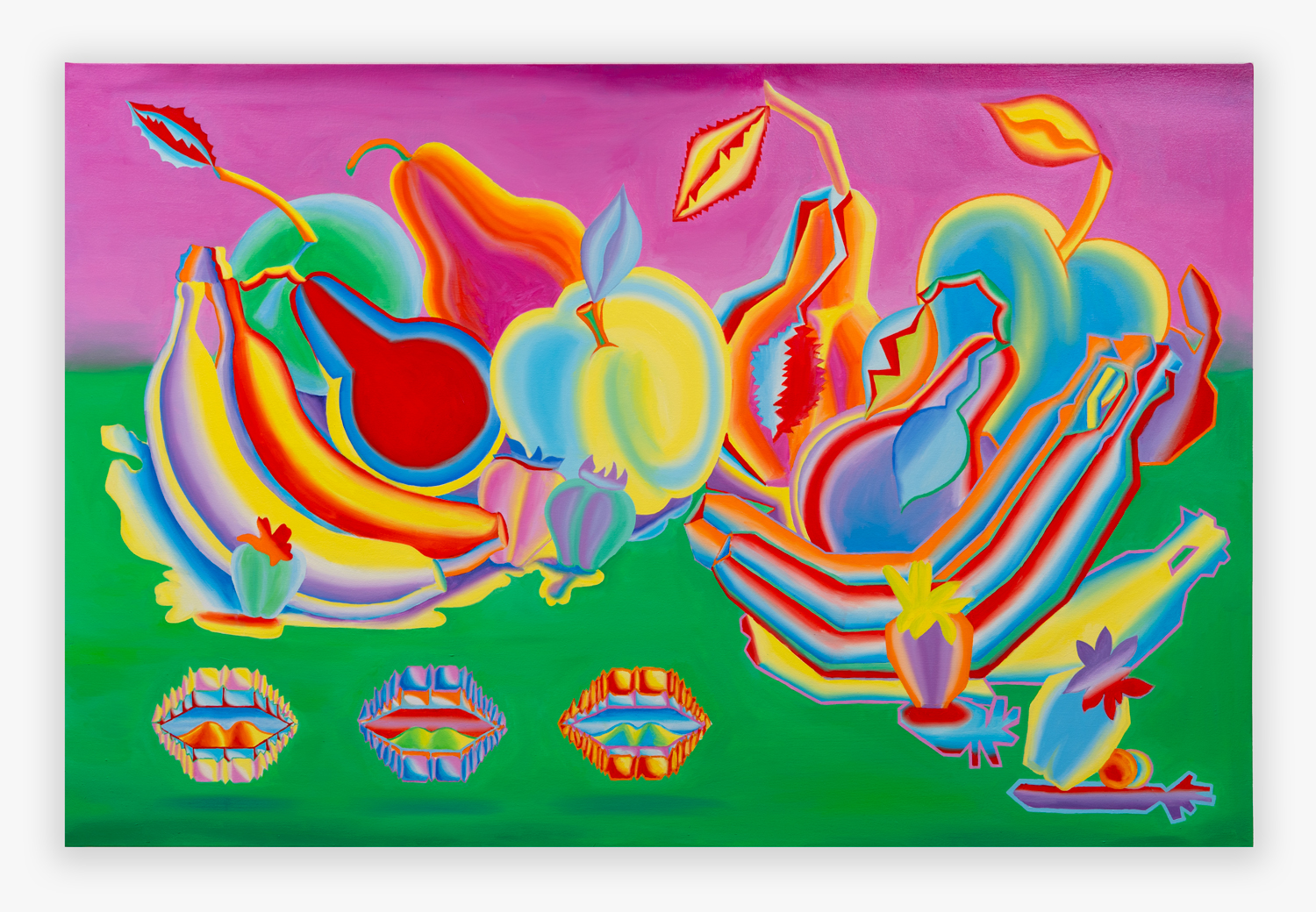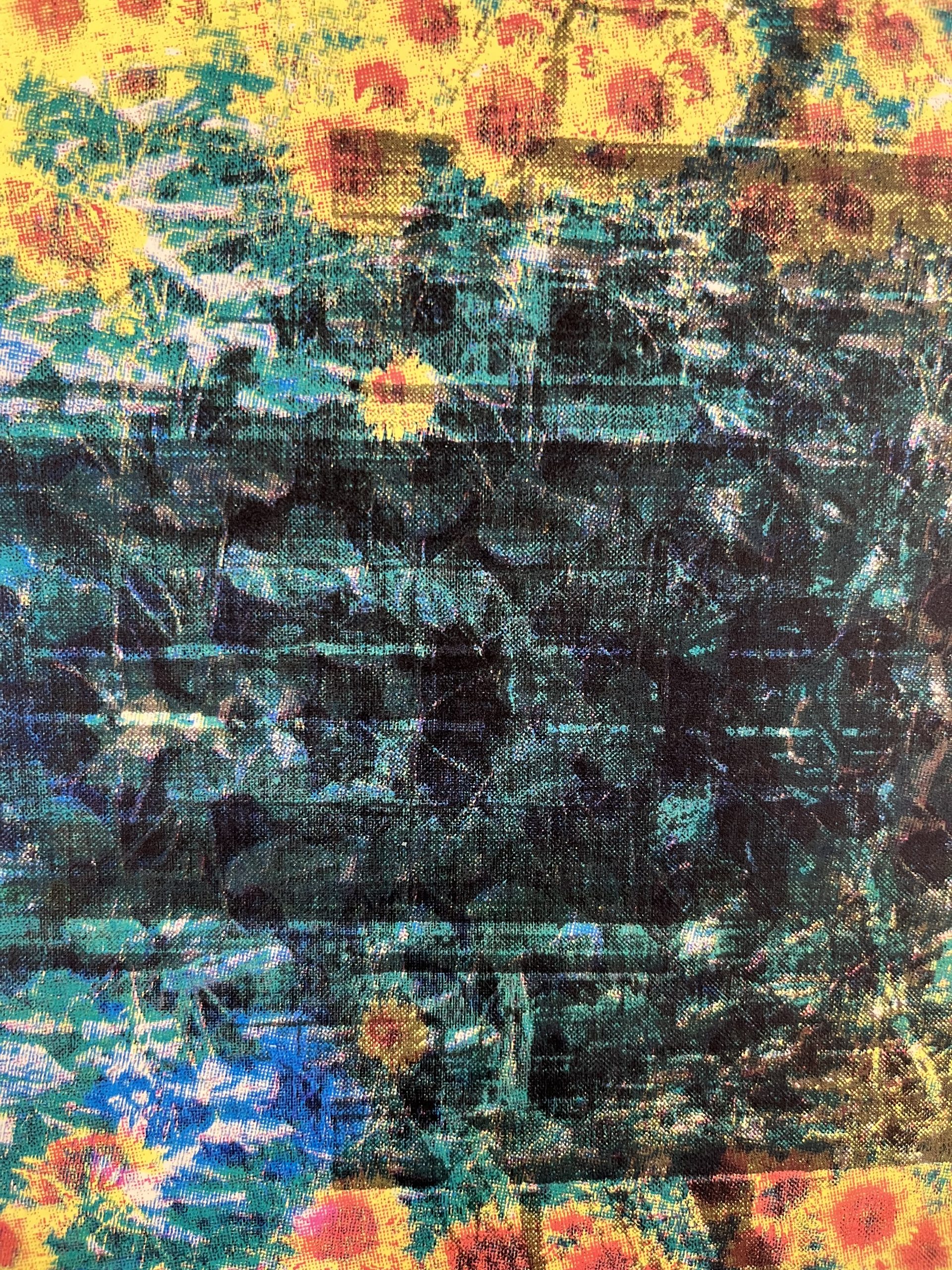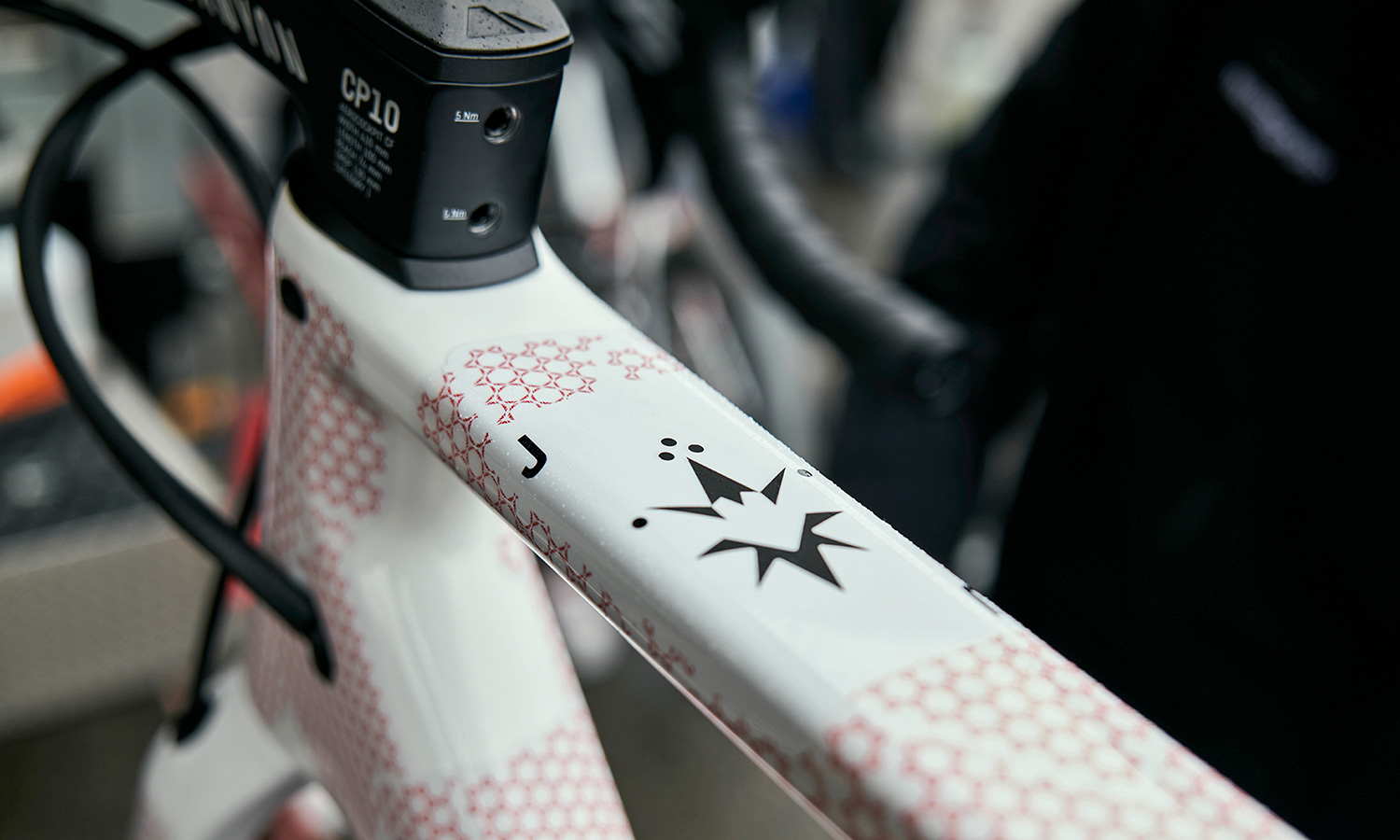
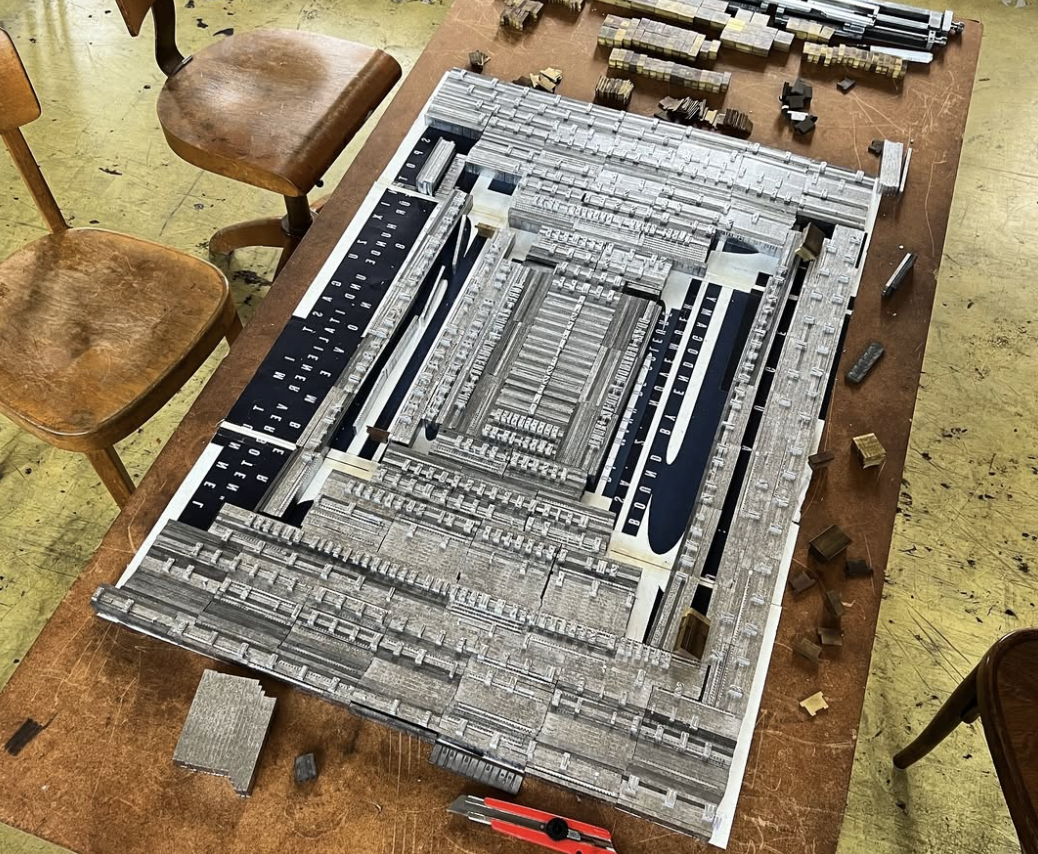
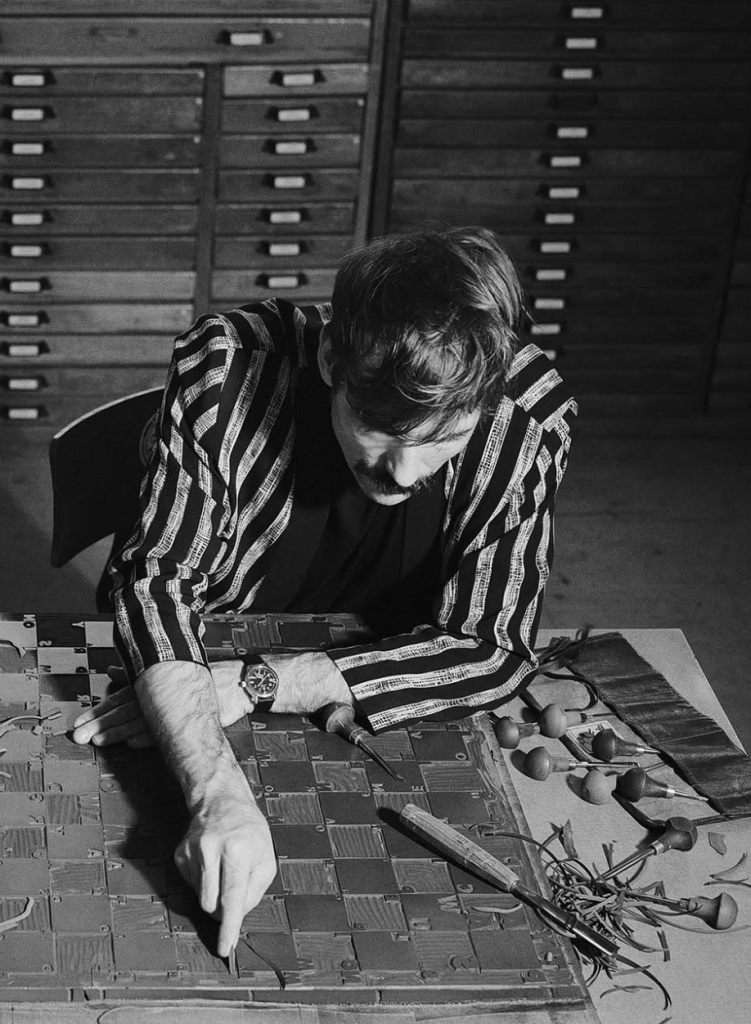
Somewhere between Zürich’s cultural pulse and a quiet Alpine valley, Dafi Kühne has spent sixteen years building one of the most formidable letterpress studios in Europe. Working under the name Baby Ink Twice from a 450-square-metre factory floor in Näfels, he designs and prints large-format posters using six functional presses, a Ludlow hot-metal caster, a laser cutter, a complete wood type production workshop and around 1,000 type cases, forty metric tonnes of equipment in total, all on the second floor. His work sits at the precise intersection where contemporary graphic design meets centuries-old printing technology, and he has made that intersection entirely his own. For the third instalment of our City Series, where we go deeper into the lives, surroundings and daily rhythms of the creatives we admire… we spoke with Dafi to understand not just his practice, but the places, routines, and culture that sustain it.
When someone walks into your studio on a typical morning, what is already happening before the first sheet hits the press?
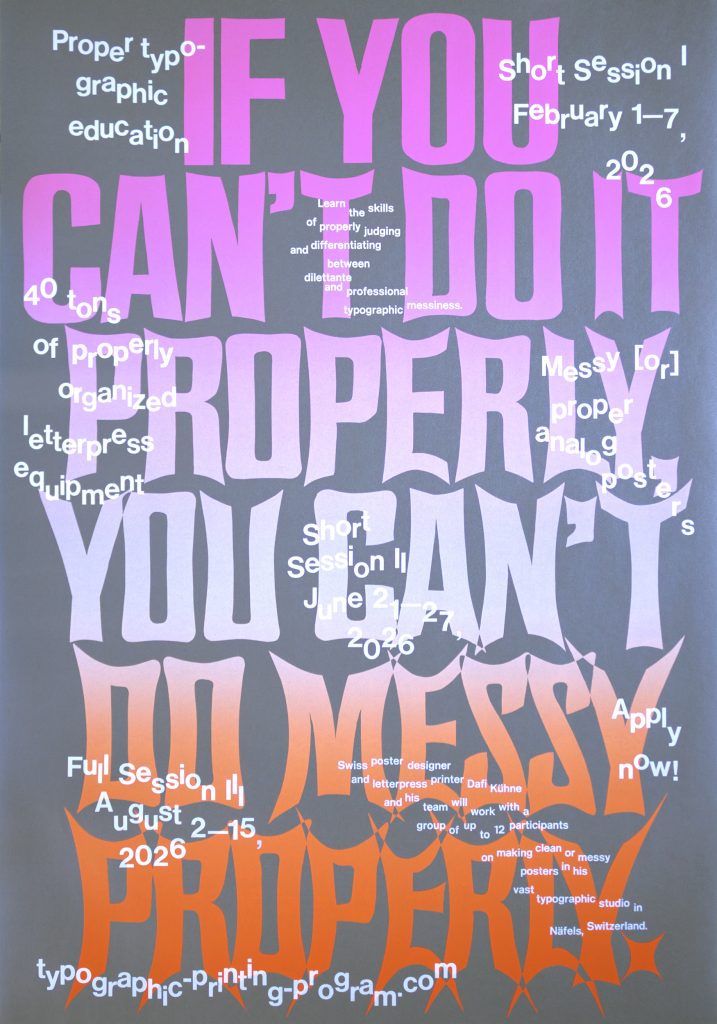
Ha, before-the-first-sheet-hits-the-press is a bit of a romantic imagination of my job. When I started my business in 2009, I had the vision of me designing, producing and printing Monday through Friday and creating stuff all week long. And then maybe on Friday afternoon doing some admin, emails, hopefully sending out some invoices for the work from the past week. Soon I realised that the reality is almost the opposite: doing emails, admin, oiling presses and maintaining equipment, meeting potential clients that promise you the world (that will never happen) and then on Friday, when you’re exhausted from the week, you actually get to design and print stuff. Well, this of course is an ironic exaggeration, but there are really a thousand things I do and prepare before I really start printing. I also have to say that, besides my poster design and letterpress printing studio, I basically run a fully operational museum with a total of six functional proof and production presses, a Ludlow hot-metal caster, a laser cutter, a complete pantograph-cutting wood type production workshop as well as photopolymer production. Over the past sixteen years, I collected around 1,000 type cases with metal and wood type. The studio houses a total of forty metric tonnes of equipment on roughly 450 square metres. And besides that, I also run my own intense summer programme (www.typographic-printing-program.com), which takes great efforts to advertise, prepare and handle the applications for. So my business is actually three in one: a poster design and letterpress print studio, running and maintaining a fleet of presses and printing equipment, and organising and hosting my own intensive classes. So the short answer really is, I do one thousand things before I actually print. And sometimes, I start printing first thing in the morning.
How would you describe the character of where your studio is, and how do those qualities show up in your work?
Well, I have to say that personally, I live in the city. I commute to my studio daily. The studio is in the countryside in Switzerland, between high-rising mountains in a little valley in the Alps. Just a typical small town in rural Switzerland. The reason why I am here is that the cost of rent for a large factory floor is much lower here. If you are asking me if the place where my studio is located leaves traces in my work, I would say: honestly, I hope not. I try to get inspiration from anywhere and learn from everything and in most cases, it is not rooted in the place where my studio is located. Besides that, though I do have a few local clients, the majority of them come from other places in Switzerland or abroad.

What first brought you to base your studio where it is now, and at what point did it stop being practical and start becoming part of the identity of the work itself?
After my studies, when I still lived in the Glarus region, my back-then girlfriend (now wife) and I wanted to move to Zürich. I already owned a letterpress proof press, which I had in the basement of the place we rented back then. So when we moved to Zürich, I knew that I couldn’t afford to bring the press with me and rent a good studio space in the city. That’s why I decided to rent a small studio space here, where I could afford it and where I knew my way around. So in 2009, I rented one room on the floor I am right now. The studio grew relatively fast, since in Switzerland many print shops still had letterpress printing equipment in the basement that they wanted to get rid of. This was perfect for a young designer with a small budget. Sets of metal typefaces, wood type and printing presses just didn’t cost much. So I collected all of my stuff with a really lean budget. Whenever I had some money at the end of the month, I bought something. If I didn’t have any money, I just didn’t buy anything. So the investments came bit by bit. And room after room I expanded my studio on that old factory floor.
If you are asking about the practicality versus it being part of the identity, I want to say that this happened pretty soon and intensified with every piece of equipment that I acquired and integrated into my process. My studio really has grown over the past sixteen years and over time it started to fit my process and the products I am producing like a glove. I became more and more focused and picky on what I really needed and how I wanted to use the tools to produce my work. I believe that my studio really changed from a random accumulation of tools and equipment to a curated collection that is one hundred per cent functional.
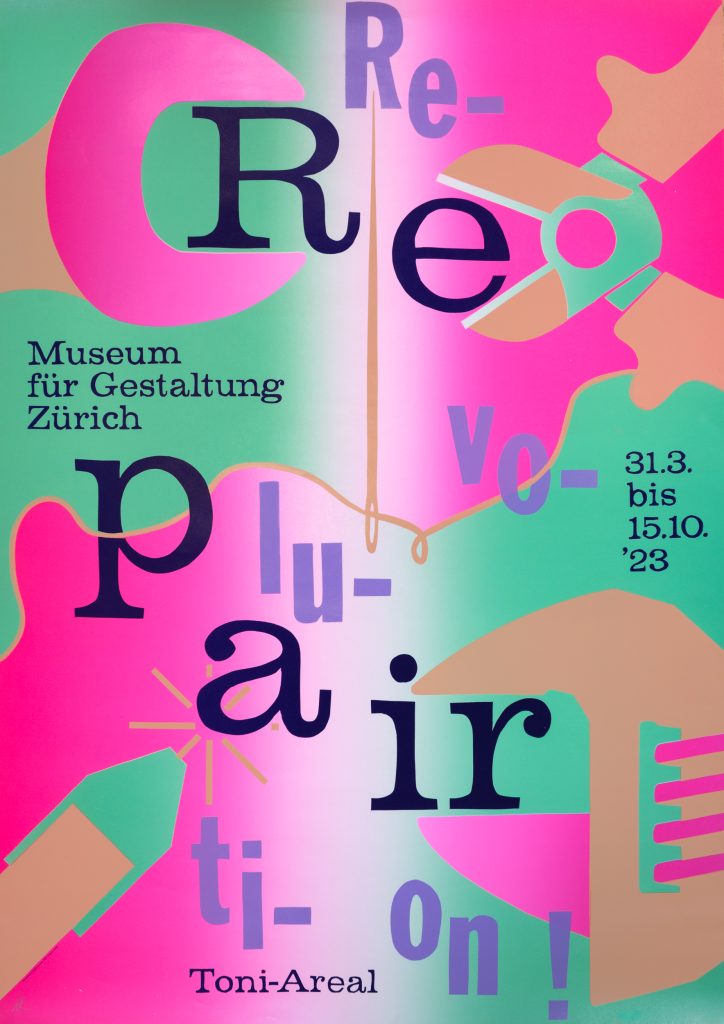
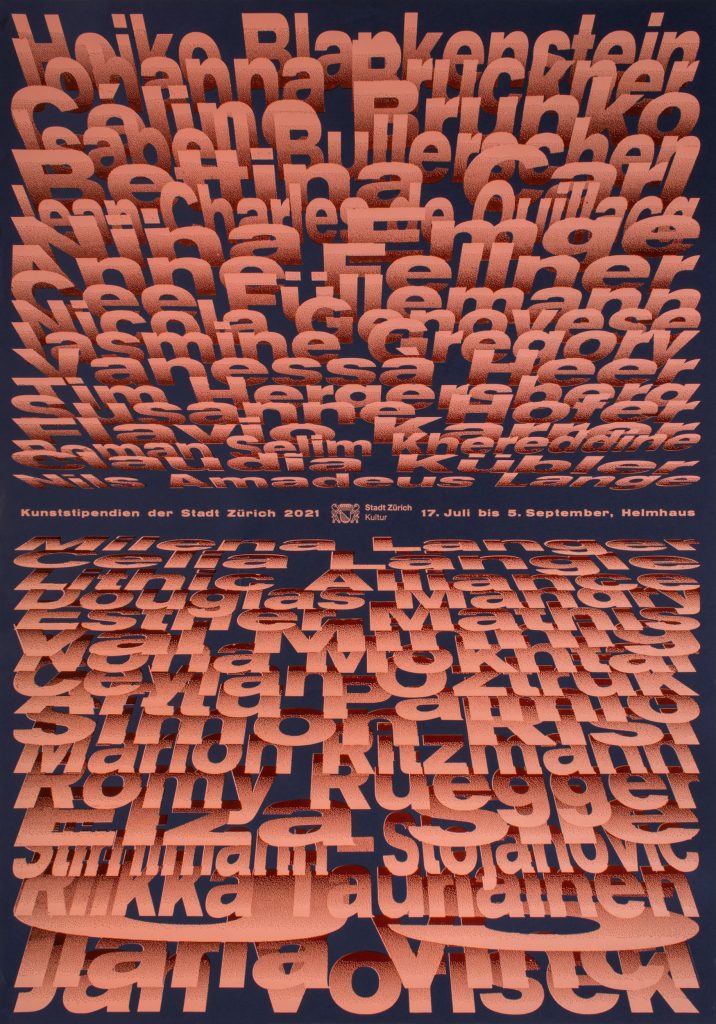
My productions are sometimes pretty large — not only in formats, but also in printing passes and editions. For example, a few years back, I printed the Repair Revolution poster for Museum für Gestaltung in Zürich. These large Weltformat (89.5 × 128 cm) posters are printed in thirteen printing passes from hand-cut linoleum. So on an edition of 850 hand-printed posters, this means more than 10,000 prints are being pulled over the course of a few weeks. To be able to pull such a project off, the studio really needs to be well equipped. And I need to work with my employee and additional assistants.


How does the pace of where you live shape the pace of your thinking, and does it affect your design decisions?
Honestly, I simply do not engage with the town where my studio is that much, or at least not in a way that has an influence on my work. I mean, I step outside at lunch to get my sandwich at the local bakery. I buy other groceries in the small family-owned grocery stores. I use the local post office and some other small shops around here. Since I have had my studio here since 2009, people know me in these places, which is nice. I do some small talk with the employees I know and I truly believe in supporting small local businesses. But when I step back into my studio, it is a different world that doesn’t have all that much to do with the environment it lies in.
Is there a regular walk, commute or daily route that has quietly become part of your creative process?
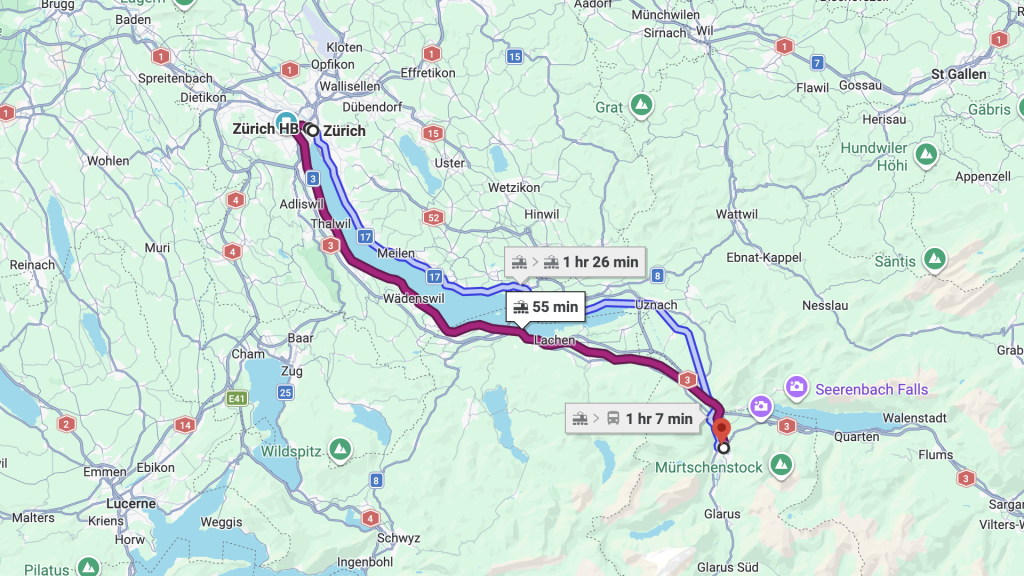
My commute is a 55-minute direct train ride from Zürich to Näfels. I try to take the train as often as I can, though I sometimes have to move stuff for work, and then I take the car. Riding the train so regularly, I have developed strategies to blend in, to have my little corner on the train where I can sit and work, write a few emails, or relax and listen to a podcast by myself. I have discovered this with many solo commuters. They often want their daily routine, their coffee, their headphones, their book or phone, and then just like to ride on their own. It is a completely different behaviour from that of group commuters, school classes and tourists. And since my commute is out of the city and to the bottom of the Alps, depending on the weather and the season, there are quite a few groups of hiking or ski tourists on my train. They are always happy, super communicative, loud and generally breathe up a lot of air. So as a daily commuter, I avoid these groups.
The time I spend on the train (or in the car) is the time when I mentally prepare for work. I sit and watch the landscape pass by. I might think about concepts and ideas, but I most often don’t actually sketch or work digitally on them. It is more like a slow reflection on ideas. And sometimes I really just sit and relax.
You have committed fully to physical production as part of your design language. Was there a turning point that made you realise digital output alone was not enough?
For me, even before I was printing my own products, I was always interested in the autonomy as a designer. When I was a student, I experimented a lot with photocopiers and different papers and printing substrates. I loved to be able to not only design a product, but also actually be involved in the production process to the point where I could deliver the finished product. I just found it frustrating to design something and then hand the production over. So when my former professor told me there was a cheap proof press available, I jumped right on it. If at that point, in 2008, someone had offered me some silkscreen equipment or a Risograph, I guess I would have taken that as well. So it was not really a conscious decision for a specific printing technology — it was more a decision for autonomy. But what I can also say is: if I had found a silkscreen table back then, I am pretty sure that I wouldn’t be printing silkscreen anymore today. I discovered that letterpress printing was a perfect match for me. So I really was lucky to have found the printing technology that really suits me.
Your studio is full of machines and materials. Is there one press or piece of equipment that feels less like a tool and more like a collaborator?
I feel like it is always the machine that I am currently working with. I generally find it fascinating that humans can have these kinds of connections to machines. Each machine has its rhythm, its pace, its sound, its haptics … smell … I love that. If you spend hours and days working with one machine, you develop a feeling for it. You develop muscle memory for processes and movements. You internalise the rhythm and pace. And you also develop a feeling for the condition the machine is in. Does it work well? Does it sound right? Does it feel good? I personally service all of my equipment myself, sometimes with the help of professional mechanics who make parts for my presses. So I really need to know my tools well. This even gives you a deeper connection to machines and tools. So yes, my tools are also my collaborators that I like to keep in perfect shape and take care of. But I don’t go as far as to give them names or anything. In the end, they are machines.

You often design the thing that prints the thing. Can you describe what that looks like in practice, from the initial idea through to block, plate or type?
Yes, this is right. When I decided to print my own work using letterpress technology, I really wanted to find a connection between a printing method that is based in a centuries-old history but technologically stuck in the 1980s and today’s graphic design world. So when I got into letterpress printing, around 2006, there was at least a 35- to 40-year gap in technology from when letterpress printing commercially ceased to the present time. The whole digitalisation of the graphic design discipline, peripheral tools like laser cutters, CNC routers or 3D printers, general material research and the precision and availability of handheld tools open up worlds of imagination for print forme production. And this has become my personal playground that I love to explore. In that sense, I am not only the designer of posters, but also the designer of the tools that I print my posters with.
Very often when I start a new project, I do some research about the topic and the context that surrounds the theme of my posters. With this, I think about materials and visualisations that connect to these themes. That is sometimes the moment when I go ahead and experiment on the press with tools and materials. These test prints then get scanned and I simulate the desired results. When the design gets approved by the client, I then always go back and produce the actual prints from the actual materials. So I never reproduce the digital simulations directly. I always go back and make the actual formes with the actual techniques. The Werkstattschau is a good example of that.

How do the physical constraints of analogue processes expand your ideas rather than restrict them?
The first thing I do is a thorough research about the topic and its context. If it is a concert poster for example, I listen to the music, I watch some live shows, live or online, I read the lyrics and look at existing visuals from the band and I check out the venue where they are scheduled to play. Then — since I work mostly typographically — I play around with words and engage with the content. I genuinely believe in the responsibility of designers to critically analyse and question the content. Of course, some content is given and can’t be altered. In our example, the band’s name, the venue’s name or the date cannot be changed. But the way I phrase the content can be. Do I use any longer descriptions, or do I keep it short? How do I purposely make the content longer or even more complicated? Some layout concepts only work with a lot of content to fill up a page. With other concepts, the content needs to be kept as short as possible.
So in this first phase I play around with the words that are given, but also with other expressions that are hidden within the topic. I search for synonyms, rephrase sentences and see what could be different linguistic variations to announce that show. In this phase of research I might also stumble across some colours or materials that are important and which can have an influence on paper. Or I know a technique or a specific typeface that is perfect to visualise a topic. It can really start anywhere. There is no general rule on how to start a process for me. But it all starts with research and contextualisation.

What are the tools in your studio that show real signs of wear, and what do they reveal about how you actually work?
I would probably say it is quite the opposite. Since I use my presses on such a regular basis, they shouldn’t show any signs of wear or any deficits in maintenance. Teaching at many different universities and institutions in Europe and the USA, I have seen so many presses and so much letterpress equipment in desolate conditions. Sometimes this doesn’t matter and absolutely great work can be produced with really bad equipment. But in my case, producing pretty big editions of large-format letterpress-printed posters with sometimes over twenty perfectly registered printing layers, I need very well maintained tools. So probably, the tools that I use the most are the tools that are serviced the most. But of course there are traces from years of use on handles, on knobs, and on pieces that get moved and touched daily.
What is a humble, inexpensive tool in your studio that you couldn’t live without. Something you would recommend to any young printer starting out?
One piece of advice I would give to any young printer is that there are no shortcuts in analogue. Processes work in real time. And saving time, saving on good materials or saving on quality tools normally isn’t the right decision. Many tools that I bought cheaply first, I had to replace with better-quality ones later. And often when I tried something with a cheaper material, it ended up being a frustrating process. But I understand that for a young person, larger investments are often not possible. My recommendation is to buy fewer, but better tools.
For letterpress printers, type is very often the coolest thing to buy. It is fun and expands the visual vocabulary of a workshop. But if I had to start a new workshop, even before buying type I really would prioritise a plate-height tester. This traditional tool to precisely measure type height and calibrate printing blocks really changed the precision of all my work. This is also the first tool that I introduce on the first day of working with my students. It is a game changer that — if used in the process correctly — will affect the quality of all work in a letterpress shop. And though it is not the cheapest tool and definitely less exciting than buying sets of metal and wood type, I think it is worth investing a bit of money in a great tool that will improve your work much more than just the next set of type.


On the other end of the scale, what is the boldest investment you have made in your studio that genuinely changed your process?
There are several. In 2010, I bought my first large proof press with the printing format 90 × 65 cm and a weight of two metric tonnes. The press itself was pretty affordable, but then I found out that transportation, cranes — my studio is on the second floor — and platforms to support the floors would cost at least twice the price of the press itself and almost broke my neck financially. But after I bought it, it also had a huge influence on my work, on what I could do and how my posters developed. It was not easy financially, but it affected my work and my business really positively in the long term.
In 2015, I bought a brand new laser cutter, which was also quite expensive. Having worked with laser cutters before, I knew their potential and having direct access to one instead of going somewhere to pay per minute just opened up room to play, experiment and explore. Laser cutters are not the solution for everything. I still cut most of my printing formes manually because I love the imperfections of my hand-cut letterforms. But they are great tools for quick and precise forme production, if needed.
In 2019 I bought my biggest press, a Grafix GX4N with a printing format of 114.5 × 86 cm, which can theoretically be doubled up with a few restrictions. And again, this made a huge difference in how I design and plan my work, whom I can sell the work to and generally how I operate and position my studio. And again, it was a big investment financially but it paid back in terms of where I am now.
And finally in 2023, I bought a Heidelberg KSB Cylinder press (40 × 58.5 cm) which was a horribly complicated move. But it really was another step up for my business. Before I had this production press, whenever clients asked me to produce, let’s say, 400 large posters and they also needed 10,000 invitation cards, I had to work with an offset printer to produce the cards. But now I can provide all formats and edition sizes in the same quality. So I can produce not only the posters, but also the cards with letterpress printing technology, which is great.
With reaching a total of forty tonnes of equipment now all on my studio floor — which actually is on the second floor — the capacity of the building is reaching its limit. Basically whenever I want to introduce a new tool, something else needs to leave. But there are always ways. We’ll see if there are any other big tools and steps that I can take to optimise the studio in the future.

Beyond the presses, what digital tools quietly support your analogue practice, and how do you stop them from flattening the character of the work?
I use technology wherever it suits the cause or speeds up the process. Anything that will make my work smoother, faster or more comfortable can help. That being said, I never use it for the final product though. That is still all hand-printed.
I often use a digital letter counter before I start typesetting, so I can quickly check if I have enough type to set my paragraphs. I have used AI to spell-check my copy from photos of my first proofs, though I have to say that I was really disappointed with the result — but it might be a good helper if it improves in the future. I use computers, Google, design software all day long, of course — I am a designer of the digital generation and definitely no Luddite.
Another part of my job is to mediate and document what I am doing. If I tell people that I am printing all of my posters with letterpress technology, people often reply, “Oh wow, I love silkscreen!” So I realised early on that I needed to document and explain my processes to help my clients understand the work I put into their products. I began video recording many of my processes right away in 2009 when I started my business. On my website (www.babyinktwice.ch), all the work is in chronological order from newest on top and oldest at the bottom. So if you scroll down to the very bottom and watch the old videos, you can see how slowly cut and low quality the videos from 2009 were. Back then, I had a camcorder just to document my processes. Scrolling up from back then, you can see how the quality of video recording and editing improved over the years and today, I can record everything with my phone and the quality is really good. So one very important studio helper simply is my phone. But I am guessing this is the same for everyone.


Are there magazines, newsletters, blogs or podcasts you follow consistently, and what separates useful influence from background noise for you?
I follow Katherine Small Gallery — a fantastic bookstore from Boston focusing on typography. They have a great weekly newsletter that is nicely written with a good sense of humour. Generally, I believe that newsletters are a good way to publish information more independently, instead of using social media that is filtered through the algorithm and theoretically could be destroyed at the push of one rich person’s button. That is also the reason why I started my own occasional newsletter besides my Instagram channel a few years back.
There are moments in my studio that I can’t have any music around. When I am designing for example, I need to stay focused and music simply distracts me too much. But when I am printing, I love to listen to some music and podcasts. I consume most of my music from physical records. But sometimes in my long production phases that can last for days, I need something longer than twenty-five minutes on one side of a record. So I listen to podcasts. I have been a long-time follower of 99% Invisible, a podcast about the hidden design, architecture, and unnoticed details that shape our everyday world. I also enjoy some direct graphic design podcasts like Ohne den Hype, a German podcast featuring conversations with designers about their work, process and just their life in the creative industry — without the hype. And if I need something longer, I listen to Alles gesagt?, a long-form interview podcast published by Die Zeit, where the interviewees are simply asked clever questions until they can’t take any more. Episodes can last up to eight hours or sometimes more.
Where do you go when you need good conversation, and where do you go when you need quiet?
When I need a tea, a good conversation, a Coca-Cola, a beer, or a dinner with a friend, I do this in Zürich where I live. There are just so many more options and there are always new places to discover. For a tea or a Coca-Cola I often go to the café at Museum für Gestaltung — this is also a good place to have short informal meetings with clients or future clients. My two current restaurant favourites are AnChay for their vegan seitan bánh mì and spicy papaya salad, and Ooki Pavillon for their beautiful location and vegetarian spicy tantanmen. For a beer I love to go to Nordbrückli in my neighbourhood.


If someone visited for just one evening and wanted to understand the real character of where you live, where would you send them?
In the summer, they need to go swimming in Unterer Letten in Zürich. That’s what I show my friends if they come to visit me for the first time. It is a river bath in a canal in the midst of Zürich. It is a ten-minute walk from my home, and if the weather is good, I love to go there every evening in the summer for a quick swim on my own or with my family. It is a bath that was constructed in 1909 and has kept most of its wooden structure since then. You walk up the river a few hundred metres and then swim down. It really looks industrial, since the canal begins under a hydroelectric power plant. It is such a cool place and you swim under an old railway viaduct and back into the wooden bath from 1909. It is beautiful, weird, industrial, looks a bit scary but is absolutely great — I do this with my kids all the time. No cameras allowed for privacy, which makes the place also pretty cool.
Which galleries, museums or independent spaces near you have genuinely shaped your visual language?
I am a regular visitor to the Museum für Gestaltung in Zürich, which is one of Switzerland’s most important design museums. They have several exhibition sites throughout the city, a great industrial design collection and most importantly one of the biggest poster archives in the world with over 350,000 posters. So I try to go and see every exhibition in all the exhibition spaces they have. This would be my recommendation for my home city of Zürich.
If you are in Näfels, I would probably recommend the Museum des Landes Glarus, a richly decorated 17th-century palace. I am personally not so much fascinated by the history of the building and the general exhibition spaces, but on the top floor under the rooftop there is an excellent permanent exhibition on the textile spinning, weaving and printing industry of the region of Glarus. This is really worth a visit and a fascinating part of the history of the region.
If you are asking about the influences on my visual language besides my graphic design education, I would probably say that my work has been influenced by a lot of concert visits, generally in the rock’n’roll and punk scene. Over about thirteen years, from 2006 until 2019, I have been directly involved in the organisation of more than 300 concert shows, theatrical performances and parties in the region of Glarus. This definitely had an influence on how I developed my visual style, and also on how I approach the organisation and initiation of projects. If the thing you want to do doesn’t exist, create it.
Finally, what honest, practical advice would you give to someone who wants to build a print-driven studio and life outside a major design capital?
I believe the key to success in a contemporary print-driven design studio is not that much about how good you can actually print. It is about how good you can design for your printing technology. In my opinion there are too many printers with a design background that is not deep enough, while on the other hand there are too many visual designers that have simply no connection to print. I am really fascinated — not to say shocked sometimes — that the art print scene is so separated from the design world and vice versa.
Very often when I visit a design exhibition or a university’s graphic design final show, I am impressed by the low production quality of the sometimes great design products. And on the other hand, if I go and see a printmaking exhibition, I am sometimes underwhelmed by the design quality of the great prints. Of course, I am blatantly generalising here and there is good work to be found in either scene. But it is still mind-boggling that two disciplines that, in my thinking, are very much related and interwoven, in practice are strictly separated.
So, no matter where you are, no matter if it is in a design hotspot or in the periphery, my advice for a print-driven studio is to approach it with the highest design standards and an intrinsic motivation to produce great work. The key is called design. If all you ever do is great design and combine that with great printing quality — great clients and great work will follow, no matter where you are.
Dafi Kühne’s studio is not a nostalgia project. It is a living, evolving production facility where contemporary design thinking meets physical process at a scale few letterpress studios anywhere in the world can match. The forty tonnes of equipment on that second-floor factory space in Näfels are not there for romance — they are there because each machine, each expansion, each bold financial leap has opened a new possibility in the work itself. What stays with you after a conversation like this is the clarity of purpose: design drives everything, the place serves the practice, and the practice never stops growing. You can find Dafi’s work, process videos and studio documentation at www.babyinktwice.ch and his intensive summer programme at www.typographic-printing-program.com