
Thirty copies of a book about mustard pots. A record sleeve made from greyboard and metallised film. Feathers for a giant parrot. The finalists for this year’s Digital Printer Awards have been announced ahead of the ceremony in London on 12 November, and together they give a clear picture of where digital print is heading: smaller, stranger, more tactile and more personal than ever.
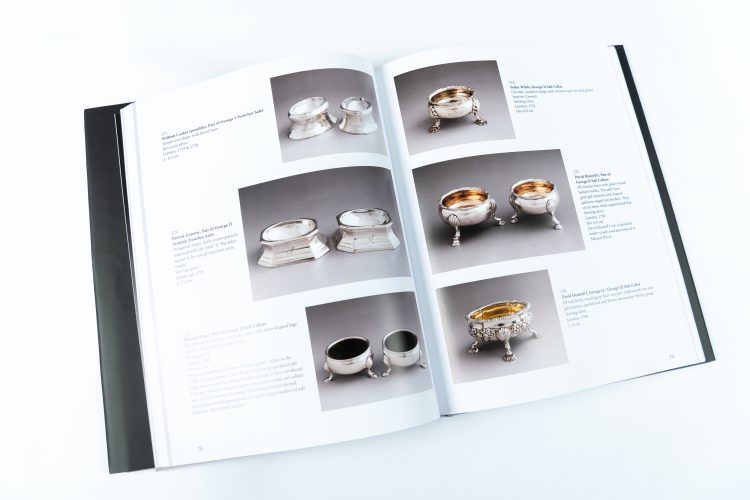
Somewhere on this year’s shortlist is a hardback called British Silver Mustard Pots, Salt Cellars, Casters and Peppers, printed by Halstan for its author Michael Lopategui in a run of just thirty. It was printed on a Canon varioPRINT iX3200, sewn on a Meccanotecnica line, cased by Diamond Bookbinders, and wrapped in a jacket printed litho by Evolve Print. Three businesses, several machines and serious craft, all for a book that will probably sit on thirty shelves. It is a charming entry and it is also the clearest sign of the biggest shift in this shortlist. Tiny runs are no longer a compromise. They are becoming the premium product.
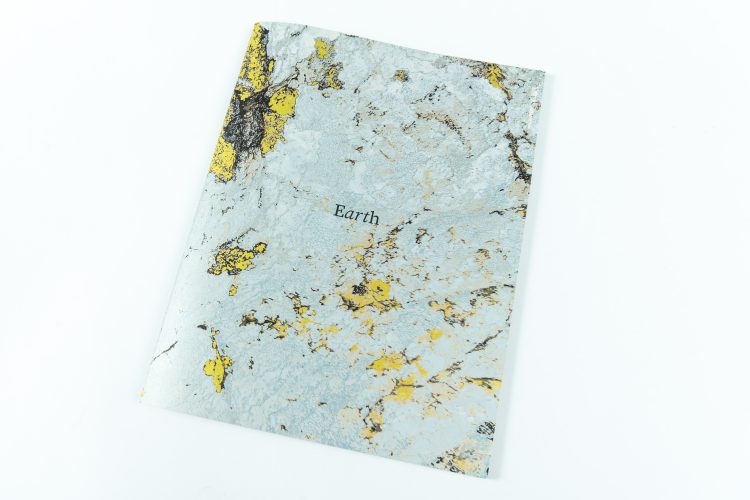
Look at the run lengths across the craft-led categories and the pattern is striking: 6, 30, 30, 65, 70, 75, 100. F E Burman‘s Stellar Works 2026 for TC & Friends was produced in 100 copies on an HP Indigo 15K, with a GF Smith Gmund Mother Earth Moor cover, white foil blocking front and back, a debossed panel and a three-hole stitch bind in two banks. Ripe Digital’s Horseplay for Pencil Studio ran to 65 copies and moved across Fedrigoni Splendorgel, Woodstock Betulla, Sirio Ice White, GF Smith Colorplan in Mandarin, clear film and adhesive Teslin. Gavin Martin’s Earth for MRLD Studio was printed 75 times in CMYK plus digital white and metallic on Colorplan Mist, then sewn. These are print runs that look more like fine press editions than commercial jobs and digital’s economics are what make them possible.


That also means paper is doing much of the storytelling. Named stocks appear throughout the entries, from Keaykolour Sombre Grey on Northside Graphics‘ PUR-bound Arcen Architecture Booklet for Sort Design, to the Pergraphica Mysterious Blue on J Point +’s decagon-shaped box for Arteks, to the cane fibre textured paper on Harkwell‘s variable-data honey rum labels. Designers and studios are named alongside printers too, with Pencil Studio behind two finalists and Ben Prescott, Mary Leonard and Fred Cochran credited on others. The best of this work reads as a real collaboration between studio and press rather than a transaction.
Gavin Martin is worth singling out here. A finalist in three different categories: I Mean the Green for Alex Eagle in Books, Earth in Designed for Digital Print and Finishing, and the Perfume M Collection sets for Perfumer H in Labels and Packaging. Across all three it pairs HP Indigo 7900 printing with platen, VeloBlade cutting and sewing. This is a printer operating like a studio… and the judges have noticed.
The most touching story on the list belongs to Dynamic Print. Its Innovation entry is an order of service for Scarlet and Morgan, commissioned by Mark Riley, with a seeded paper cover, Tintoretto Gesso text, interleaved Cromatico, a hand-produced deckle edge and hand sewing by the client himself. According to the entry, Riley had approached five other UK printers who all declined to quote. A local printer pointed him to Dynamic Print, which made a mock-up and won the job. It is a small run of 100, but it says a lot about where value now sits: in saying yes to the job other printers find too fiddly.

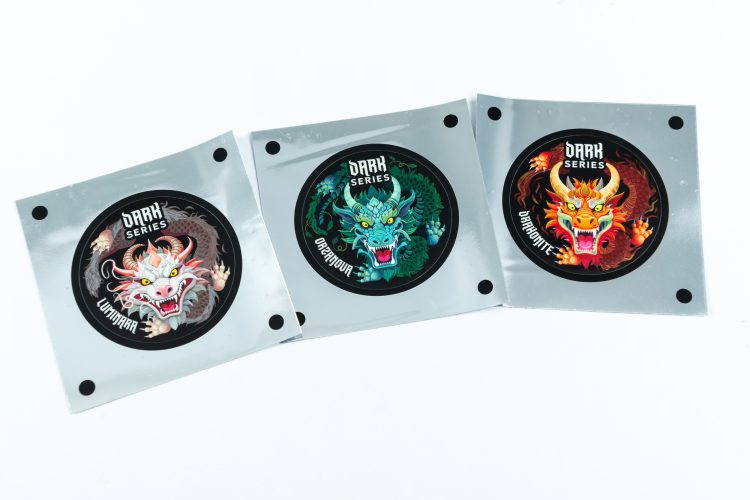
Proof+ pushes that idea even further. Its Halter and Forge Montana bourbon, a self-promotional piece, combines blind sculptured embossing with black tonal print to imitate antique metal, then adds reclaimed saddle leather, recycled metal, a wooden closure and a flint glass decanter, with leather and metalwork by outside artisans. Its Dark Series labels bring in LED modules by Saralon. Print is no longer just the surface on a product. Increasingly, it is part of how the object is made.

Touch is the other big theme. Scodix appears again and again in J Point‘s entries, including the F.O.M.O. vinyl project, where the “records” are made from Black Boston board duplexed with metallised film and finished with matt lamination and UV varnish. Litograf pairs a Xeikon PX3300HD with MGI embellishment for Vital Aesthetic. Reflex Label+ Barwell’s Celtic Warrior Irish Whiskey for Ahascragh Distillery runs a Cotton Touch stock through a Grafotronic haptic finishing line with hot foil and low-build tactile varnish. Harkwell’s Muc Off Glow Dark Energy adds silk screen to digital. The labels on this list are meant to be handled as much as looked at.
You may also notice how many of them are for drinks. Beyond Belief Brewing’s Kofi African Pale Ale from Amberley Labels, Padrão Rum and Lemoencello from MCC Label Paarl in South Africa, Ripe Digital‘s Slow Gin, Harkwell’s Bristol Honey Rum, the Celtic Warrior whiskey and Proof+’s bourbon together make up a well-stocked bar. Craft drinks are a natural fit for digital labels: small batches, frequent releases, premium shelf positioning and brands that need to stand out on a crowded back bar.

At the other end of the scale is data. Propack Direct Mail has two finalists: a behaviour-driven programme for Travis Perkins that produces 10,000 personalised pieces a month using XMPie and a Moll Vantage line with camera-matched tip-ons, and an 80,000-piece campaign for Car Finance 247. Eight Group‘s entry for ZapPost is titled Direct Mail That Behaves Like Digital, and that phrase could describe the whole category, with runs from 10 to 1,000 on a Konica Minolta AccurioJet KM-1e. Impress Print Services‘ gift cards for Squires Garden Centres use barcode-driven scan-to-print on a Fujifilm Jet Press 750S (no longer on sale). Mail is becoming programmatic, triggered by customer behaviour rather than a campaign calendar.
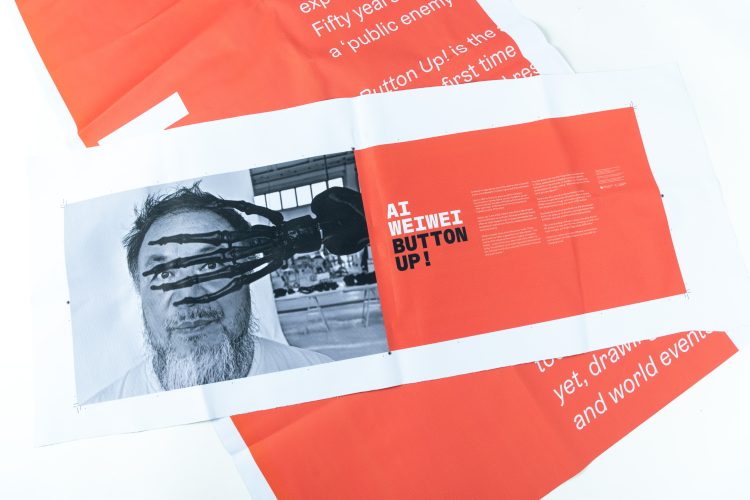
Then there is scale. Multiprint Solutions‘ work on Ai Weiwei: Button Up! for Factory International at Aviva Studios is a finalist in two categories, combining Canon Arizona and Colorado printing, a Zünd cutter, plywood and sewn display textile across more than 100 panels. FaberExposize UK printed 105.23 square metres of display fabric to make feathers for a giant parrot for NEWSUBSTANCE. Dominion produced a 67 metre by 4.7 metre PVC mesh banner for Bradford Bulls. Wide format has become part of the architecture itself.
Looking across the equipment, HP Indigo clearly dominates, appearing in around fifteen of the roughly three dozen job entries across the 7800, 7900, 7R, 15K, 16K and 6K series. Canon, Fujifilm, Konica Minolta, Xerox and Xeikon make up much of the rest. The more interesting story, though, is in finishing. Graphtec cutters, VeloBlade, Vivid Matrix laminators and foilers, and Zünd tables appear repeatedly, which suggests that the difference between good and great now often happens after the job leaves the press. The one truly new-kit story is Litograf’s Nutrend Gummies, printed on a Bobst Digital Master 340 with a flexjet station that prints directly onto adhesive. Litograf describes it as the first machine of its kind in the world after the beta version.
Sustainability is where the shortlist gets most concrete. Impress reports a 90% reduction in Scope 1 and 2 emissions since 2014 and holds ISO 14001, FSC, B Corp and Carbon Balanced Printer credentials. Dominion has removed solvent inks, installed 50kW of solar and moved to 95% paperless production, while recycling around 80% of its waste. Midland Regional Printers reduced its measured footprint by 18.52% in 2025-26 and by 28.58% over two years, with 326 solar panels on site and 15,530 trees funded through World Land Trust projects. These are real numbers rather than general promises.

Finally, the people. The Women of Impact shortlist is full of growth stories: Claire Taylforth taking FaberExposize from £2 million to more than £7 million through automation; Jodie Smith joining FCS Lasermail at 15 and becoming head of sales in a business that grew from £12 million to £26 million; Anna Jordan-Smith building Micropress’s digital division during the company’s rise from £5 million to more than £30 million; Verity Fox leading Dominion through the loss of her father without a succession plan; Karen Herbert with almost four decades in the trade; and Sarah Smith, who sold her home and moved 60 miles to buy Dynamic Print. In Future Star, Aidan Lucas joined Paragon at 16 in the warehouse and became head of planning at 29. Again and again, careers are being built from the factory floor upward. That may be the most useful lesson in the whole shortlist for an industry worried about its talent pipeline.
Several companies show up throughout the list. Harkwell has three jobs plus Nat Haytayan in Future Star. Impress has three jobs plus a sustainability nomination. Eight Group, FaberExposize and Dominion each have both work and people in the running, and J Point + has three entries. If there are safe bets, they are here. Our hunches, and they are only hunches, are Halstan for pure charm, Dynamic Print for the best story, and Litograf for genuine technical firsts.

What the shortlist says overall is that digital print has stopped trying to justify itself against litho. It is now the preferred route for the most personal, tactile and experimental work in the industry, from thirty-copy monographs to monthly mail driven by customer behaviour. We will find out who wins on 12 November.
The Digital Printer Awards 2026 take place at the InterContinental London Park Lane on 12 November. Tickets and the full shortlist are available at here.
Images courtesy of the Digital Printer Awards and the individual finalists.


