Transdisciplinary designer and professor Catherine d’Amours harvests clay from specific territories, 3D-prints it into ephemeral typographic installations, then returns it to the earth, working directly against a modernist tradition that cut language from the conditions of its making.
The earliest known form of writing is a mark pressed into clay. Terratypie begins there and works backwards through everything that typography has since become: the universalising, the standardising, the systematic distancing of the practitioner from material knowledge and the act of making. “Modernist typography cut language from the conditions of its making,” catherine d’amours says. “This project starts there.”

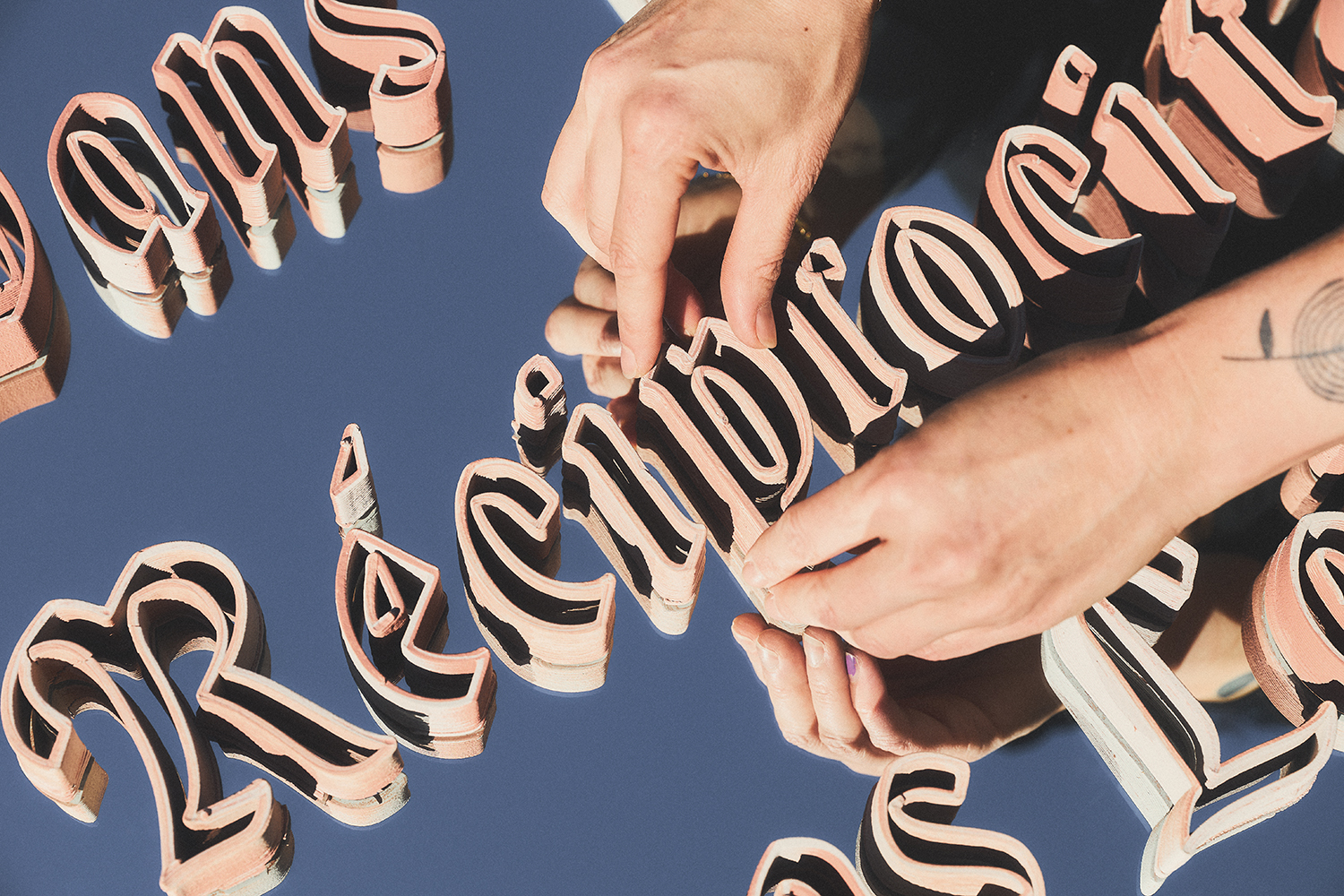
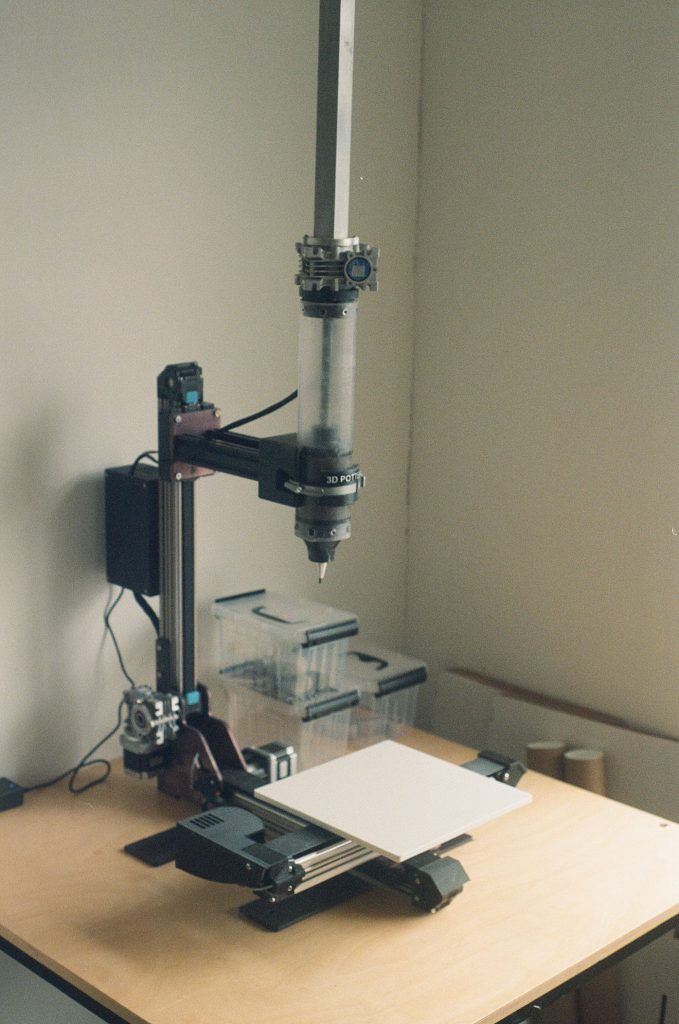
Clay is gathered through a foraging approach across Wolastoqiyik Wahsipekuk and Kanien’kehà:ka territories, each sample dated and identified by site. The harvesting is non-extractivist: small quantities, traceable, tied to specific ground. The clay is then 3D-printed into typographic installations that are, from the beginning, designed to dissolve. Each letterform comes into being with a specific territory and undoes itself back into it. The permanence that typography has almost always sought, the reproducible, the fixed, the portable, is refused at every stage.
Developed in collaboration with research assistant Emile Parent at the École de design and ongoing since its first clay prototypes in 2024, the project situates typography within a broader critique of how design knowledge is held and transmitted. Walking is part of the research methodology. Attention to what is changing in a territory is part of the practice.


“This practice asks us to return to the same territory, again and again with enough attention to notice what is changing,” d’amours says, “enough humility not to claim we can save it, and enough presence to design with what the land makes possible.”
The work explores what design might become when it moves through interstitial spaces rather than resolving them, when it is nomadic, relational, and tied to the living conditions of specific ground.
Catherine d’Amours is a transdisciplinary designer and professor at the École de design, University of Quebec in Montreal. Her practice moves between typography, installation and writing, with a sustained attention to the more-than-human world. Her work has been presented at the PHI Centre, ISEA, the Musée de la civilisation and the Frankfurt Book Fair.
Website: catherinedamours.com Instagram: @catherinecdadamours
Terratypie, 2024 to present. Clay harvested from Wolastoqiyik Wahsipekuk and Kanien’kehà:ka territories, 3D-printed typographic installations. Developed in collaboration with Emile Parent. Prototyping workshop photography: Félix Richer-Beaulieu. Documentation of earth return at Champ des possibles, Kanien’kehà:ka territory: Vincent Castonguay.