
There is a moment every artist knows… The work is finished, photographed against a white wall or laid flat on a studio floor, uploaded to a shop or a portfolio, and then silence. The piece is good, you know it is good. And yet it sits there. The frustration is real, but the explanation is rarely about the work itself. It is about what surrounds it, or more precisely, what doesn’t.

We have always understood this intuitively in physical spaces. Galleries that consistently move work tend to share certain qualities: they are uncluttered, the lighting shows the pieces beautifully, and crucially, they never hang too much. The editing of space is itself a psychological act. It tells the viewer that what remains has been chosen, that it matters, that it belongs. But online, where most art now lives before it is bought, that architecture collapses. A JPEG against a white background, no matter how carefully shot, strips a work of its spatial intelligence. It becomes an object instead of an experience.
The perceived value and meaning of an artwork are not fixed. They are actively shaped by context, by lighting, placement, and the colours surrounding it. This is not a new idea in behavioural psychology, but it is one the art world has been slow to translate into the digital environment. When a buyer encounters work online, they are not just looking at the piece. They are trying to solve a problem. Will this work in my home? Will it hold the wall? Will it speak to the room I am imagining? Without context, the cognitive load of answering those questions falls entirely on them, and most of the time, they quietly close the tab.


When people buy art, what they are really doing is bringing part of another person’s imagination into their most intimate spaces. Their living room, their workspace, their bedroom. That is not a casual transaction. It is personal. The decision to buy is almost never made at the moment of first seeing a work. It is made during a longer, quieter process of imagining it already there. The artist’s job, if they want to shorten that process, is to do the imagining for the buyer first. To show the work not as an object awaiting judgement, but as something that has already found its place.
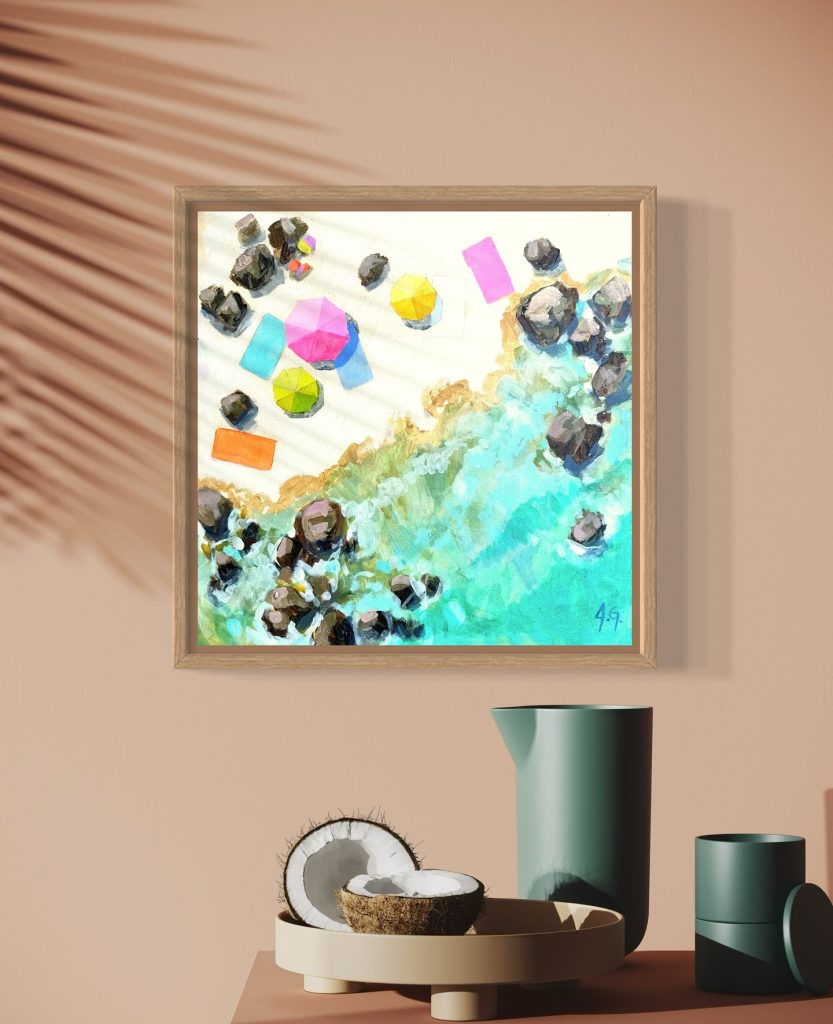
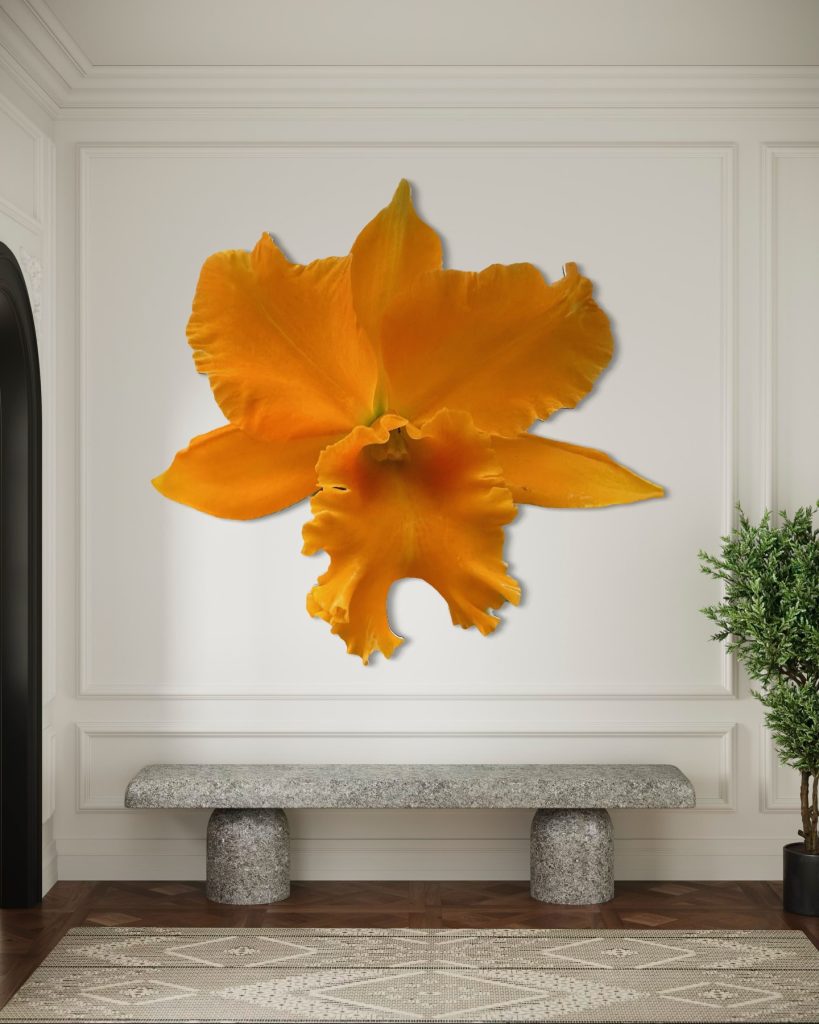
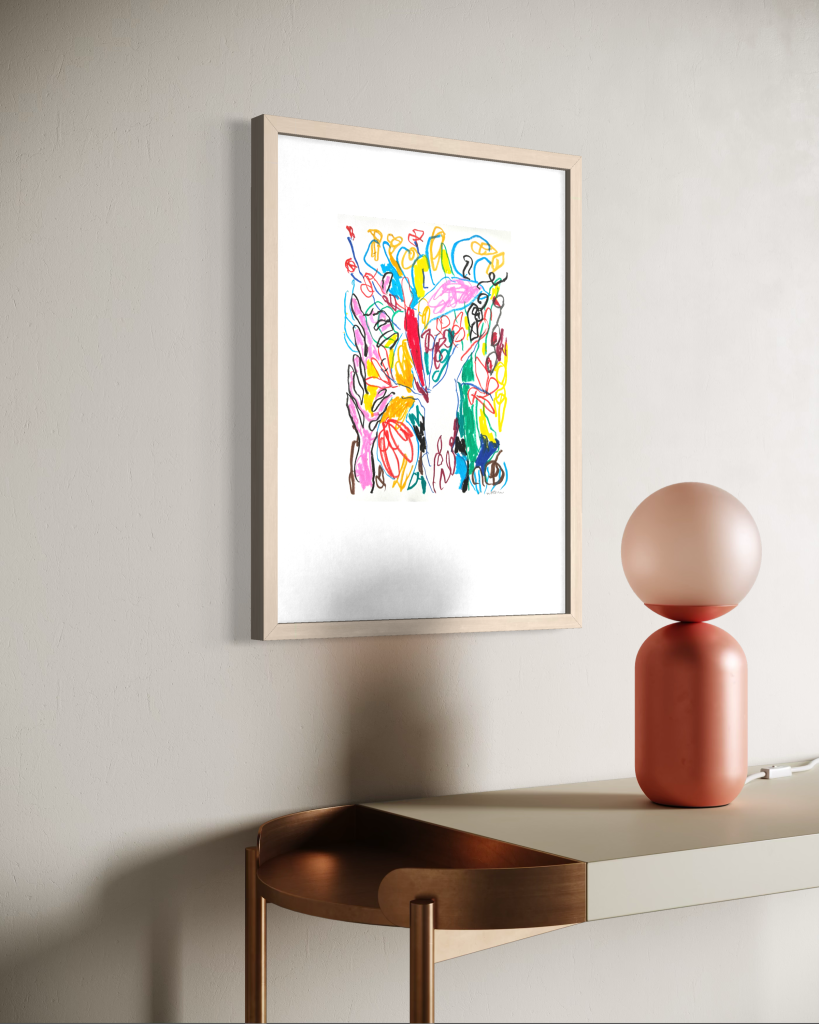
This is why room visualisation tools have moved from novelty to necessity in a short space of time. Seeing a print hanging above a mid-century sideboard, or a large abstract anchoring the wall of a pared-back kitchen, does something that even the best product photography cannot. It answers the question before it has been asked. Tools like Smartist App exist precisely in that gap, allowing artists and studios to present work in lived-in settings, turning a catalogue into something closer to a home visit. The psychological shift is subtle but significant. The buyer stops evaluating and starts imagining. That is the territory where purchases actually happen.
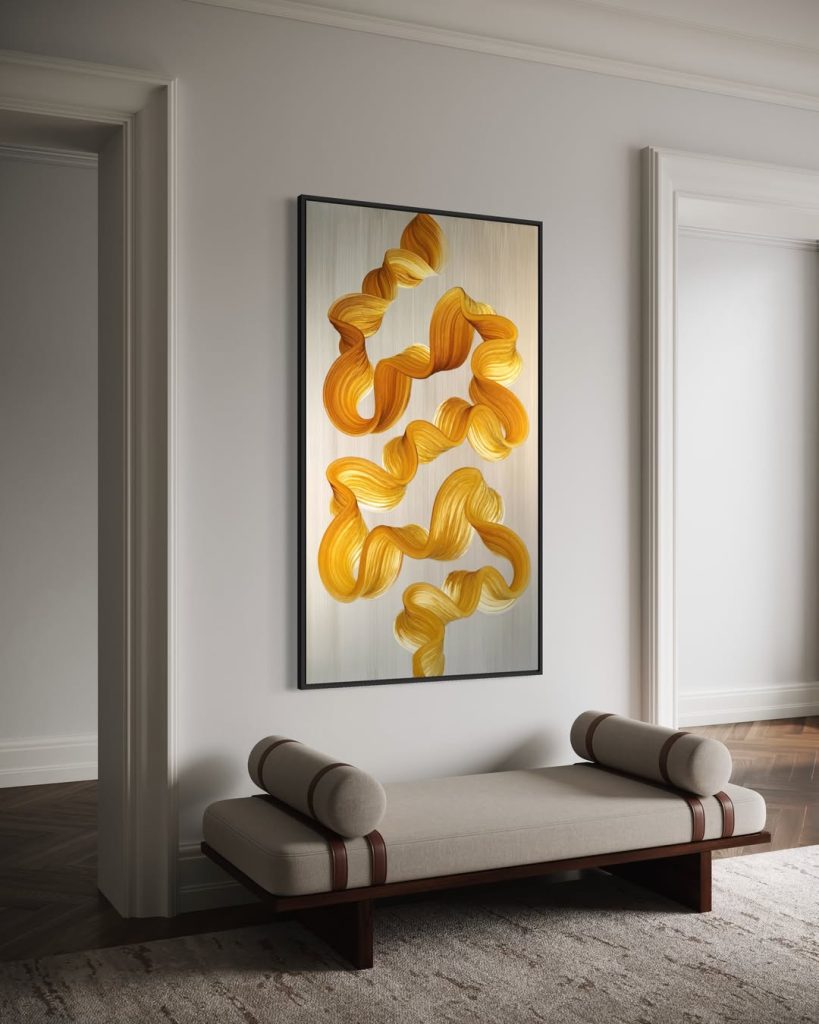

Research has consistently shown that context changes not just how artworks are perceived, but how they are evaluated, and that specific environments elicit specific responses. A piece shown in a gallery context is read differently to the same piece shown in a domestic one, and neither reading is more correct than the other. But for an artist trying to sell prints, posters, or editions directly to buyers who live in houses rather than white cubes, the domestic context is the relevant one. Meeting the buyer inside the life they already have, or the life they aspire to, is not a concession. It is the work.
What this ultimately asks of artists and studios is a shift in how they think about presentation. The image of the work is not the end of the creative process. It is the beginning of a different one. How it is shown, where it is placed, what surrounds it. These are not marketing decisions bolted on afterwards. They are part of the conversation the work is trying to have. The white background was always a convention, not a truth. Showing work in context is simply showing more of the truth: that this piece was made to live somewhere, and here is one way it might.
People of Print is a global platform for print culture and the creative community. Smartist App is a member of People of Print.
https://www.instagram.com/smartistapp

Want to know more about our membership? Give us an email at members@peopleofprint.com.
- Order From Pattern, Disorder From Chance: Sun Möller-Park’s Ready, Set, Fuse – Pt. 2 - October 5, 2026
- Hidden in Plain Sight: Kidnichols and the Making of Mountain Moves - October 5, 2026
- The Quiet Work of Ritual: Garden Party Magazine, Issue 03 - October 5, 2026