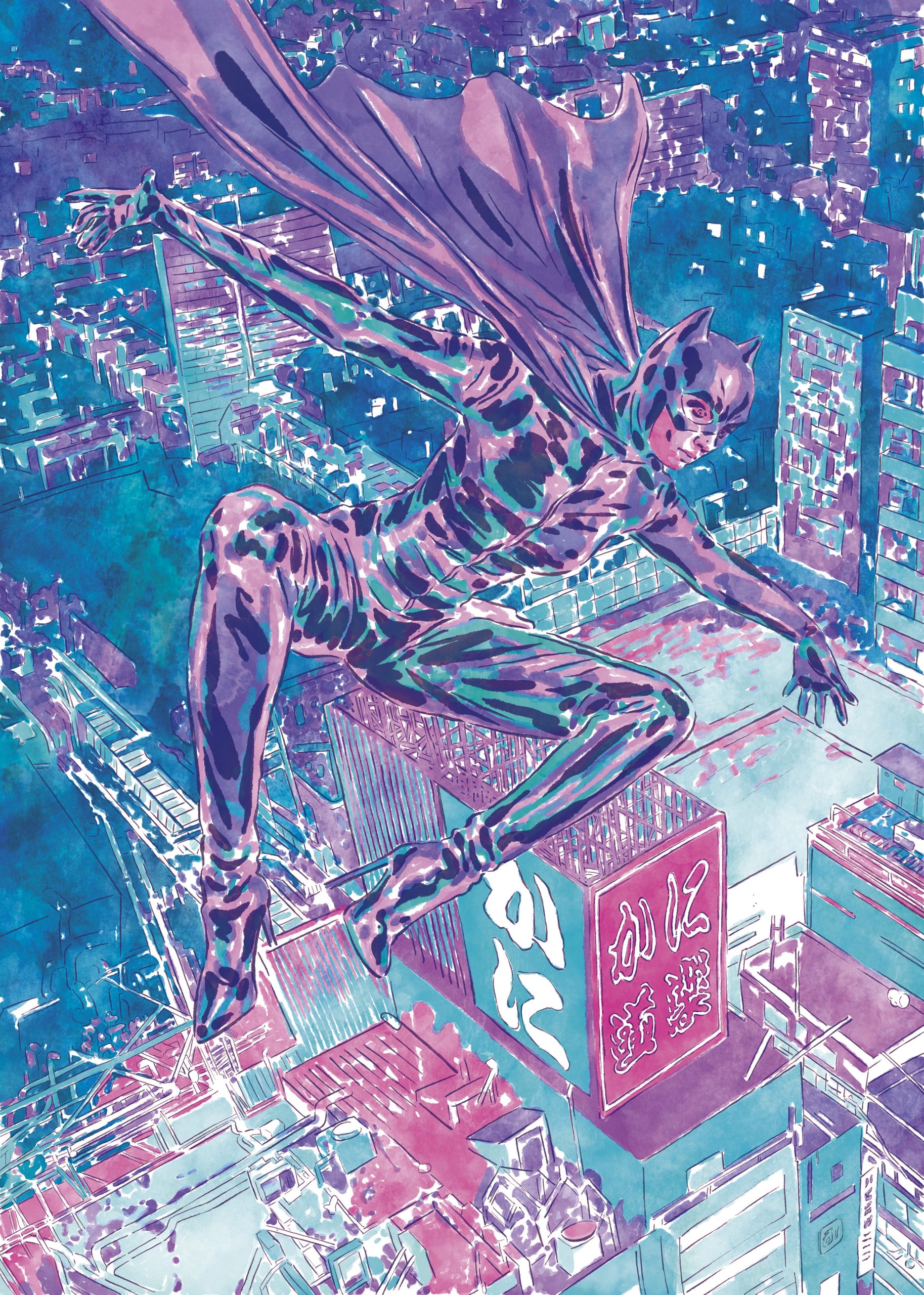
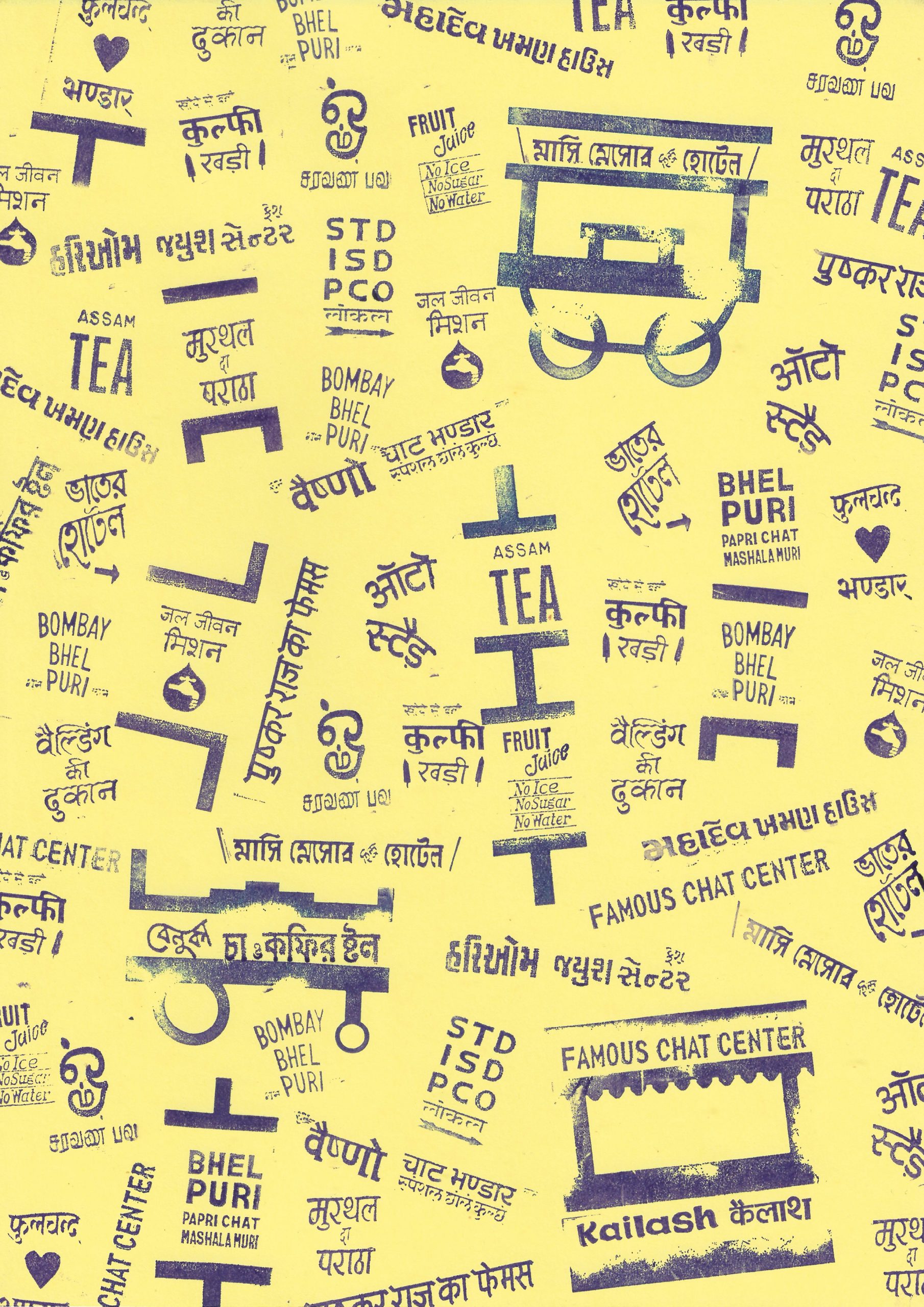
New Delhi-born designer and maker Deepesh Sangtani documents India’s hand-painted street signs, distils their letterforms and symbols into laser-engraved rubber stamps on modular wooden blocks, and uses them to create prints that embrace inconsistency, misalignment and the open-ended nature of play.
Hand-painted signs in India have a distinct visual character, shaped by the painter, the location and the specific circumstances of their creation. Each one is imperfect and complete at the same time. Deepesh Sangtani became interested in how those signs could be documented without being fixed, how their visual language could be preserved in a form that keeps moving rather than settling into an archive.
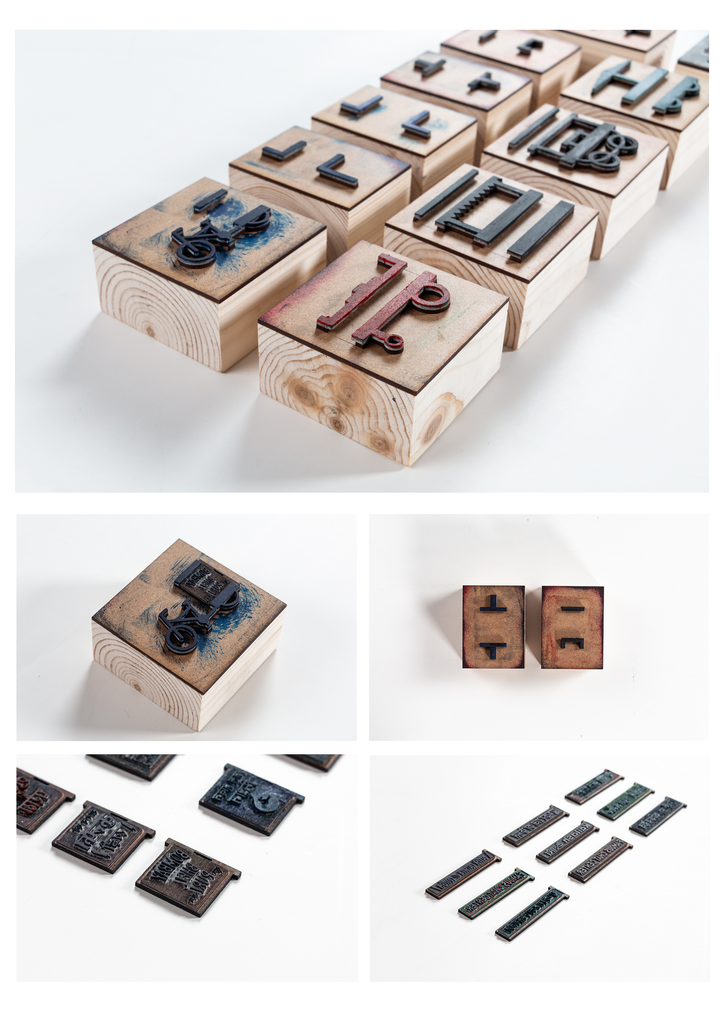
Objects of Transience was developed as his master’s thesis at the Glasgow School of Art in 2024. The process began with a Google Form distributed to friends and family across India, asking them to photograph and upload ten street signs each. Those images were simplified into individual elements: letterforms, symbols, borders, the iconography of food carts, light poles and display stands, the surfaces where hand-painted signs most commonly appear. The elements were redrawn, digitised and turned into rubber stamps, laser-engraved and mounted on MDF and wooden blocks as a modular, interchangeable system. “This project explores documenting something made by hand and returning it to the hand as a tool,” Sangtani says, “allowing it to be reworked, reinterpreted, and kept in motion through use.”

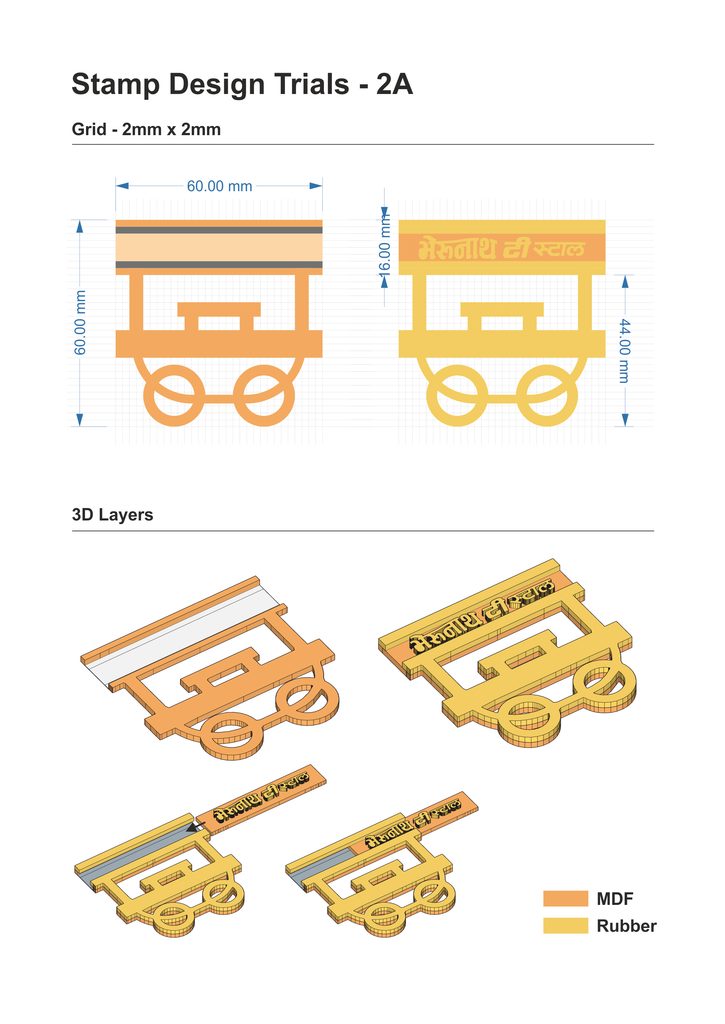
The modular design system required significant iteration: testing alignment, spacing and a locking mechanism that would allow the stamp components to be combined in multiple configurations without losing coherence. Printing became as much a part of the research as the making: pressure, layering and orientation were all varied, with ink bleeds and misalignments embraced rather than corrected. These inconsistencies connect the printmaking process to the imperfect human quality of the street signs it was built from. “Print does not have to repeat the same image,” Sangtani says. “It can shift, adapt, and remain open to change, where each impression becomes part of an ongoing process rather than a fixed outcome.”

The rubber stamps were also used as part of an installation including seventy-five handmade pinwheels created for the exhibition. The project has since developed into Kutty Press, a mini publishing experiment using the stamps to make small, limited-edition A5 prints, and into a teaching module exploring the visual language of cities.
Deepesh Sangtani is an interdisciplinary designer and maker from New Delhi, working at the intersection of visual arts, graphic design, space and print. His practice is rooted in visual storytelling and the tactile nature of making.
Instagram: @deepstagram27 / @kuttypress.studio
Objects of Transience, 2024. Rubber stamps, laser-engraved, mounted on MDF and wooden blocks. Master’s thesis, Glasgow School of Art, MDes Communication Design. Studio photography: Raunak Singh.