Imagine drawing a shape in Illustrator and holding it in your hands, cut from acrylic, folded from Dibond or slotted together from honeycomb board, the same afternoon. Vivid’s VeloBlade Nexus makes that possible. It is quietly changing what designers can ask of their printers.
Every designer has a drawer of ideas that died at the quote stage. The pop-up mailer that needed a bespoke steel cutting die, the shaped shop sign that would have meant a joinery workshop, the run of fifty structural invitations that made no sense to tool up for. The VeloBlade Nexus, built by Vivid Laminating Technologies in Ashby de la Zouch, Leicestershire, is the machine that empties that drawer. It takes the most expensive part of shaped print, the physical die, and replaces it with something every designer already knows how to make: a vector path.

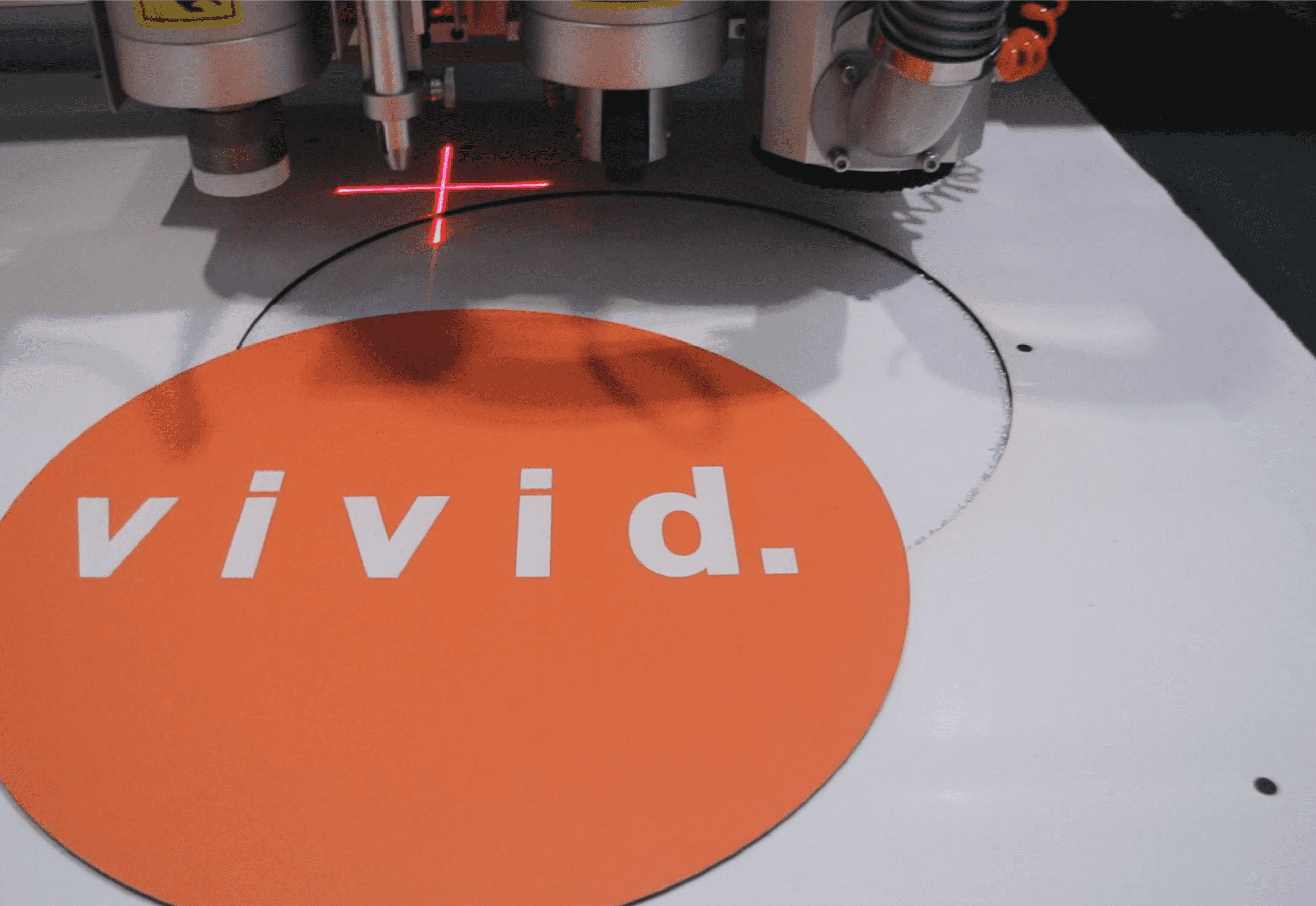
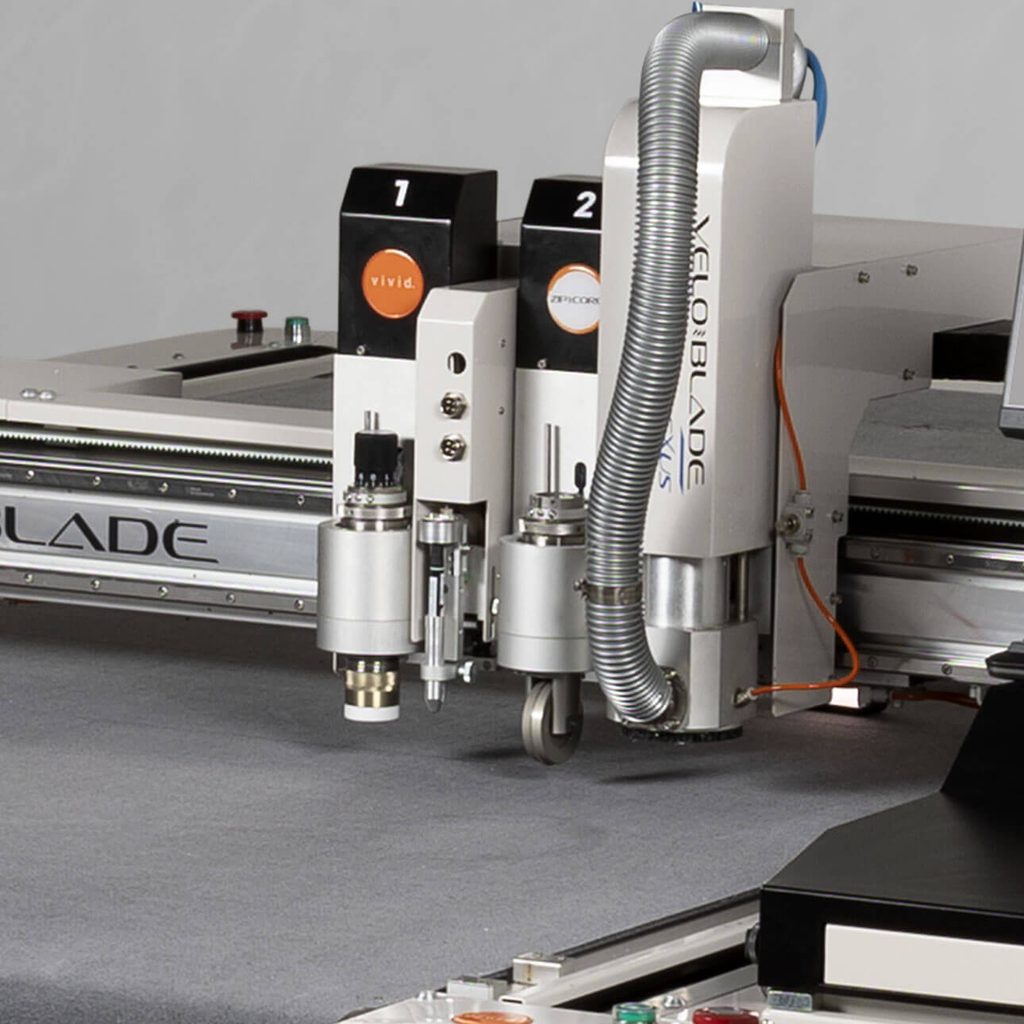
The principle is beautifully simple. You draw your cut, crease and perforation lines in Illustrator, InDesign, CorelDraw or AutoCAD and the Nexus follows them exactly. A vacuum conveyor bed holds the sheet flat while a head loaded with interchangeable tools goes to work: drag knives for fine detail, oscillating knives for thicker board, a crease wheel for folds, a kiss-cut knife that slices through vinyl without touching the backing, a V-cut knife for bevelled folds and an optional CNC router for rigid stock. With more than a hundred blade options available, the machine cuts, creases and perforates in a single pass, swapping tools and setting its own cut depth as it goes. Watching it work feels a little like watching your artboard come alive.

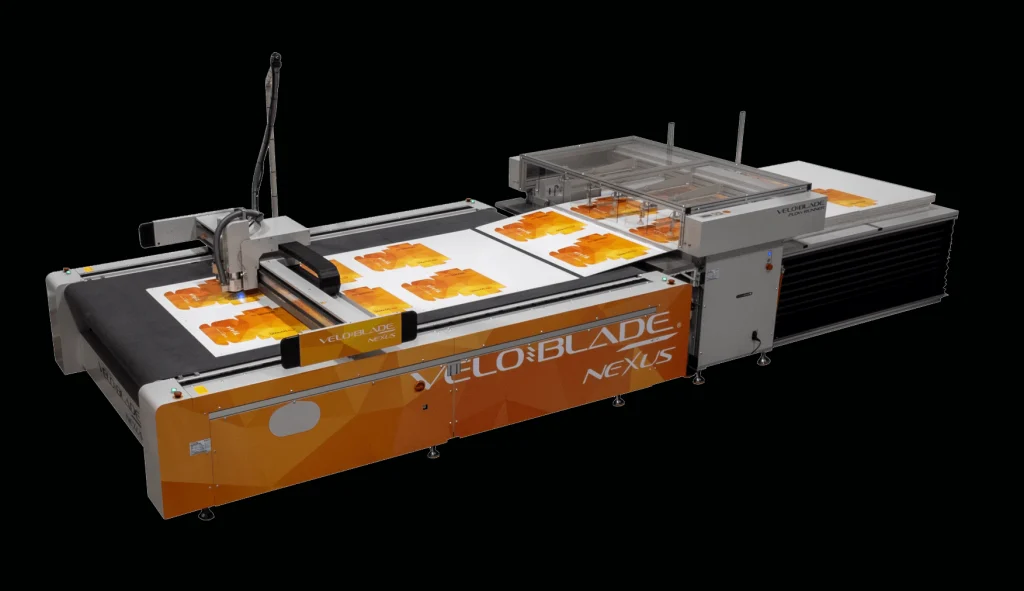
Then there is the scale. Beds start at 1800 x 1600mm and run up to a vast 3000 x 3200mm with custom sizes on request. The router handles material up to 25mm thick at speeds of up to 1500mm per second. That opens up almost every substrate a designer could dream of working with: aluminium composite such as Dibond, MDF, acrylic, foamed PVC, KT and honeycomb board, corrugated card, fabrics, paper and self-adhesive vinyl. A CCD camera reads registration marks on printed sheets so the cut lands precisely on the artwork, with a quoted repeat accuracy of plus or minus 0.1mm. Your print and your shape finally line up perfectly.
This is where the fun starts. The edge of a piece stops being an afterthought and becomes part of the design. Lettering can be routed out of acrylic and layered for depth and shadow. Dibond can be V-cut and folded into crisp tray signs with clean returns. Honeycomb board, light and fully recyclable, can become exhibition stands, plinths and point of sale that flat-pack into a car boot. Packaging designers can prototype a carton, test the fold, tweak the dieline and cut again within the hour, then run a short edition without ever ordering tooling. Illustrators can turn a sheet of artwork into kiss-cut sticker sets, shaped prints or die-cut zine covers in quantities that suit an independent practice rather than a factory.
For print businesses, the Nexus is just as exciting. Fed by roll or by sheet, with an automatic feeder that can stack up to 100kg of board for unattended runs, it sits as comfortably in a busy production line as it does in a studio experimenting with one-offs. That versatility turns a printer into a making partner. For years the choice was between hand-cut craft and industrial tooling with nothing sensible in between. The businesses that fill that gap are the ones designers will seek out. It is telling that Loughborough University’s own print service runs a Nexus to help students and staff turn their work into something tangible.
The best results will always come from people who understand their materials: which way the grain runs, how a crease behaves on a heavy coated stock, how much room a 3mm acrylic letter needs from its neighbour. The Nexus does not replace that craft. It rewards it, giving skilled designers and printers a tool that can keep up with their ideas.

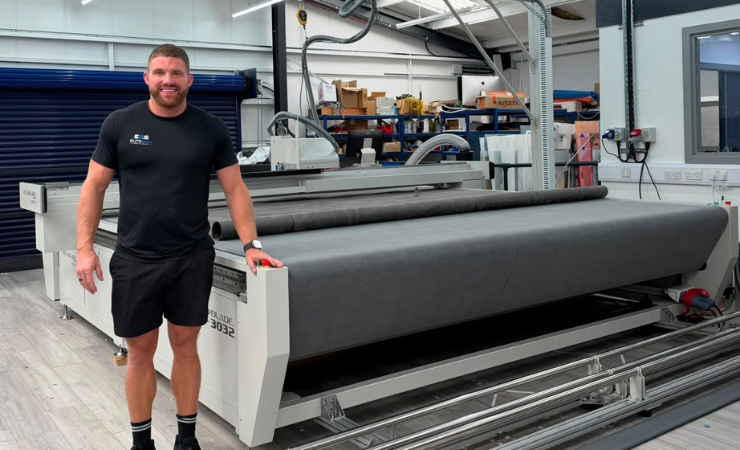
Manchester sign maker Elite Sign Solutions is the latest UK business to bring one in, installing the flagship Nexus 3032 from Soyang Europe this summer. Having rebuilt after losing its premises in the Morton Mill fire in 2020, the company found its printers were outpacing its finishing. The Nexus was the answer. Within the first month it designed, made and supplied a complete exhibition stand in honeycomb cardboard, which director Thomas Swales calls “a product we simply wouldn’t have been able to offer before.” That is the real story. Every install like this is another workshop where an idea for something shaped, folded, layered or routed can move from screen to object in a day. If you have been sitting on a structural idea, now is the perfect time to ask your printer what is on their cutting bed.
Image: Thomas Swales of Elite Sign Solutions with the VeloBlade Nexus, courtesy of Soyang Europe
