Climate-controlled, calibrated to the millimetre, and now Hahnemühle Gold certified, Greyscales is the kind of studio that exists for photographers who care about every variable between the file and the wall. We spoke to founder Craig about the long route from press photography to one of the country’s most rigorously specified fine art print studios, and why paper choice is, in his words, a question of personality.
Some rooms give themselves away the moment you walk in. The air is even, there is no draft, no warmth pooling near a window, no hum of damp from a corner.
Greyscales, in its newest incarnation, is exactly that kind of room. Temperature-regulated, humidity-controlled, every surface is specified for the work that happens inside it; printing photographs at the highest standard the trade currently allows.

“It has been built to the perfect specifications for printing,” Craig tells us, “including regulated temperature and humidity levels to ensure every print is produced in an optimal environment.”
This is the studio Craig has built around three decades of working with photographs and the people who make them. He trained first as a press photographer, then commercially, and along the way founded the Picture Pantry photo agency, which now represents around a hundred food photographers worldwide. Greyscales emerged from all of that, less as a pivot than as a logical conclusion.


“Greyscales was a natural progression,” he says, “and formalised our position as a premium photographic print studio.”
That long view is what makes the studio’s recent Hahnemühle Gold certification feel less like a promotional milestone and more like external confirmation of something already true. Hahnemühle’s Certified Studio programme is the closest thing the fine art print world has to a meaningful credential, and Gold sits at the top of it. Studios are independently assessed on technical capability, knowledge of materials, and the conditions under which work is produced.
For Craig, submitting to that scrutiny was the point.


“The studio is built on 30 years of photographic experience to provide premium prints to photographers,” he says, “so it was important to us that we were both independently assessed and certified by the leader in the field. That leader is Hahnemühle, and so we welcomed the assessment of both our printing ability and knowledge, as well as the studio itself.”
The hardware reads like a wishlist for anyone who has ever tried to colour-match a print to a screen at three in the morning. A 46-inch Canon imagePROGRAF PRO-4600 sits at the centre of the operation, paired with several Canon PRO-1100 units used for testing. The colour pipeline is anchored by Apple Macs running BenQ reference monitors, with Adobe Lightroom and Photoshop alongside Mirage Dinax for layout and print preparation.


The combination produces what the trade still calls giclée prints. Archival in the proper sense of the word, made to last for decades rather than the weeks or months a domestic inkjet might manage.
Where the studio earns its keep, though, is in the relationship between paper and image.
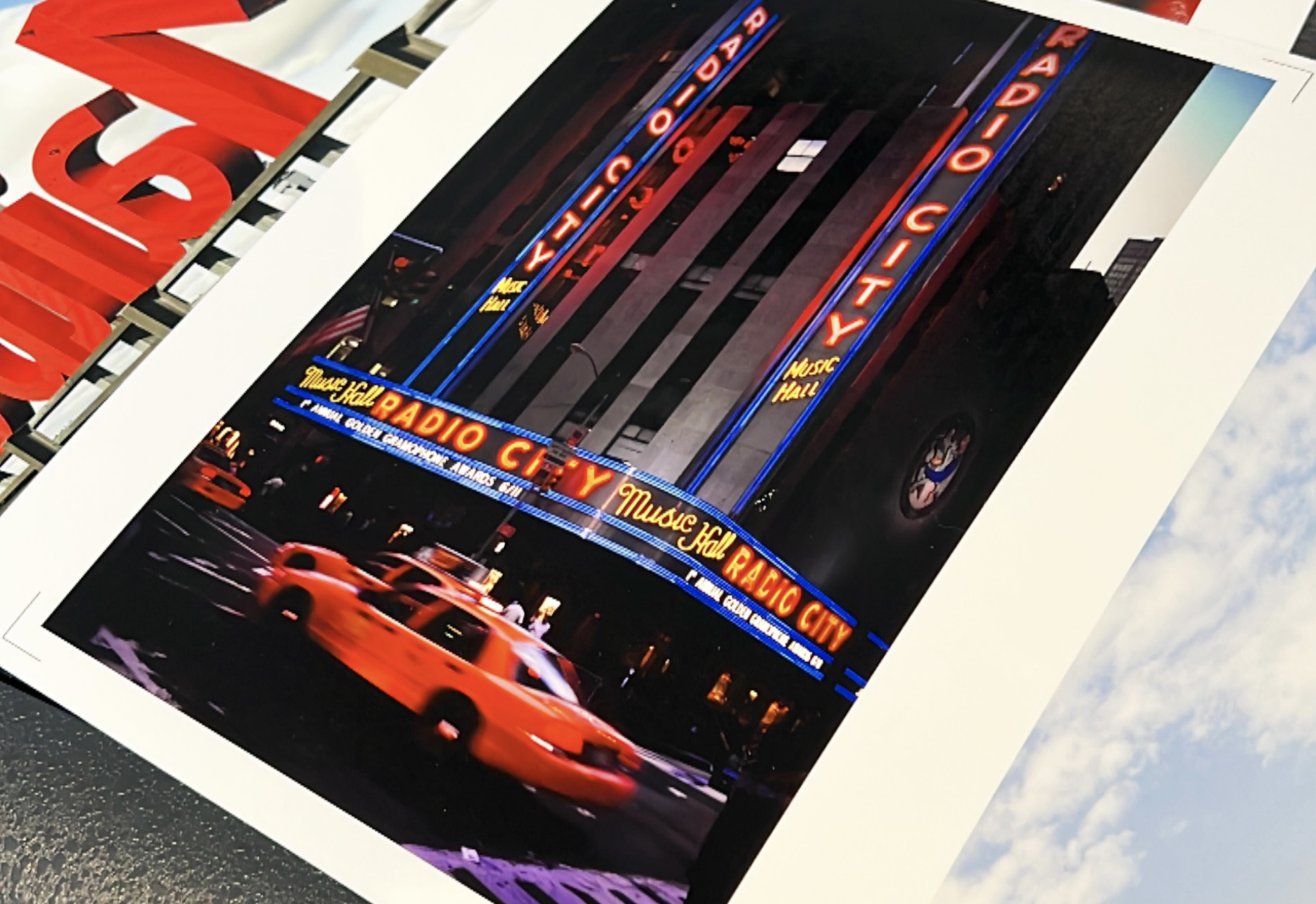
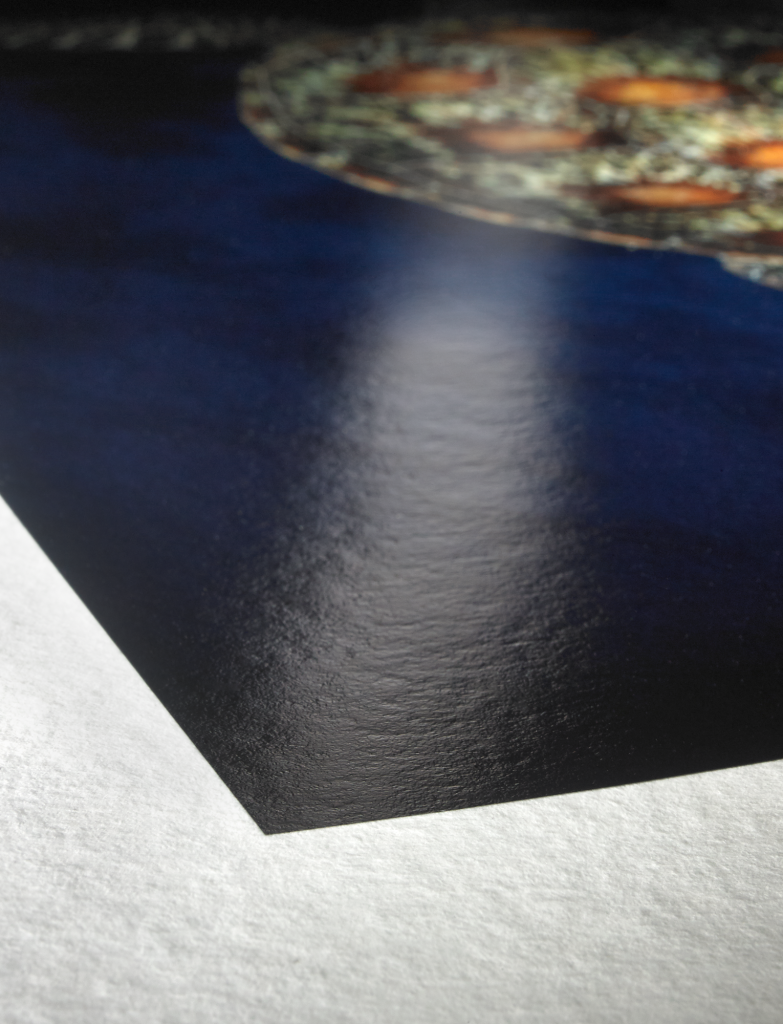
Craig has built the offer around the three classical photographic finishes. For pearl, there is Hahnemühle Photo Rag Pearl, which he describes as “an acid-free, natural white, archival paper with a beautiful, subtle pearl finish.” For matt, the studio works with Hahnemühle Photo Rag Matt Baryta, “another acid-free, archival paper but with a completely non-reflective surface, sometimes preferred by galleries and exhibitions.” For gloss, the recent addition is Hahnemühle Photo Gloss Baryta X, adopted after a round of head-to-head testing.
“It produced a beautiful level of colour saturation, deep blacks, and sharpness,” Craig says of the Gloss Baryta X. “So we decided to offer that alongside our other papers. This gives photographers the gloss finish, combined with the archival qualities that ensure the print will last for many decades.”


Sitting alongside these are Photo Silk Baryta X for those who want a slightly less reflective gloss, and Photo Luster as a high white, long-lived everyday option. Photo Rag, Photo Rag Bright White, and FineArt Baryta are available to order.
That sounds like a lot of choice, and it is. But the studio’s working philosophy is to narrow it down through conversation rather than catalogue.
“Selecting a paper is always a very personal choice,” Craig says, “and depends on a number of factors.” Archival qualities matter. So does the lighting in which the print will eventually live, since artificial light reads pearl and matt very differently. So does the image itself, whether it carries pastels and subdued colour that suit a matt paper, or vibrant tones and deep blacks that ask for pearl or gloss.
“Ultimately, we often ask a photographer to send us an image, and we can take a look for them,” he explains. “Our experience means we can typically help them select a paper that provides an outstanding result.”
For photographers approaching fine art printing for the first time, his advice is the advice every honest printer gives. Print small, print on several papers, and let the eye decide. “Or just ask your printer for some paper samples,” he adds.
And then there is the line that sits at the heart of how Greyscales works.
“Selecting the correct paper is very important,” Craig says, “as it really does provide the photograph with its own personality, but it also has to reflect the photographer’s personality too.”
It is a radical idea in an industry that often treats paper as a substrate rather than a collaborator. At Greyscales, the substrate is the conversation. The Gold certification is proof that the conversation can be trusted. And the climate-controlled room, with its calibrated monitors and its 46-inch printer, is where the talking finally turns into something you can hold in your hands.
Greyscales is at greyscales.co.uk and on Instagram at @greyscales.co.uk. Hahnemühle’s Certified Studio programme is at hahnemuehle.com.
Images courtesy of Greyscales.

Want to know more about our membership? Give us an email at members@peopleofprint.com.