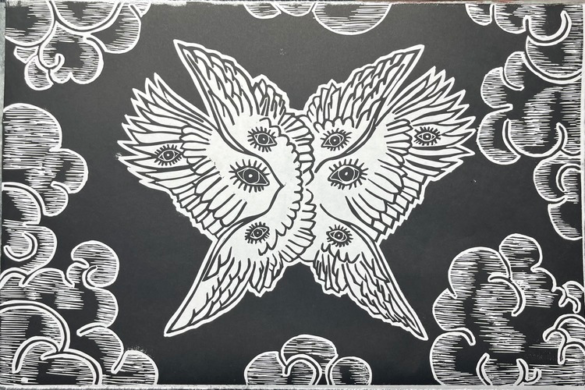

Brighton-based maker and designer Katya Walton transforms reclaimed scaffolding boards into CNC-cut chairs that become canvases for printmakers and painters, creating functional artworks that challenge how, where and by whom art is consumed.
The premise is disarmingly practical: everyone needs somewhere to sit. But the thinking behind Katya Walton’s Collaborative Craftscapes reaches considerably further than furniture design. These chairs, cut from reclaimed scaffolding boards without screws or nails and finished by a rotating cast of artists and printmakers, are an argument about value, accessibility and what art could look like if it lived in people’s homes rather than passing through galleries.
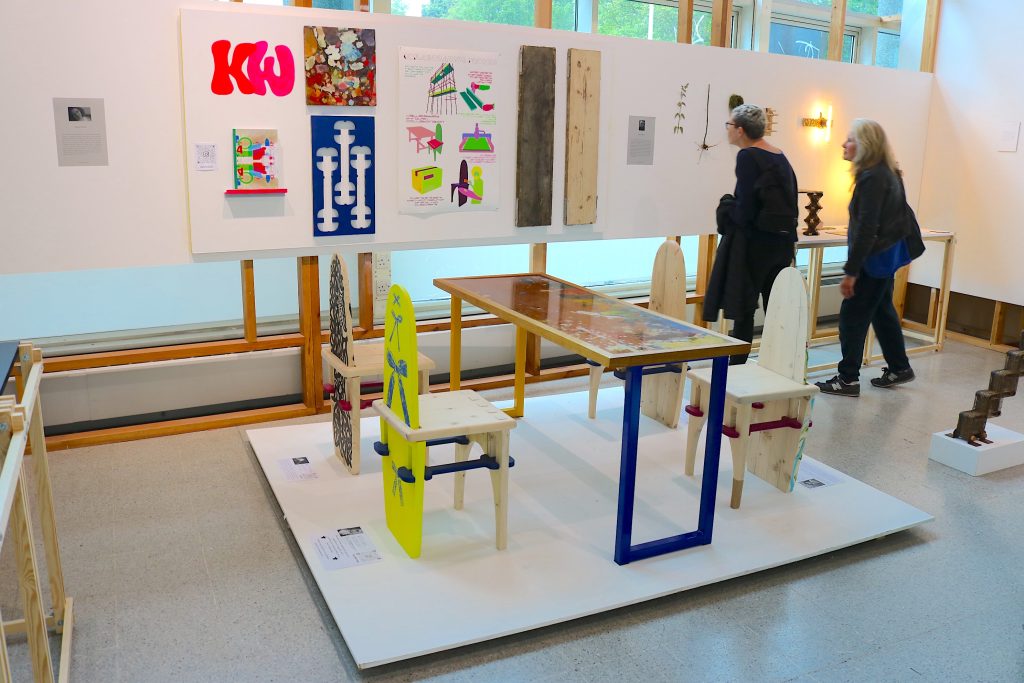
Walton designed the chairs to slot together using CNC machining, a process that allowed her to minimise material waste from the outset. The arch of the front legs directly corresponds to the arch of the backrest, so every cut serves the whole. The flat-pack format reduces shipping emissions. Repurposed scaffold timber replaces virgin materials. Sustainability is not a feature added to the design but built into its geometry. From that structural foundation, the collaboration begins: Mima Adams, a Manchester-based oil painter; Phoebe Winter and Charlotte Deal, Brighton-based printmakers; and Anoushka Sachdev, a London-based visual artist each worked directly on the chairs, blending their own practices with the form Walton had made for them.
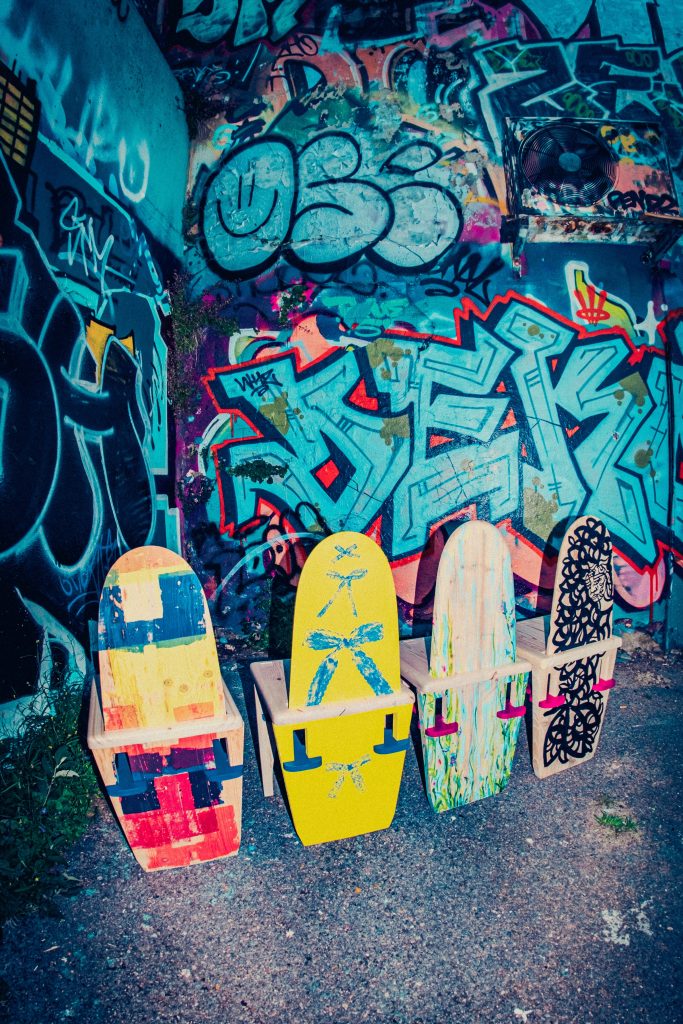

The project took a year from research to finished collection, moving through small MDF and acrylic models before scaling up and refining the digital design in Rhino 8. The resulting chairs were shown at the University of Brighton Graduate Show and at New Designers in London in July 2025, where the collection received a Habitat Loves recognition award from Habitat UK and was featured in Dezeen. One chair also appeared in Mima Adams’ solo show Visceral at Studio 44AD in Bath.

Walton is clear about what the project is trying to do in the current moment. “I want to offer a way in which people can justify spending money supporting artists and consuming art without a large budget through functionality,” she says. In an economic climate where spending on art feels like a luxury, a chair makes the ask different. The art is already doing something. It holds you. It lives in your kitchen or your studio, looked at daily rather than occasionally. Walton traces the thinking back to influences including Sophie Taeuber-Arp and Virgil Abloh, both of whom pushed at the boundary between design and fine art, and to a conviction that collaboration is the only way one maker can honestly bring multiple specialisms together without pretending to master all of them.
Katya Walton is a maker and designer based in Brighton, specialising in woodwork at the intersection of art and function. She studied at Manchester School of Art and the University of Brighton, and maintains an independent studio practice producing furniture, print and small-run garments.
ARTIST LINKS
katyawalton.uk
@katyawaltonstudio
katyawalton.uk/store
Collaborative Craftscapes, 2025. Reclaimed scaffolding boards, CNC machined, with oil painting, screen printing and found object printing by collaborating artists. Photography: Owen Mills (@mills.owen1), Alex Dennel (@sponkcrawl), and Katya Walton. Collaborators: Mima Adams (@mimazpainting), Phoebe Winter (@phoebewinterbn1), Charlotte Deal (@charlottedealdesigns), Anoushka Sachdev (@_shakshakshak).