

Venezuelan-born designer Germán Castellanos rebuilds a Dominican street kiosk from scratch to create a participatory installation that celebrates working-class culture, sonic density and the intelligence embedded in everyday life.
Distance has a way of clarifying what proximity makes invisible. Germán Castellanos developed La Paletera as his undergraduate thesis at Parsons while living in New York City, at a moment when physical separation from Santo Domingo, where he grew up, sharpened his awareness of everything the city carried: its textures, its rhythms, its informal systems of ingenuity and survival. The project became, as much as anything, an act of recognition.
The paletera is a portable street kiosk, the kind of object so embedded in urban infrastructure that it tends to disappear from view. Castellanos rebuilt one from scratch, deliberately entangling himself in the disciplines required to do so: woodworking and fabrication, field recording and sound design, electronic tinkering, graphic research and print production. The process itself was ethnographic. Learning through making was the method, and the object that resulted is simultaneously industrial design, sculpture and participatory archive.

Before the thesis year, while still living in Santo Domingo, Castellanos wandered the city collecting ambient recordings and visual documentation: colmado speakers, street debates, church sermons, political commentary, motor engines, spontaneous laughter.
“Dominicans are sonically expressive,” he says, “and rather than muting that intensity, I wanted to amplify it.”
The finished installation reverses the usual logic of urban withdrawal: where headphones typically help us escape the noise of the city, La Paletera transports that auditory density into the controlled quiet of the gallery. Viewers activate layered soundscapes through a custom-built console, moving from passive listening into something more active and participatory.

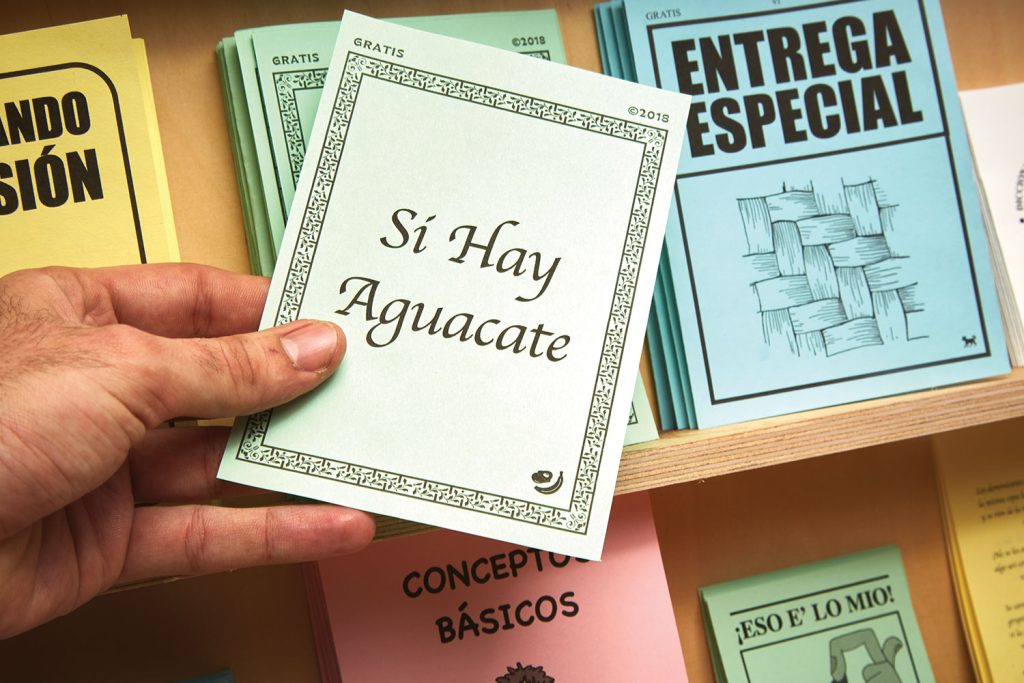
Accompanying the sound installation is a series of printed pamphlets drawn from the commercial and devotional ephemera found in Dominican streets: bold typography, photocopied aesthetics, the graphic language of colmado flyers and church handouts. These printed fragments extend the kiosk’s logic into portable form, small pieces of cultural documentation that carry the project’s spirit beyond the gallery wall.
“The pamphlets are not illustration of the culture,” Castellanos notes. “They are made from it, in the same way the paletera itself is made from the city.”
The concept of tigueraje runs through the whole project, the Dominican term for the street-level resourcefulness and social intelligence of working-class urban life. La Paletera refuses to frame that culture as spectacle or subject. It treats it as a system of knowledge: loud, improvised, industrious and deeply creative. The people whose voices fill the soundscape are not documented but present, active cultural producers whose contribution Castellanos has chosen to amplify rather than interpret.
Germán Castellanos is a multidisciplinary designer whose work explores cultural identity, everyday systems and popular visual language, merging research with hands-on fabrication.
ARTIST LINKS
bfacd.parsons.edu/2018/la-paletera
@germancast_
La Paletera, 2018. Wood, custom electronic soundboard, field recordings, printed pamphlets. Thesis project developed at Parsons School of Design, New York City.


